For ordinary 2D GIS editing on a small desk, start with a compact laptop that runs your chosen software; if you use ArcGIS Pro 3.6, check its 64-bit Windows requirements first. Large datasets or regular 3D work make memory and the exact graphics configuration more important, while a 16-inch laptop is a deliberate trade-off against desk space rather than an automatic upgrade.
Who is this for?
Small-desk 2D GIS editors
You mainly edit maps and attribute data, need room to work on a small desk and might connect an external display when stationary. If your software is ArcGIS Pro 3.6, check the supported 64-bit Windows versions listed by Esri.
Large-project and 3D GIS users
You regularly work with large datasets or 3D scenes, so the smallest chassis is not your only priority. Esri advises allowing additional memory capacity for those workloads.
Mobile GIS users seeking a compact workstation
You want a laptop that travels without giving up the option of a more specialised configuration. Lenovo lists 14.5-inch ThinkPad P14s Gen 7 configurations, while ASUS lists the 13.3-inch ProArt PX13 line; check the components in the particular model you choose.
What matters when choosing?
Compact laptop for mainly 2D editing
Choose it when: Your usual work is editing 2D maps and attributes, and preserving desk space matters most.
Accept the trade-off: A smaller built-in screen leaves less room for maps and panels; configurations within the same product line can also differ.
Compact model with discrete graphics
Choose it when: Large datasets or 3D scenes are a regular part of your GIS work, but you still want a compact machine.
Accept the trade-off: The graphics option alone cannot establish how a particular GIS project will run; installed memory and software requirements still matter.
Larger 16-inch laptop
Choose it when: You value a larger built-in display or a particular high-specification configuration more than the smallest desk footprint.
Accept the trade-off: Measure your working area before committing to a 16-inch machine, especially if you also use a mouse or monitor.
| Concern |
What to check |
Who this matters to |
| Software compatibility |
Identify your GIS application and version. For ArcGIS Pro 3.6, compare the exact laptop with Esri's supported 64-bit Windows systems and hardware requirements. |
If my mapping software cannot run on the laptop, its size and other features will not help me edit maps. Around 42% of consumers put software-compatible everyday editing first. |
| Small-desk fit |
Measure usable desk width and depth with your mouse and any monitor stand in place. Check the laptop's dimensions and display connections for your intended setup. |
I need room to move a mouse and work comfortably without crowding my desk. For around 33% of consumers, that compact fit is the primary concern. |
| Large data and 3D work |
Compare the selected configuration's installed memory and GPU with your software's requirements. Esri advises extra memory capacity for large datasets or 3D scenes. |
When my projects regularly contain large datasets or 3D scenes, I need to judge the configuration against that heavier workload. Around 25% of consumers prioritise this capacity. |
Buying pitfalls
-
Choosing an operating system before checking the GIS software
Esri lists supported 64-bit Windows operating systems for ArcGIS Pro 3.6. A laptop's compact size or extra memory does not resolve an operating-system mismatch.
Write down the application and version you use, then compare its current requirements with the exact laptop configuration.
-
Assuming every version of a laptop has the same components
Lenovo's ThinkPad P14s Gen 7 listings include both integrated-graphics and NVIDIA RTX PRO graphics configurations. The family name alone does not identify the GPU or installed memory.
Check the exact part number, operating system, installed memory, GPU, storage, display and ports before ordering.
-
Choosing a 16-inch machine without measuring the desk
A 16-inch laptop is a different desk-space commitment from the 13.3-inch ASUS ProArt PX13 or 14.5-inch Lenovo ThinkPad P14s Gen 7 lines.
Measure the space available for the laptop, charger, mouse and any external-display stand. Choose the larger format only if that arrangement works for you.
-
Putting a replaced laptop in household rubbish
UK government guidance says electrical products should not go in household rubbish when they are no longer wanted.
Back up and securely erase your data, then use an appropriate electrical-waste collection point or check whether a retailer offers take-back.
Brands and product lines to compare
Lenovo
The ThinkPad P14s Gen 7 line is a compact mobile-workstation reference for Windows GIS shoppers.
- Lenovo UK lists a 14.5-inch display and a configuration with NVIDIA RTX PRO 500 Blackwell Laptop GPU and 6 GB GDDR7.
- Another listed configuration uses integrated graphics. Check the selected model's graphics, memory and storage rather than applying one version's specifications to the whole line.
ASUS
The 13.3-inch ProArt PX13 line offers a compact creator-laptop route; the 16-inch ProArt P16 line requires a separate desk-space decision.
- ASUS lists PX13 line options of up to 32 GB memory, up to 2 TB SSD storage and up to NVIDIA GeForce RTX 4070 Laptop GPU.
- Those are line-level maximums, not specifications of every PX13. Confirm the configuration and whether a 13.3-inch screen suits your work without an external display.
HP
The 14-inch ZBook Firefly 14 G11 line is a mobile-workstation comparison for shoppers considering compact Windows configurations.
- HP lists Windows 11 Pro and multiple Intel Core Ultra processor options for this line.
- HP notes that components vary by custom configuration. Verify the exact GPU, installed memory, storage and display.
Dell
The 14-inch Precision 5490 provides a mobile-workstation comparison point.
- Dell describes Precision 5490 configurations with integrated Intel and NVIDIA RTX Pro graphics options.
- Dell UK identifies this model as unavailable, so treat it as a configuration reference rather than assuming it is a current purchase option.
Joybuy product choices
These choices cover compact Windows laptops for a small desk and a larger 16-inch alternative for consumers willing to give up some desk space. Match each configuration to your GIS software and usual projects before choosing.
 No image available
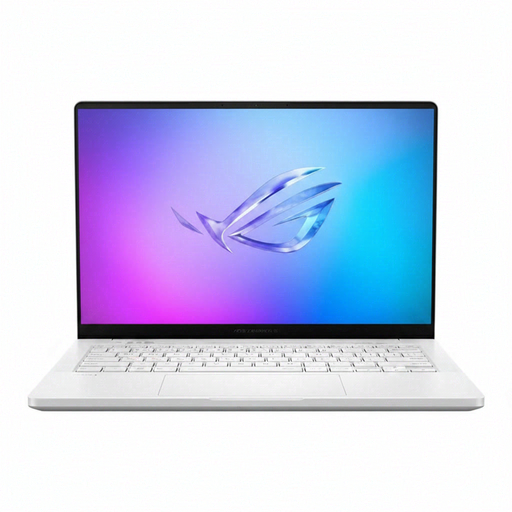
ASUS ROG Zephyrus G14 GA403WR-QS088W, 14-inch
Consider this compact configuration if you want to compare a discrete-GPU laptop for GIS work; check your application's requirements rather than assuming a particular result.
Listed configuration: AMD Ryzen AI 9 HX 370, 32 GB LPDDR5x memory, NVIDIA GeForce RTX 5070 Ti, 2 TB SSD, WQXGA+ display and Windows 11 Home.
View on Joybuy
 No image available
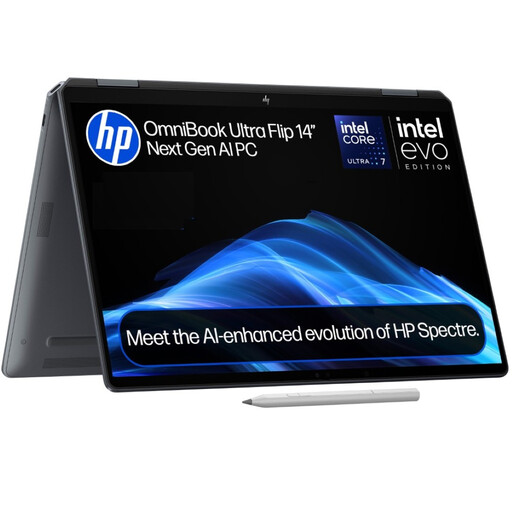
HP OmniBook Ultra Flip 14-fh0006na 2-in-1
Consider this compact convertible for everyday map editing if its configuration meets the requirements of your GIS application.
Listed configuration: 16 GB RAM, 1 TB SSD and Windows 11 Home. Confirm the exact GPU for this SKU before considering it for graphics-heavy or 3D work.
View on Joybuy
 No image available
Lenovo Legion Pro 7 16IAX10H, 83F5000UUK, 16-inch
Consider this larger configuration if demanding projects take priority over a compact footprint and you have measured the available desk space.
Listed configuration: Intel Core Ultra 9, 64 GB RAM, NVIDIA GeForce RTX 5090, 2 TB SSD and Windows 11 Home. These components do not establish performance in your particular GIS application.
View on Joybuy
Frequently asked questions
Do I need Windows to edit GIS maps?
You need a supported 64-bit Windows system if your workflow uses ArcGIS Pro 3.6, according to Esri. Other GIS applications may have different requirements, so check the exact software and version you intend to run.
Is a 16-inch laptop too large for a small GIS desk?
A 16-inch laptop is worth considering only if it fits your measured working area and you value its larger display or chosen configuration more than a compact footprint. Account for your mouse, charger and any monitor stand as well as the laptop itself.
Do I need a discrete GPU for 2D GIS editing?
Do not treat a discrete GPU as a requirement for every 2D editing task. If you also work regularly with 3D scenes or large datasets, compare the exact GPU and installed memory with your application's requirements; Esri advises additional memory capacity for those heavier workloads.
How should I dispose of a laptop I replace in the UK?
Keep the old laptop out of household rubbish: UK government guidance says unwanted electrical products should not be disposed of there. Back up and securely erase your data, then use a suitable electrical-waste collection point or check the retailer's take-back arrangements.


