ArcGIS Pro map editors
If ArcGIS Pro is essential to your editing and geoprocessing, start with a supported Windows configuration, then compare memory, storage and graphics against your projects. Esri lists Windows operating systems for ArcGIS Pro.


Choose a Windows laptop if you need to run ArcGIS Pro natively; a QGIS-centred workflow also gives you macOS and Linux options. For ArcGIS Pro, Esri recommends 32GB RAM, while regular 3D visualisation makes the exact graphics configuration more important. Balance those requirements against screen space and how often you need to carry the laptop.
If ArcGIS Pro is essential to your editing and geoprocessing, start with a supported Windows configuration, then compare memory, storage and graphics against your projects. Esri lists Windows operating systems for ArcGIS Pro.
Regular 3D scenes or graphics-intensive visualisation make the selected GPU and its dedicated memory worth checking alongside RAM and storage. Esri notes that graphics configuration affects ArcGIS Pro visualisation.
If QGIS is your main application, you can consider Windows, macOS or a supported Linux distribution, then weigh screen workspace against carrying the laptop between locations. QGIS Documentation describes installation options for those platforms.
Settle your required software and operating system first. Then choose memory, graphics and a screen size that fit your recurring work rather than relying on the processor name alone.
| Concern | What to check | Who this matters to |
|---|---|---|
| Software compatibility | List the GIS applications, plug-ins and organisation-managed tools you must use. Esri lists Windows for ArcGIS Pro 3.7; QGIS Documentation describes installers for Windows and macOS and packages for many Linux distributions. | If ArcGIS Pro is essential to my work, I need to settle the operating system before comparing hardware. Around 36% of consumers would put software compatibility first. |
| Memory and local storage | Check the installed RAM, upgrade options and SSD capacity of the exact configuration. Esri recommends 32GB RAM for ArcGIS Pro; allow space for your own project data as well as the application. | When my map files and other applications compete for resources, I want enough memory and local space for the work I actually keep on the laptop. Around 29% of consumers would make capacity their primary concern. |
| 3D graphics | For regular 3D scenes, confirm the selected GPU and its dedicated graphics memory rather than assuming every version of a laptop line has the same graphics. Esri warns that some ArcGIS Pro visualisation workflows do not perform optimally with GPU emulation. | If I regularly edit or inspect 3D scenes, graphics capability matters more to me than it would for mainly 2D layers. Roughly 21% of consumers would prioritise 3D graphics. |
| Portability and workspace | Compare the exact model’s weight, charger, display and ports with how you work between sites and at a desk. Check the keyboard layout if it matters to your daily use. | If I carry the laptop between work locations, I need a screen I can edit on without overlooking what I must carry. About 14% of consumers would put portability and workspace first. |
The same laptop line can have different RAM, SSD and graphics configurations, so its processor name does not identify everything you are buying.
Keep the exact configuration or manufacturer part number and compare its installed memory, storage and GPU with your GIS workload. Esri distinguishes between minimum and recommended ArcGIS Pro resources.
Esri lists Windows operating systems for ArcGIS Pro 3.7, while QGIS Documentation provides a macOS installation route. A laptop that suits QGIS will not necessarily run every application your organisation requires.
Check your GIS applications, plug-ins, organisation-managed software and licence conditions before choosing the operating system.
If a required application needs a different platform, you may need access to another compatible computer or a change to your workflow.
Graphics needs differ between mainly 2D editing and regular 3D visualisation. Esri notes that some ArcGIS Pro visualisation workflows, including 3D views, do not perform optimally with GPU emulation.
Base the GPU choice on your heaviest recurring task, and check the exact graphics configuration if 3D work is part of it.
A fault is easier to explain when you have kept the selected specification and purchase records. An old work laptop also needs its data handled before reuse or recycling; UK WEEE guidance encourages recovery, reuse and recycling of electrical equipment.
Check the seller’s support information, retain your records, and securely erase personal and organisation data before handing over an old device.
ThinkPad P-series configurations are worth examining if you want a Windows mobile workstation for ArcGIS Pro.
Precision is another Windows workstation line to compare for native ArcGIS Pro use.
ZBook Power G11 is a workstation line to consider when graphics configuration is part of the decision.
MacBook Pro is a route to assess when your required GIS workflow runs on macOS, such as QGIS.
These Windows laptops include dedicated-graphics choices for GIS work involving 3D visualisation and an integrated-graphics choice to assess for mainly 2D editing. Compare each listed configuration with the applications and projects you need to run.
 No image available
Consider this Windows 11 Home configuration if your GIS work calls for substantial listed memory and dedicated graphics. The product name specifies 64GB RAM, a 2TB SSD, NVIDIA GeForce RTX 5080 16GB graphics and a 16-inch 4K OLED touchscreen. Check battery runtime and the selected support package if you will work away from your desk.
 No image available
This Windows 11 Home configuration is worth assessing for local GIS projects and graphics-focused work. Its product name specifies 64GB RAM, a 2TB SSD, NVIDIA GeForce RTX 5090 graphics and a 16-inch display. Check its weight and battery runtime if you need to carry it regularly.
 No image available
Consider this model if a larger built-in screen matters for editing maps and you can accommodate an 18-inch laptop. The product name specifies a 2TB SSD and NVIDIA GeForce RTX 4070 graphics. Confirm its installed RAM and carrying requirements against your projects before choosing it.
 No image available
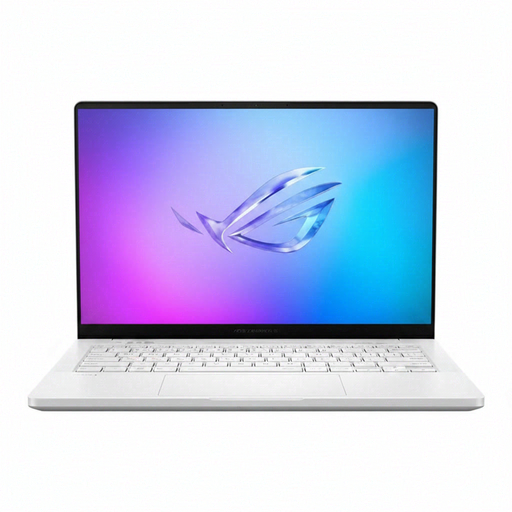
This 14-inch Windows 11 Home laptop offers a smaller screen format to assess if you move between work locations. Its product name specifies 32GB RAM, a 2TB SSD, NVIDIA GeForce RTX 5070 Ti graphics and a German keyboard. Check that keyboard layout, the dedicated graphics memory and the weight against your needs.
 No image available
Assess this configuration for mainly 2D GIS editing if you want a 16-inch screen without selecting a dedicated GPU. Its product name specifies 32GB RAM, a 1TB SSD, a QHD+ 165Hz display and Intel Arc graphics. The graphics are identified as integrated, so check your requirements carefully if regular 3D visualisation is part of your work; also check battery runtime for use away from a charger.
Do not choose a MacBook on the assumption that it will run ArcGIS Pro natively: Esri’s ArcGIS Pro 3.7 supported-operating-system list names Windows. If your work is centred on QGIS instead, QGIS Documentation describes a macOS installer; check every required application and plug-in before choosing macOS.
It may suit lighter work, but 16GB is below Esri’s 32GB recommended RAM figure for ArcGIS Pro. Compare the memory of the exact laptop configuration with the size of your projects and the other applications you run alongside GIS software.
Not for every mainly 2D editing workflow, but it becomes more important if you regularly use 3D scenes or graphics-intensive visualisation. Esri notes that certain ArcGIS Pro visualisation workflows do not perform optimally with GPU emulation, so check the selected GPU and its dedicated memory for that work.
Keep the order confirmation, selected specification and a record of the fault, then contact the seller. GOV.UK explains that consumer law protects purchases of goods made remotely or in person; the appropriate remedy depends on the circumstances of the purchase and the fault.
Securely erase personal and organisation data before arranging reuse or recycling. UK government guidance on waste electrical and electronic equipment encourages the recovery, reuse and recycling of products and components.