
24/7 Customer Support

Free returns

Same-day & Next-day Delivery

Quality Guaranteed

Unlock Your Welcome Offers: FREE Delivery | Up to 80% OFF | Free 30-day JoyPlus trial
Download the APP
Upgrading your car's standard halogen lights to modern H4 LED headlight bulbs is one of the most impactful changes you can make. The promise of brighter, clearer light not only enhances your vehicle's appearance but, more importantly, improves nighttime visibility and safety. However, the market is flooded with options, and it's easy to fall into common traps that lead to wasted money, frustrating installation issues or even a failed MOT.
As the Joybuy Product Recommendation Officer, my role is to help you navigate this landscape. We will look past the marketing hype and focus on the practical details that ensure you get a reliable and effective upgrade.
Before you add any bulbs to your basket, be aware of these frequent pitfalls that catch out many UK drivers.
Many bulbs are advertised as CANbus ready LED headlights, suggesting they will work flawlessly with any vehicle's computer system. The reality is more complex. A Controller Area Network (CANbus) system monitors your car's functions, including the headlights. If it detects a change in power consumption—which is significant when switching from halogen to efficient LEDs—it can trigger a dashboard warning light or cause the bulbs to flicker. While many "CANbus ready" bulbs work for a majority of cars, vehicles from European manufacturers (like Audi, BMW and Volkswagen) are often more sensitive and may still require an additional decoder.
The single most critical failure of a cheap LED bulb is a poor beam pattern. Your car's headlight housing is designed to work with the precise filament position of a halogen bulb. A poorly designed LED that doesn't replicate this position will scatter light uncontrollably. This not only fails to illuminate the road ahead effectively, creating dark spots, but it also produces dangerous glare that can dazzle oncoming drivers. An incorrect beam pattern is a safety hazard and a guaranteed MOT failure.
LED chips generate a surprising amount of heat. Without an effective cooling system, this heat causes the bulb's brightness to degrade rapidly, leading to premature failure. Some bulbs rely on a simple aluminium body (passive cooling), while others use a high-speed fan (active cooling). Bulbs with insufficient thermal management may look bright initially but can dim significantly or fail completely within months, forcing you to buy replacements far sooner than expected.
To make a smart purchase, focus on these core parameters. They are the true indicators of quality and performance.
The most important feature is the bulb's ability to replicate the original halogen beam. Look for products that specify a 1:1 halogen design or "perfect beam pattern." This ensures the LED chips are positioned exactly where the halogen filament would be. For an H4 9003 HB2 LED bulb, which provides both high and low beam headlights in a single unit, this is crucial for creating a sharp, clean cut-off line on the low beam setting. This prevents dazzling other road users and properly illuminates your path.
A long lifespan depends entirely on heat management.
If your car was made in the last 15 years, it likely has a CANbus system. A good plug and play headlight upgrade will have an integrated driver or circuitry designed to work with these systems. Look for descriptions like "98% or 99% vehicle compatibility." However, maintain realistic expectations. If you own a car known for sensitive electronics, it is wise to either choose a bulb specifically noted for its advanced CANbus integration or be prepared to purchase a separate decoder if an error appears.
Based on these critical factors, we have matched several products to different types of UK drivers.
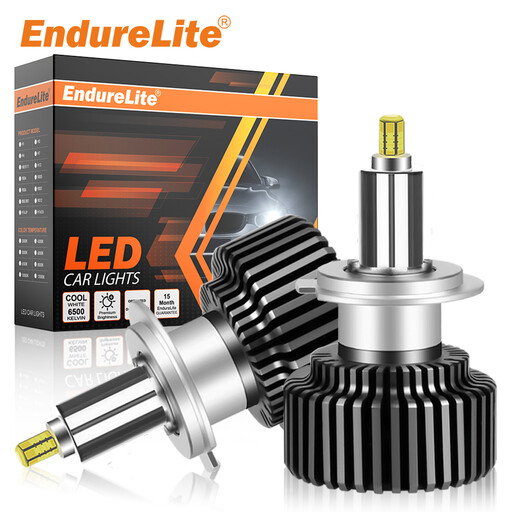
Why This Fits Their Persona: This user wants a straightforward, noticeable improvement over halogen without breaking the bank or spending hours on installation. This bulb is designed for a simple swap.
It directly addresses the beam pattern issue by simulating the original bulb's design, ensuring a focused beam without glare. The plug-and-play nature and built-in driver tackle the installation and basic compatibility traps.
Features a 6000K cool white colour for a modern look and an efficient cooling system with a fan to maintain brightness and longevity. The 'plug-n-play' design makes it ideal for a first-time upgrade.
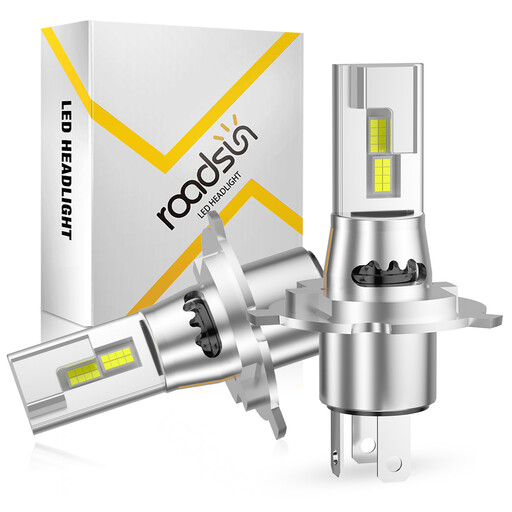
Why This Fits Their Persona: This driver relies on their vehicle daily, often in poor weather or on unlit roads. For them, reliability and long-term performance are paramount. They need a bulb that will not fail unexpectedly.
It directly counters the overheating trap with a high-performance 16,000RPM cooling fan and aviation aluminium housing. This focus on thermal management is designed to prevent dimming and extend the bulb's service life.
The combination of an IP68 waterproof rating and robust cooling makes it a dependable choice for all-weather driving. The 1:1 halogen size ensures a straightforward installation without modifications.
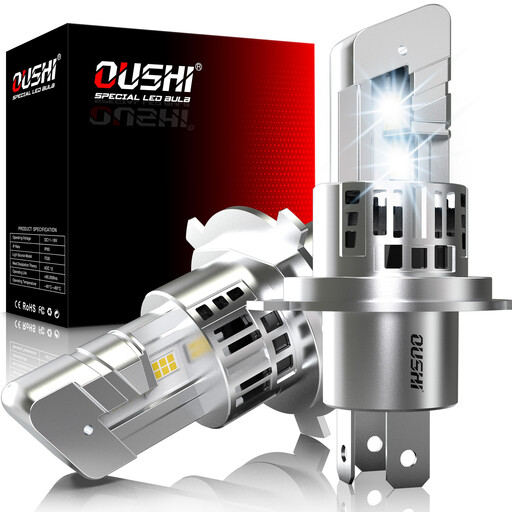
Why This Fits Their Persona: This driver prioritises maximum brightness and a sharp, modern aesthetic. They want the crispest, most powerful light output possible and are often driving vehicles with more complex electronics.
It addresses the CANbus trap by incorporating a latest-generation system specifically designed for higher compatibility with European vehicles, reducing the likelihood of errors or radio interference on sensitive cars.
Delivers a very high light output with a 6500K xenon white colour for maximum road clarity. The 1:1 mini size ensures it fits into the factory socket without modification, even with its powerful performance.
We have compiled a complete, real-time list of products that fully satisfy these strict selection criteria and UK safety regulations.
As of my last update, the rules for using LED bulbs in headlights designed for halogens are in a transitional phase. For an MOT, the beam pattern must be correct, not cause dazzle and the light colour must be white or yellow. High-quality H4 LED bulbs that accurately mimic the halogen filament position are designed to meet these beam pattern requirements. However, it is always advisable to check the latest DVSA guidelines and keep your original halogen bulbs to refit if necessary.
It depends entirely on your vehicle. Most Japanese and Korean cars are less likely to need one. Many modern cars from UK and European brands, particularly from the VAG Group (VW, Audi, Skoda), BMW and Mercedes-Benz, have more sensitive monitoring systems. If a bulb is advertised as "99% CANbus ready" and you still get a dashboard error, a simple external decoder is an easy and effective solution.
For the vast majority of vehicles, it is a very straightforward process. It typically involves opening the bonnet, removing the headlight dust cover, unplugging the old bulb, unclipping it and then reversing the process with the new LED bulb. No special tools are usually required, and the entire process can often be completed in 10-15 minutes. Always consult your vehicle's handbook first.