
24/7 Customer Support

Free returns

Same-day & Next-day Delivery

Quality Guaranteed

Unlock Your Welcome Offers: FREE Delivery | Up to 80% OFF | Free 30-day JoyPlus trial
Download the APP
Upgrading your car’s dim, yellow halogen bulbs to crisp, modern LEDs seems like a straightforward job. Yet, many UK drivers find themselves caught in a frustrating cycle of dashboard warning lights, flickering bulbs and light patterns that fail an MOT. The market is flooded with options, but not all are created equal, especially for modern vehicles with sensitive electronics.
As the Joybuy Product Recommendation Officer, my role is to help you navigate past the marketing clutter. Before you spend your money, be aware of these common pitfalls that catch out even savvy DIY enthusiasts:
To ensure your bright car light upgrade is a success, focus on these non-negotiable specifications.
Your car's computer uses a Controller Area Network (CANbus) to monitor all electronic systems, including the lighting. It expects to see a certain electrical resistance from a standard halogen bulb. Because LEDs use far less power, the CANbus system can misinterpret this as a blown bulb, triggering a warning light. A genuine CANbus error free LED car bulb has a built-in resistor (or 'load equaliser') that mimics the power draw of a halogen, satisfying the system and preventing errors. For sensitive European cars, look for bulbs specifically advertised with compatibility for these makes or those with more advanced integrated drivers.
Car bulbs are not interchangeable. The fitment code, such as H11, 9006 HB4 or T10, refers to the specific shape and size of the bulb's base. Using the wrong one simply won't work.
car interior LED lights, side markers and LED number plate bulbs typically use codes like T10 LED bulbs or the equivalent W5W 501 LED.Always check your vehicle's owner's manual or inspect the existing bulb to confirm the correct fitment code before purchasing. A plug and play car bulb is only plug and play if it's the right size.
For high-output headlight bulbs, the cooling system is paramount for longevity and consistent performance.
Instead of a generic list, we've matched specific bulbs to the UK drivers who will benefit most from them.
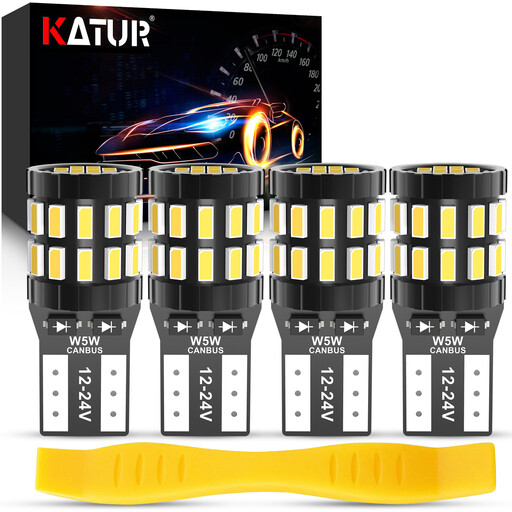
Why This Fits Their Persona: This user wants a simple, cost-effective and reliable upgrade for their car's interior map lights, door courtesy lights or number plate bulbs. They value a quick, error-free installation without needing complex tools or wiring.
It directly addresses the "Universal Error-Free" myth for smaller bulbs by incorporating a CANbus-compatible design that works on a high percentage of common UK vehicles for these low-power applications, preventing the typical T10 bulb error.
True plug-and-play installation takes minutes. The 360-degree viewing angle from its 30 SMD chipsets provides even illumination, eliminating the dark spots common with cheaper, single-LED bulbs.
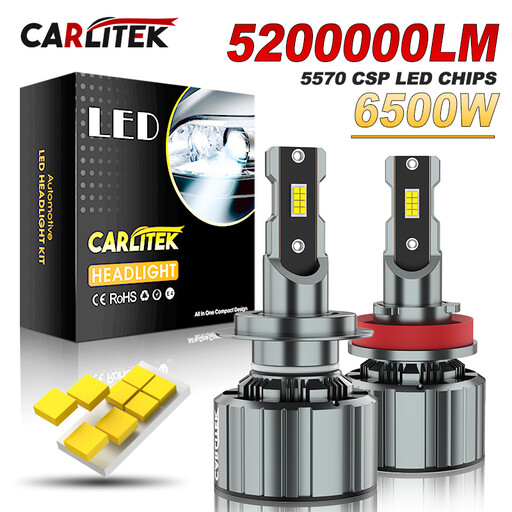
Why This Fits Their Persona: This driver prioritises safety and performance, frequently travelling on unlit B-roads or motorways at night. They need a significant increase in brightness and a reliable bulb that won't fail or dim during a long journey.
It tackles the overheating and beam pattern pitfalls head-on. The built-in 10,000 RPM fan provides active cooling to prevent dimming, while the 1:1 halogen filament design helps ensure a focused beam that illuminates the road, not oncoming traffic.
The compact, all-in-one design with a built-in CANbus driver simplifies installation, as there are no external boxes or wires to fit into the headlight housing. The IP68 waterproof rating adds durability for UK weather.
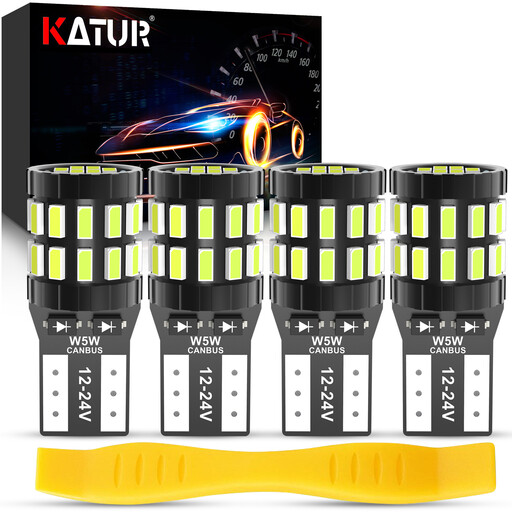
Why This Fits Their Persona: This driver is looking to personalise their vehicle's appearance. They want to replace the standard yellow interior lights with a modern, distinctive colour to enhance the cabin's aesthetic, without causing electronic issues.
By offering a simple, plug-and-play coloured bulb with CANbus compatibility, it allows for aesthetic customisation without the headache of dashboard errors. It's a modification that looks good and doesn't upset the car's electronics.
The vibrant "Ice Blue" colour provides a unique and premium look for interior lighting. The 12-24V operating voltage gives it wide compatibility with cars, vans and other vehicles.
We have compiled a complete, real-time list of products that fully satisfy these strict selection criteria and UK safety regulations.
For interior lights, number plates and side repeaters, LED upgrades are generally acceptable. For headlights, the situation is more complex. Since 2021, fitting aftermarket LED bulbs into a headlight unit originally designed for halogen bulbs is an MOT failure if the beam pattern is incorrect. While many high-quality LEDs are designed to mimic a halogen beam, legality can be a grey area. It is always advisable to check the latest DVSA guidelines and ensure your beam pattern is correctly aligned and does not cause glare.
Yes, absolutely. A CANbus-ready bulb will function perfectly as a normal LED bulb in a non-CANbus vehicle. The built-in resistor that prevents errors in modern cars will simply be inactive, drawing no extra power and causing no harm to the older car's simpler electrical system.
This usually happens with highly sensitive vehicle monitoring systems, common in premium German brands like Audi, BMW and Mercedes-Benz. Their CANbus systems perform very precise resistance checks. In these cases, the bulb's built-in resistor may not be sufficient. You might need an additional, more powerful external CANbus decoder or resistor wired in-line with the bulb to fully resolve the error message.