
24/7 Customer Support

Free returns

Same-day & Next-day Delivery

Quality Guaranteed

Unlock Your Welcome Offers: FREE Delivery | Up to 80% OFF | Free 30-day JoyPlus trial
Download the APP
Driving on poorly lit British roads with standard halogen headlights can feel like navigating by candlelight. The dim, yellowish glow struggles to cut through rain and fog, reducing visibility and reaction times. A car headlight upgrade to modern H4 LED bulbs seems like a straightforward solution, promising a brighter, safer journey. However, the market is flooded with options, and it's easy to make a costly mistake.
As a Joybuy Product Recommendation Officer, my role is to help you see through the marketing clutter. Before you buy, be aware of these common pitfalls that catch out many UK drivers.
To make a smart purchase, focus on the technical details that determine real-world performance and safety. Here are the three non-negotiable factors to check for any H4 LED headlight bulbs.
An H4 bulb, also known as a 9003 HB2 LED bulb, contains two filaments to provide both high and low beam H4 bulbs in a single unit. The most critical feature of an LED replacement is its ability to precisely replicate the beam pattern of the original halogen bulb.
Look for bulbs described as having a 1:1 halogen design or "ultra-thin chip spacing." This ensures the light is focused correctly onto the road, creating a sharp cut-off line on the low beam to avoid dazzling other road users and providing long-range visibility on the high beam. A correct beam pattern is not just a courtesy; it's a fundamental safety requirement.
Colour temperature is measured in Kelvin (K) and describes the colour of the light. Standard halogens are typically around 3200K, producing a warm, yellow light. Most LED upgrades are in the 6000K cool white car bulbs to 6500K range.
For UK driving conditions, a bulb around 6000K offers an excellent balance of clarity, style and all-weather performance.
The Controller Area Network (CANbus) is your car's internal computer system. It monitors various components, including the headlights. Because LEDs use far less power than halogens, the CANbus system can mistakenly think a bulb has failed, leading to a dashboard error message.
To prevent this, look for CANbus ready LED headlights. These bulbs have built-in resistors or circuitry to communicate correctly with the car's computer. While many are advertised as "99% compatible," some sensitive vehicles (often from German manufacturers) may still require an additional external decoder. Always check the product details for any specific exclusions.
To simplify your choice, we've matched some H4 LED options to different driver needs. These selections are based on their design, features and how well they address the common purchasing pitfalls.
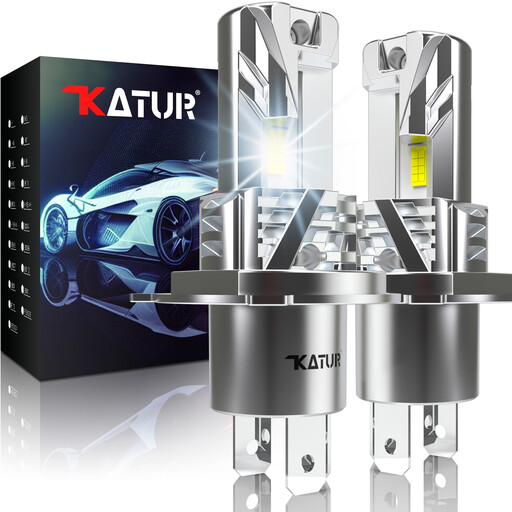
Why This Fits Their Persona: Ideal for the driver who wants a significant and affordable car light replacement without the complexity. The fanless design and 1:1 mini size make it a great choice for a first-time DIY upgrade, especially on cars with tight headlight housings.
The fanless design eliminates a common point of failure (the cooling fan), addressing the overheating and early burnout issue with a simple, reliable solution.
Its compact, 1:1 halogen size ensures a true plug-and-play fit in most vehicles without needing to modify the dust cap, simplifying installation.
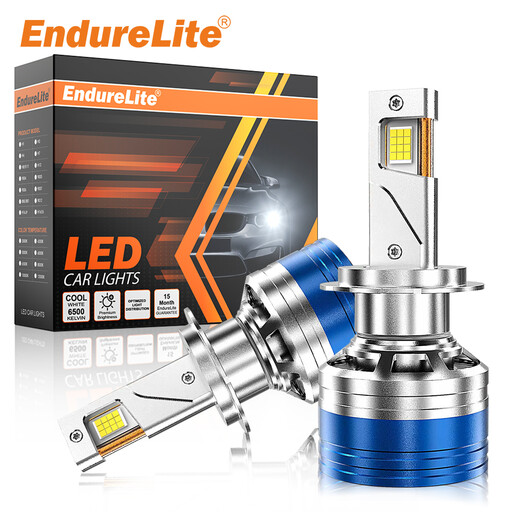
Why This Fits Their Persona: Perfect for the driver who relies on their car daily and prioritises safety and reliability. This bulb is built for longevity and compatibility, making it a dependable choice for frequent night-time driving on motorways and country lanes.
It directly tackles the "Plug and Play" myth by incorporating a CANbus ready design, making it compatible with 99% of vehicle systems to reduce the risk of error warnings or flickering.
The design focuses on simulating the original halogen beam pattern, which avoids scattering light and prevents dazzling oncoming traffic—a key safety and compliance feature.
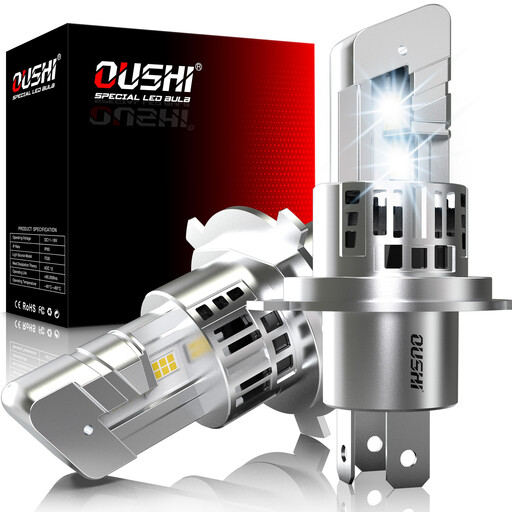
Why This Fits Their Persona: For the enthusiast who wants a substantial increase in light output for maximum visibility. The high lumen rating, combined with an active cooling system, is suited for those who demand high performance from their vehicle's components.
While it has a high brightness claim, it pairs this with a high-speed turbo fan and aviation aluminium housing. This robust cooling system is designed to manage the heat from the powerful chips, countering the overheating flaw.
It features an advanced CANbus system with stated suitability for European vehicles, offering a higher chance of error-free installation on more sensitive cars.
We have compiled a complete, real-time list of products that fully satisfy these strict selection criteria and UK safety regulations.
This is a critical point. For a headlight to be road legal in the UK, the bulb and the headlamp unit it is fitted into must be designed for each other and be E-marked as a complete system. Many aftermarket LED bulbs are sold for "off-road use only" because they haven't been type-approved with specific headlight units. While a well-designed LED with a perfect beam pattern may not cause issues, you should always check the latest DVSA guidelines and be aware that fitting them may be a technical breach of regulations.
It depends on your vehicle. Many modern bright H4 bulbs UK models come with a "CANbus ready" driver built-in, which works for the majority of cars. However, vehicles from brands like Audi, BMW, Volkswagen and Mercedes-Benz often have more sensitive monitoring systems and may still require an additional, external CANbus decoder to prevent dashboard errors. The general advice is to install the bulbs first and only add a decoder if you experience flickering or a warning light.
For most vehicles, replacing an H4 bulb is a relatively simple DIY task. They are designed to be a direct swap for the original halogen bulb, twisting and locking into the same socket. The main difficulty can be physical access to the back of the headlight unit, which can be tight on some car models. Always ensure the car is off and the old bulbs have cooled down before you begin the replacement.