
24/7 Customer Support

Free returns

Same-day & Next-day Delivery

Quality Guaranteed

Unlock Your Welcome Offers: FREE Delivery | Up to 80% OFF | Free 30-day JoyPlus trial
Download the APP
Replacing standard halogen bulbs with HB3 9005 LED headlight bulbs can provide a cooler white appearance, faster start-up and a more compact lighting unit. However, choosing by lumen figures alone can lead to poor beam control, dashboard warnings or bulbs that do not fit behind the original dust cover.
This guide explains the practical checks to make before buying 9005 LED bulbs, whether you need them for headlights, driving lights, fog lights, an SUV, truck, motorcycle or powersport vehicle.
Listings often focus on figures such as 20,000LM or 30,000LM. These numbers may describe the pair rather than each bulb, and they do not automatically indicate how well light is distributed on the road. An LED bulb with poor chip positioning can create dark spots, scattered light or glare for oncoming drivers.
Look for a 1:1 LED replacement design, thin chip placement and a stated beam-pattern focus. After fitting, the headlight aim should still be checked rather than assuming the original alignment is unchanged.
A bulb may use the correct HB3 or 9005 connector but still produce flickering or a dashboard error on a vehicle with sensitive lighting electronics. CANbus-ready LED bulbs reduce this risk, but “ready” does not mean guaranteed compatibility with every car.
Always confirm the original bulb number in the vehicle handbook, on the removed bulb or through a reliable parts catalogue. Check the product’s voltage range and whether there is sufficient room for a fan, heat sink or external driver.
LEDs use less energy than many halogen bulbs, but the chips still generate heat. A small bulb with weak heat dissipation may suffer from reduced output or a shortened service life. Fan-cooled models can move heat quickly, while fanless designs avoid moving parts and operating noise.
Consider the available space, weather exposure and whether the vehicle is used regularly at night. A fanless mini bulb may suit a tight housing, whereas a turbo-fan model may appeal to drivers who prioritise active cooling.
HB3 and 9005 are commonly used to describe the same bulb format, but the vehicle application still needs checking. Confirm:
A compact all-in-one design can be useful where the factory housing has limited space. External drivers or bulky wiring may require additional room and careful routing.
A 6000K LED headlight bulb generally produces a cool white appearance, while 6500K appears slightly bluer. Colour temperature is not the same as brightness or road coverage. For everyday driving, the beam shape, alignment and usable contrast matter more than colour alone.
A 1:1 replacement should position the LED chips similarly to the original filament. This helps the reflector or projector create a more controlled beam. Once installed, check the cut-off and aim on level ground. UK drivers should also verify that the conversion complies with the vehicle’s lighting requirements and does not create glare or an unsuitable beam.
Look for an aluminium housing, heat sink or integrated fan, plus a stated water and dust-resistance rating. IP65 and IP68 ratings refer to protection conditions under defined testing; they should not be treated as a guarantee for every installation environment.
For vehicles prone to bulb warnings, an integrated intelligent driver and CANbus-ready design may help reduce errors, flickering and radio interference. Nevertheless, retain the original bulbs until the replacement has been tested in both the vehicle’s high- and low-beam functions, where applicable.
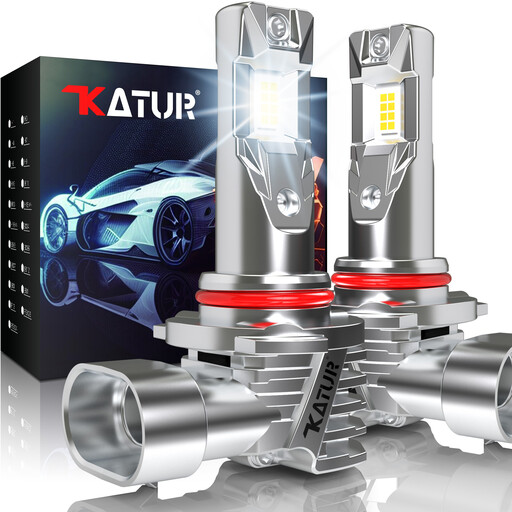
Why This Fits Their Persona: The compact fanless design suits drivers seeking a straightforward replacement for a daily car, SUV or truck without adding a separate driver or bulky wiring.
Its fanless construction avoids reliance on a moving cooling fan, while the 1:1 mini halogen format is designed for tight original housings.
6000K white output, 26,000LM stated pair output, fanless cooling and direct plug-and-play installation.
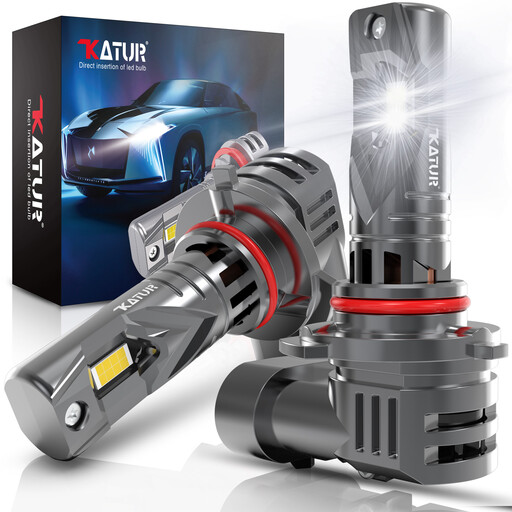
Why This Fits Their Persona: This option suits drivers wanting a high-output, compact upgrade for frequent night-time commuting while retaining a factory-style installation.
The stated 1:1 format, integrated driver and 98% CANbus-ready specification address fit and electronic compatibility concerns, subject to vehicle confirmation.
6000K colour temperature, 30,000LM stated pair output, 16,000RPM turbo fan and IP65 water resistance.
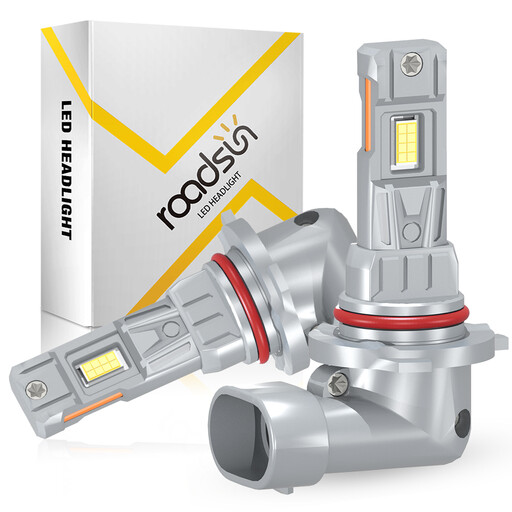
Why This Fits Their Persona: Its stated waterproof, dustproof and shockproof construction makes it suitable for trucks, motorcycles, ATVs and vehicles used in wet or dusty conditions.
The 1:1 mini design reduces housing-fit concerns, while the listed environmental protection features address regular exposure to rain, dust and vibration.
6000K cool white light, 1:1 direct installation, stated 70,000+ hour operating life and -40°C to +80°C temperature range.
LED replacements may reduce electrical consumption compared with some halogen bulbs, but actual savings depend on wattage, driving hours and the vehicle’s charging system. Advertised service-life figures such as 50,000 or 60,000 hours are product specifications rather than a guarantee of real-world duration. Heat, vibration, moisture and operating conditions all affect longevity.
We have compiled a complete, real-time list of products that fully satisfy these strict selection criteria and UK safety regulations.
HB3 and 9005 are commonly used for the same bulb format, but always confirm the vehicle’s original bulb number. Socket shape alone does not confirm that the bulb is suitable for every lighting position.
Some vehicles work without an additional decoder, while others may show a warning or flicker after conversion. CANbus-ready LED bulbs can reduce this risk, but compatibility depends on the vehicle’s lighting electronics. Check the product information and retain the original bulbs until installation is confirmed.
Many listings state operating lives of 50,000 hours or more. Treat this as a manufacturer specification, not a fixed guarantee. Correct installation, effective cooling, a sealed housing and suitable vehicle voltage can all influence service life.