
24/7 Customer Support

Free returns

Same-day & Next-day Delivery

Quality Guaranteed

Unlock Your Welcome Offers: FREE Delivery | Up to 80% OFF | Free 30-day JoyPlus trial
Download the APP
Lion’s Mane supplements are available as capsules, tablets, powders and multi-mushroom blends, but comparing them can be difficult. A large number on the front of a packet does not always mean a larger amount of actual mushroom, while terms such as “high strength”, “dual extract” and “brain support” may describe very different formulations.
For UK shoppers, the sensible approach is to look beyond the headline claim. Check the mushroom material used, the extraction method, standardised compounds, serving size and dietary suitability before paying more.
A label may say “4,000mg equivalent” while the actual extract weighs only a few hundred milligrams. This usually reflects a concentration ratio, such as 12:1 or 30:1, rather than 4,000mg of powder inside the tablet.
Neither figure is automatically preferable. The useful comparison is the actual serving size, extraction ratio and any declared polysaccharide or beta-glucan content.
Lion’s Mane can be made from fruiting bodies, mycelium, whole mushroom powder or a combination. Fruiting-body products may appeal to shoppers who want the mushroom structure specifically stated on the label. However, “fruiting body” alone does not tell you the concentration or extraction quality.
Look for a full ingredients list and avoid relying solely on vague phrases such as “mushroom complex” or “natural nootropic”.
Capsules and tablets are convenient, but powders can be mixed into smoothies, yoghurt or soup. A powder may suit someone who dislikes swallowing tablets, while a capsule may be more practical for commuting or travel.
A product that is easy to take consistently can offer better value than a larger pack that is regularly forgotten in the cupboard.
A Lion’s Mane powder is generally closer to the ground mushroom ingredient and may have a milder specification profile. An extract has undergone a concentration process and may display a DER, such as 12:1 or 30:1. This ratio indicates the quantity of raw material represented by the extract; it does not by itself confirm the amount of every active compound.
If you want a straightforward ingredient, check whether the product contains 100% organic Lion’s Mane. If you want a concentrated product, compare the extract weight and standardised values per daily serving.
Polysaccharides are a broad group of compounds, while beta-glucans are a specific type. A label stating “40% polysaccharides” should not automatically be read as “40% beta-glucans”.
For example, Osavi lists 600mg of fruiting-body extract per capsule, with a minimum of 240mg polysaccharides and 120mg beta-glucans. Other products provide different serving sizes, so compare like for like: per capsule versus per two-capsule serving.
A dual-extract Lion’s Mane product uses more than one extraction approach. Product descriptions may refer to water-soluble and alcohol-soluble fractions, but shoppers should treat these as manufacturing details rather than guaranteed health outcomes.
Also check excipients, capsule material and allergens. Vegan mushroom supplements commonly use hydroxypropyl methylcellulose shells. Those avoiding gluten, dairy, soya or added sugar should still read the current product label, as formulations can change.
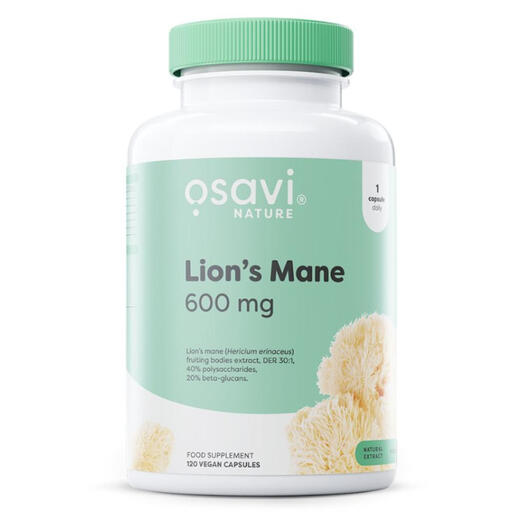
Why This Fits Their Persona: A simple one-capsule daily format gives first-time buyers a clear starting point without a multi-ingredient blend.
The label states 600mg per capsule and identifies fruiting-body extract, polysaccharides and beta-glucans separately.
One capsule daily; vegan capsule shell; 120-capsule option also available in the range.
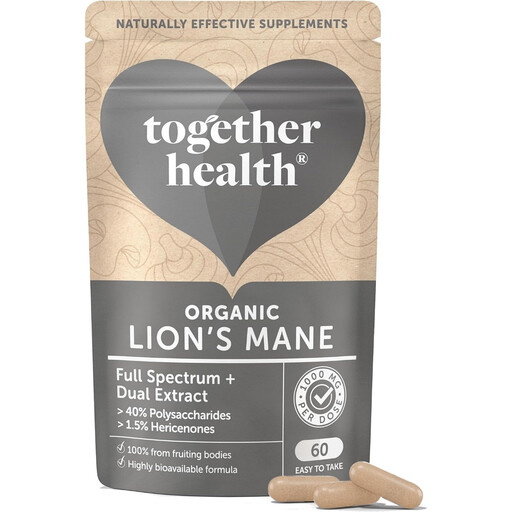
Why This Fits Their Persona: Suits shoppers who prioritise organic sourcing, fruiting-body content and a more detailed extract specification.
The product specifies 100% organic fruiting bodies, a 20:1 dual extract and a 1:1 full-spectrum extract.
Two-capsule serving; over 40% polysaccharides and more than 30% beta-glucans stated on the product information.
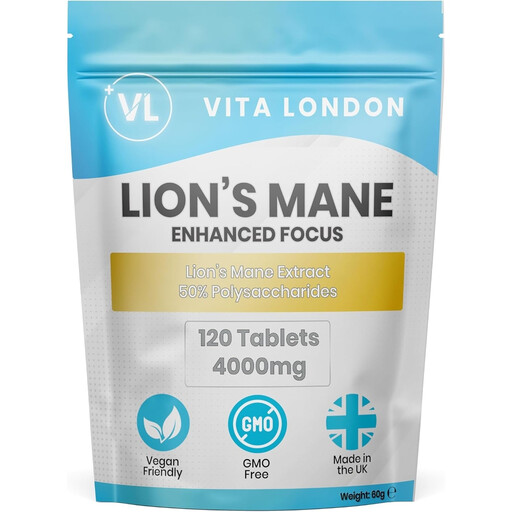
Why This Fits Their Persona: A practical choice for adults who prefer tablets and want a longer 60-day format for a regular routine.
The 4,000mg figure is clearly described as a daily equivalent from a 12:1 fruiting-body extract, rather than the tablet weight.
Two tablets daily; 120 tablets per pouch; vegan and free from gluten, wheat, soya and dairy according to the listing.
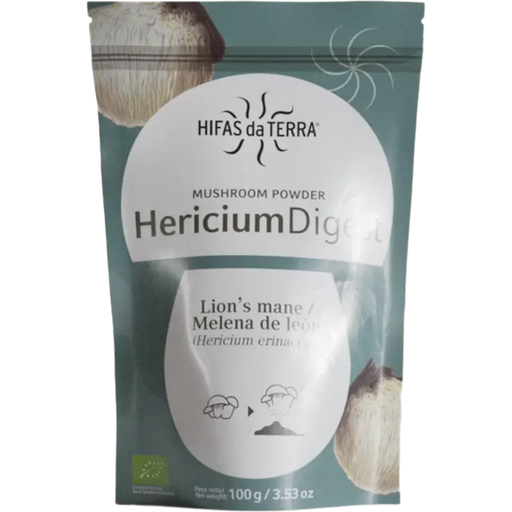
Why This Fits Their Persona: Works for shoppers who prefer adding a powder to smoothies, yoghurt, soups or other foods.
It is presented as organic Lion’s Mane powder, so shoppers are not comparing an extract-equivalent figure with a raw powder unknowingly.
The listing states 51.8g fibre per 100g and suitability for vegan, vegetarian, gluten-free and dairy-free diets.
We have compiled a complete, real-time list of products that fully satisfy these strict selection criteria and UK safety regulations.
Follow the serving instructions on the product label. Depending on the format, this may mean one capsule, two capsules or a measured amount of powder daily. Do not exceed the stated dose, and check whether the manufacturer recommends taking it with food.
Shelf life varies by product and should be checked on the packaging. Store capsules, tablets and powders in a cool, dry place away from sunlight and moisture, and keep them out of reach of children. Do not use a product if its seal is damaged.
They are food supplements for adults, not medicines and not a substitute for a varied, balanced diet or healthy lifestyle. Anyone who is pregnant, breastfeeding, taking prescription medication, under medical supervision or managing a medical condition should seek advice from a healthcare professional before use. Always check the current label for allergens and age restrictions.