
24/7 Customer Support

Free returns

Same-day & Next-day Delivery

Quality Guaranteed

Unlock Your Welcome Offers: FREE Delivery | Up to 80% OFF | Free 30-day JoyPlus trial
Download the APP
Handmade cards can look highly personalised, but the wrong die can quickly turn an enjoyable project into a frustrating one. When shopping for metal cutting dies for card making, UK crafters often focus on the picture shown in the listing and overlook the practical details: machine compatibility, finished size and whether the set contains cutting dies, embossing stencils or both.
A thoughtful purchase starts with understanding what the die can realistically do and how often you are likely to use it.
Most metal dies are designed for use with manual die-cutting machines, but the required sandwich configuration can vary. A die that works with one machine may need a different cutting plate arrangement on another. Listings may not always specify this clearly.
Before ordering, check:
Do not force a die through a machine if the platform feels unusually tight. This can damage plates or affect the machine’s rollers.
Product photography can show finished cards, stamps, paper and embellishments that are not included. Look carefully for wording such as “only cutting dies” or a stated contents list.
For example, a layered floral product may be shown with stamped details, while the package contains only the metal dies. This is not necessarily a problem, but it matters if you expect a complete cardmaking kit.
Fine patterns, narrow borders and complex lettering can produce attractive results, but they may require more careful preparation. Very detailed scrapbooking cutting dies can also leave small paper pieces inside the design, increasing the need for a die brush, pick or release paper.
For regular batch-making, a simpler design may be more practical than a highly intricate one.
Many listings describe dies as metal or carbon steel. A carbon steel die is intended to provide a firm cutting edge for paper and card, but the result still depends on the machine, plate condition and material being cut.
For everyday card making, look for:
Avoid treating terms such as “durable” as a guarantee of lifespan. Storage, pressure settings and repeated use all influence how long a die remains practical.
Measure your card blanks before buying. A large frame may suit an A5 card, while a small flower or leaf may be more useful as a layered embellishment.
Useful formats include:
Check whether the set contains one size or several nested sizes. A multi-size set usually offers more layout flexibility than a single outline.
A cutting die separates paper along an outline. An embossing stencil or embossing-compatible die creates a raised or pressed pattern without necessarily removing the paper. Some products combine both functions, while others use the terms loosely.
If texture is important, confirm that your machine and accessories support embossing. If you only need silhouettes or lettering, a standard cutting die may be sufficient.
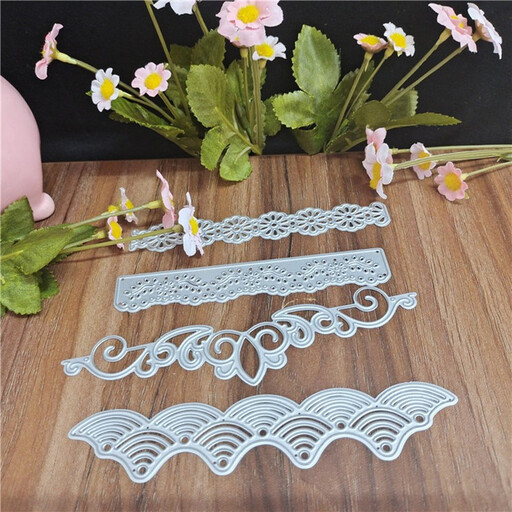
Why This Fits Their Persona: A four-piece set gives new crafters several templates to try without committing to a large themed collection.
The listing identifies the set as carbon steel and states that it is intended for DIY craft and paper card making, making the material and use clearer.
Four templates in one listing; suitable for paper card-making projects and embossing applications.
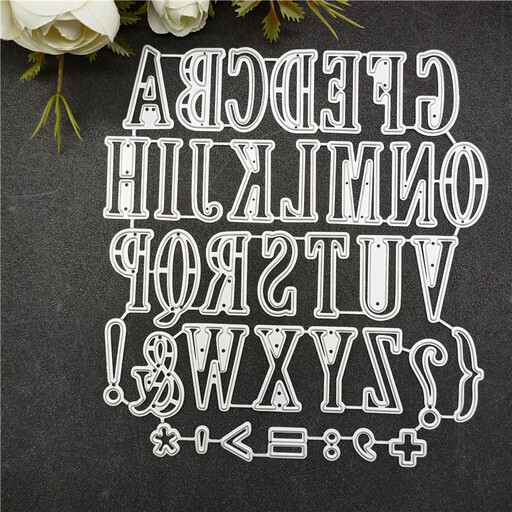
Why This Fits Their Persona: Personalised card makers can use a complete capital-letter set for names, initials, headings and decorative words.
The stated contents specify 26 capital letters, helping shoppers distinguish an alphabet set from a smaller selection of decorative characters.
Includes 26 capital letter dies; suitable for scrapbooking, albums, card making and paper crafts.
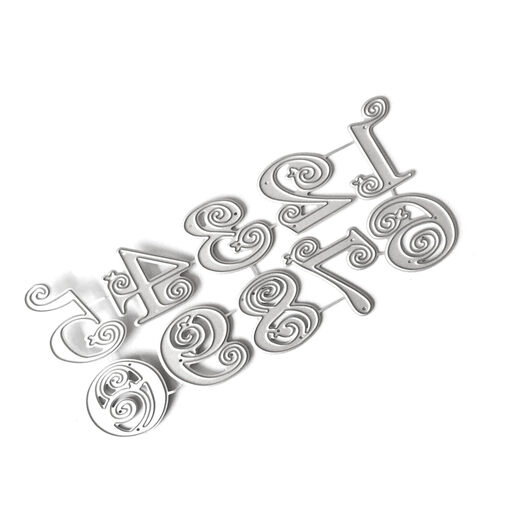
Why This Fits Their Persona: Useful for crafters producing birthday, anniversary and milestone cards where numbers are repeatedly required.
The product is specifically described as number cutting dies and carbon steel die-cut templates, rather than a general decorative set.
Designed for numbers; listed for card making, scrapbooking, packaging and paper craft embellishment.
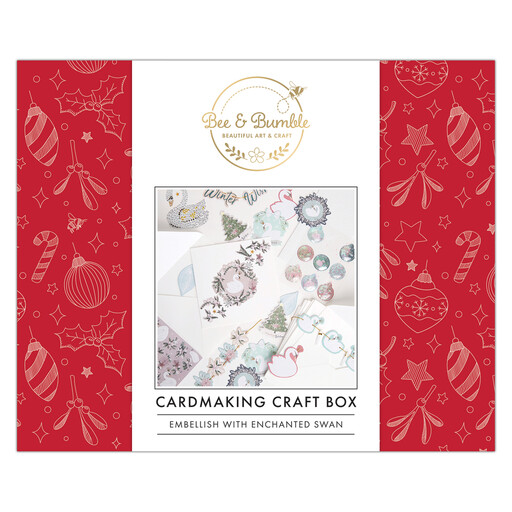
Why This Fits Their Persona: A ready-to-use option for seasonal gifting, particularly when you want coordinated cards without sourcing every embellishment separately.
The listed contents clearly include 10 cards with envelopes, die-cut toppers, 3D decoupage, foam squares, stickers and embellishments.
Includes cards and envelopes; coordinated seasonal components; small parts warning is provided in the listing.
Use a clean cutting plate and place the paper squarely over the die. For detailed paper craft dies, a piece of waxed or release paper can make removing the cut shape easier. If a design has many narrow gaps, use a small brush or pick rather than bending the metal.
Store dies flat or in labelled pockets. Keeping flower cutting dies, alphabet die sets and border dies separated makes it easier to find the correct design and reduces the chance of edges catching on loose materials.
For children’s craft sessions, supervise the use of die-cutting machines and keep small pieces away from young children. Follow the product warnings and the machine manufacturer’s instructions.
No. Compatibility depends on the machine’s platform, cutting plates and recommended material thickness. Check the machine manual and product dimensions before ordering. When information is unclear, contact the seller rather than relying only on the product photograph.
There is no fixed lifespan. Frequency of use, card thickness, cutting pressure and plate wear all affect performance. A die used occasionally on paper may remain useful for a long time, while repeated use on thicker card can cause the cutting edge and plates to wear sooner.
They can be economical for repeated designs because one die may be used across multiple cards and scrapbook pages. However, you may also need a compatible machine, plates, card, adhesive and storage. A ready-made cardmaking kit can be more convenient when you want coordinated components and envelopes in one purchase.