
24/7 全天候客户支持

免费退货

当日/次日达

品质保障

开启新人专享福利: 全场免邮 | 低至 2 折 | 免费试用 30 天 JoyPlus 会员
下载 Joybuy
A peaceful night's sleep is invaluable, especially during those warm, stuffy British summer nights. Yet, the search for a quiet fan for your bedroom often ends in frustration. You buy a fan promising silent operation, only to be kept awake by a persistent hum, rattle or an airflow that’s either a gale force or barely there.
As a Product Recommendation Officer at Joybuy, I see where many shoppers go wrong. It's easy to be misled by clever marketing. Before you make another purchase you regret, let's look at the common pitfalls that prevent you from getting the quiet, comfortable sleep you deserve.
To avoid these traps, focus on the technical specifications that actually matter for performance and quietness. Here are the non-negotiable factors to check before you buy.
The noise a fan produces is measured in decibels (dB). Without context, these numbers are meaningless. Here’s a simple guide:
Actionable Tip: Look for the dB rating at a medium speed setting, not just the lowest. A quality manufacturer will be transparent about noise levels across the fan's operational range.
The single most important feature for a modern, quiet cooling fan is a DC (Direct Current) motor. Unlike their AC counterparts, DC motors are:
For any bedroom fan in the UK, a DC motor should be a primary consideration for both comfort and long-term running costs.
The right design can enhance both performance and usability.
Features like a tower fan with a remote, a sleep timer and multiple oscillation modes add a layer of convenience that makes a real difference in day-to-day use.
Based on these criteria, we've matched a few standout models to different user needs. These recommendations focus on products that deliver on their promise of quiet, effective cooling.
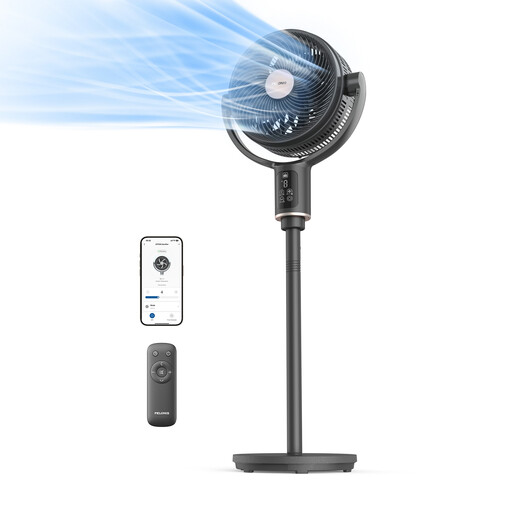
Why This Fits Their Persona: This fan is designed for those who value undisturbed sleep and modern convenience. Its ultra-low noise level is perfect for light sleepers, while smart home integration allows for effortless control without getting out of bed.
It directly counters the "whisper-quiet" myth by specifying an impressively low 24dB noise level and features a DC motor, addressing the core issues of noise and energy inefficiency.
Smart control via Alexa or an app, combined with 3D oscillation for whole-room air circulation. The dual-layer blade design creates a powerful but soft airflow.
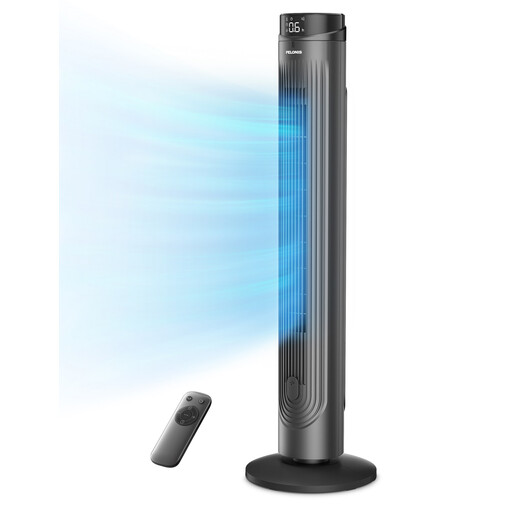
Why This Fits Their Persona: Ideal for families with young children or pets. The bladeless design eliminates the danger of fast-spinning blades, while its quiet DC motor ensures it won't disturb a sleeping baby in a nursery or a family in the living room.
This fan prioritises quiet, safe operation over raw power. The combination of a bladeless system and an efficient DC motor delivers smooth airflow without the noise and safety concerns of traditional fans.
Its primary advantage is safety, with no external moving parts. It also features 12 speed settings and a 24-hour timer, offering precise control and energy savings.
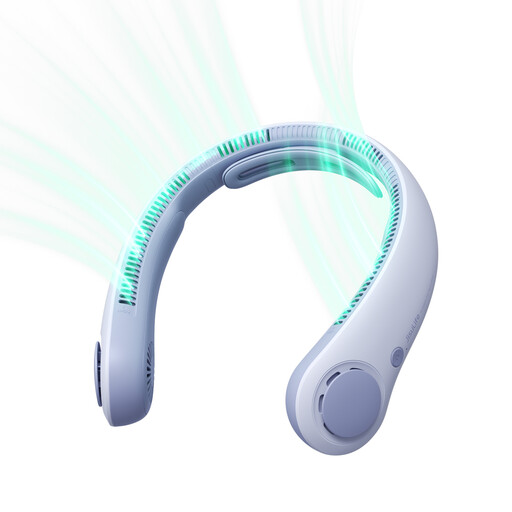
Why This Fits Their Persona: Perfect for the home office worker, commuter or anyone needing a targeted cool breeze without a large appliance. It provides hands-free cooling that is quiet enough not to disturb colleagues or be intrusive on public transport.
It sidesteps the room-fan traps entirely by focusing on personal space. Its quiet, bladeless operation delivers effective cooling directly to you, eliminating the need for a larger, noisier fan for a single person.
This is a fully rechargeable fan with a long-lasting 5000mAh battery (up to 16.5 hours). Its lightweight, hands-free design offers unmatched portability and convenience.
We have compiled a complete, real-time list of products that fully satisfy these strict selection criteria and UK safety regulations.
1. How much does it cost to run an energy-efficient fan all night? An energy efficient fan with a DC motor is very affordable to run. A typical 30W DC fan running for 8 hours overnight would use approximately 0.24 kWh of electricity. Based on average UK electricity rates, this would cost only a few pence per night, making it a very economical cooling solution.
2. What is the quietest type of fan for sleeping? Generally, tower fans and pedestal fans equipped with a DC motor are the quietest options for bedroom use. Their design is optimised for smooth, non-turbulent airflow. Models that are specifically marketed with a low decibel rating (under 30dB) and feature multiple, finely-tuned speed settings will provide the most peaceful experience.
3. Are bladeless fans completely silent? While the term "bladeless" suggests silence, these fans still generate sound. The noise comes from the motor in the base that draws in air and pushes it out through the circular amplifier. However, high-quality bladeless fan quiet models are engineered to keep this noise to a minimum, often making them quieter than conventional bladed fans at comparable airflow levels. Their main benefits remain the consistent, smooth airflow and improved safety.