
24/7 全天候客户支持

免费退货

当日/次日达

品质保障

开启新人专享福利: 全场免邮 | 低至 2 折 | 免费试用 30 天 JoyPlus 会员
下载 Joybuy
A robot lawn mower can reduce the time spent pushing, emptying and storing a conventional machine, but choosing one involves more than comparing cutting widths or battery capacity. UK gardens vary considerably, from compact, level lawns to sloping plots with borders, trees, furniture and narrow passages.
Several buying traps can make an automatic lawn mower unsuitable after installation:
Check the manufacturer’s stated maximum mowing area, rather than relying on garden size. The eufy E15 is specified for lawns up to 800 m², while the eufy E18 is designed for up to 1,200 m².
A GPS lawn mower or AI lawn mower may use cameras, satellite positioning, Wi-Fi or 4G to map and manage the garden. These systems are not interchangeable:
Always compare your lawn with the product’s limits. The eufy E15 and E18 are specified for slopes of up to 40% or 18°, with lawn height differences below 3 cm. These figures are practical screening tools: steep ramps, exposed roots and abrupt transitions may still cause problems even when the overall slope appears acceptable.
Grass compatibility also matters. The E18 is not intended for St Augustine grass or carpet grass, while the E15 is not suitable for St Augustine or dense Zoysia grass. If your lawn contains an unusual or dense grass variety, confirm suitability before ordering.
A robot mower generally trims gradually and repeatedly, while a cordless lawn mower, electric lawn mower or petrol lawn mower usually cuts the full lawn in one session. Consider:
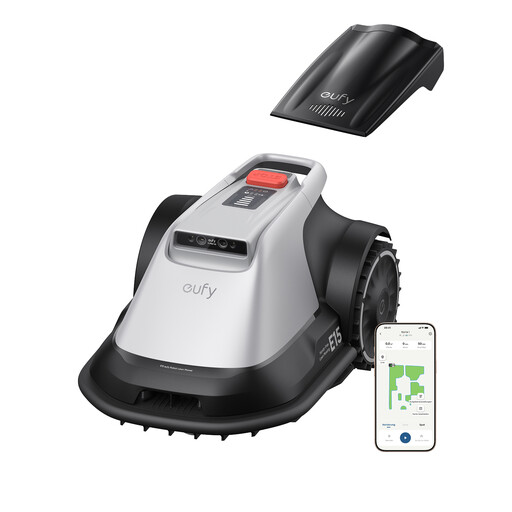
Why This Fits Their Persona: Its 800 m² coverage suits many small to medium UK lawns, while wire-free mapping avoids the cable installation associated with traditional robotic mowers.
The stated lawn-size, slope and height-difference limits make it easier to check suitability before purchase rather than relying on vague “all gardens” wording.
Hands-free auto-mapping, app control, 3D obstacle detection and edge cutting; Wi-Fi or 4G connectivity is supported.
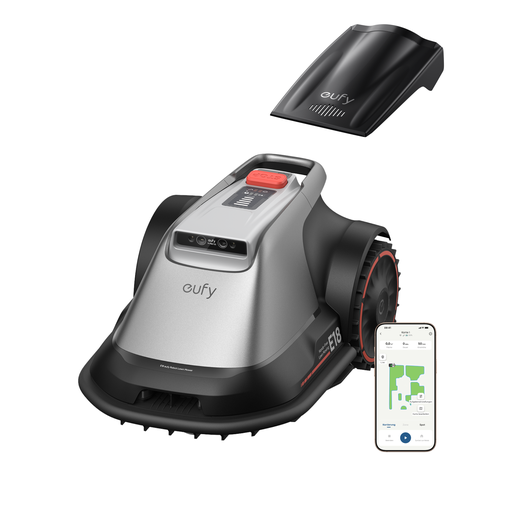
Why This Fits Their Persona: This model is aimed at homeowners with lawns up to 1,200 m² who want app-based scheduling, automatic mapping and monitoring without boundary cables.
Its specified terrain and grass restrictions highlight why checking garden conditions is essential before choosing a higher-coverage machine.
Pure vision mapping, GPS tracking with 4G support, automatic obstacle avoidance and 2-in-1 mowing and edge trimming.
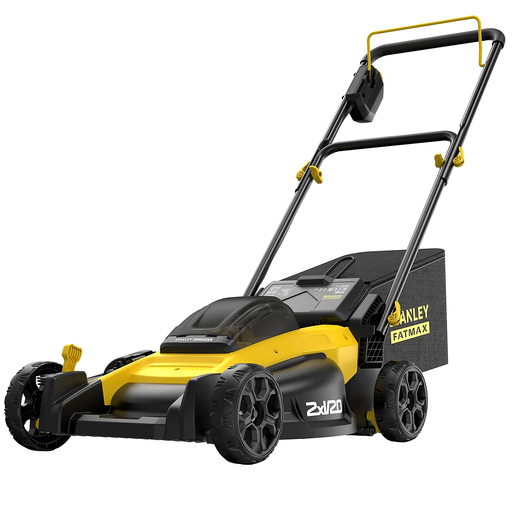
Why This Fits Their Persona: Choose this cordless lawn mower when you want manual control, a wide 51 cm deck and multiple cutting or collection methods for lawns up to 750 m².
It avoids relying on automated navigation when you need to handle changing areas, longer grass or specific mowing directions yourself.
Brushless motor, two 4.0Ah batteries, 40L bag, folding handles and mulching, side-discharge or bagging functions.
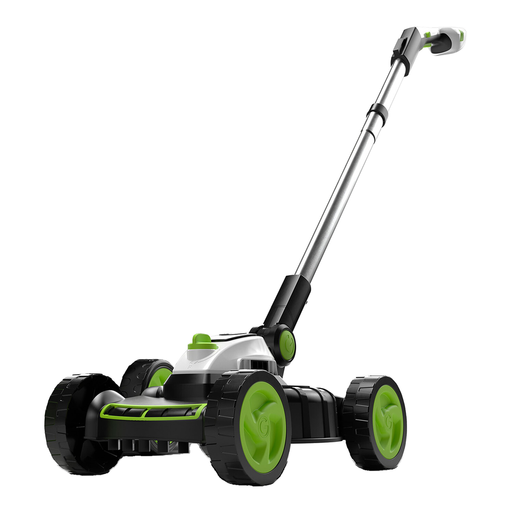
Why This Fits Their Persona: At 3.5 kg with a 25 cm cutting width, this compact cordless mower suits narrow lawns, has a small footprint and fits beneath garden furniture.
Its stated 100 m² coverage prevents small-garden buyers from paying for capacity they may not use.
Up to 30 minutes’ runtime, four-stage battery display, one-hand manoeuvrability and a low-profile handle.
A robot lawn mower is suitable when you value scheduled maintenance and have a compatible, reasonably clear lawn. A cordless lawn mower offers more control without a power cable, while a corded electric lawn mower can be practical near an outdoor socket. The VonHaus 1200W model has a 10 m cable, 32 cm cutting width, three height settings and a 30L basket.
For larger or uneven areas, a self-propelled lawn mower can reduce pushing effort. The VonHaus 132cc petrol lawnmower has a 40 cm cutting width, seven height settings from 25–70 mm and a 40L collector. Petrol models require fuel, engine maintenance and suitable storage, so compare running costs and convenience rather than focusing only on engine power.
We have compiled a complete, real-time list of products that fully satisfy these strict selection criteria and UK safety regulations.
Not always. Wire-free models use mapping systems such as cameras, positioning technology and app setup instead of perimeter cable. They still need a suitable lawn layout, a usable connection and careful initial mapping.
Running costs include electricity for charging, replacement blades and possible mobile-data fees. A model using 4G may require a subscription, depending on the manufacturer’s arrangement. Compare these ongoing costs with petrol, fuel storage and engine servicing before buying.
This depends on the product and its operating instructions. Some models include automatic recall or reverse functions for rain and poor visibility, but buyers should still follow the manufacturer’s weather guidance and keep the charging area appropriately positioned.