
24/7 Customer Support

Free returns

Same-day & Next-day Delivery

Quality Guaranteed

Unlock Your Welcome Offers: FREE Delivery | Up to 80% OFF | Free 30-day JoyPlus trial
Download the APP
Navigating the world of ski goggles can feel as challenging as a white-out on the mountain. With so many features, lens types and technical terms, it is easy to feel lost. Foggy lenses, poor visibility in flat light or an uncomfortable fit can detract from your time on the slopes. This guide is designed to cut through the marketing clutter, offering practical advice to help you find the right pair of ski or snowboard goggles for your needs.
As a Joybuy Product Recommendation Officer, my role is to help you make informed choices. Let's break down the essential features to consider before you buy.
Understanding a few key technical aspects will make your decision much simpler. Focus on lens technology, fit and fog prevention to ensure you get a pair that performs when you need it most.
The single most important feature of any goggle is the lens. Its primary job is to filter light and enhance contrast, allowing you to see the texture of the snow clearly.
A great lens is useless if it is constantly fogging up. Effective anti-fog snow goggles combine several features to keep your vision clear.
Based on features, user feedback and overall value, here are our recommendations for the 2026 season.
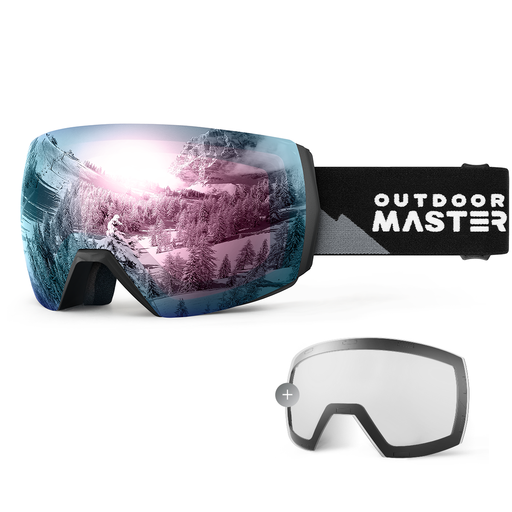
Why It Stands Out: The ULTRA model is built for all-conditions versatility. Its standout feature is the MagKlick magnetic system, which makes swapping lenses incredibly fast and simple. The bundle includes a second lens, providing excellent value and ensuring you are prepared for both bright sun and flat light from day one.
Pros:
Who is it for: Skiers and snowboarders who frequently ride in variable weather and prioritise the convenience of a fast and secure interchangeable lens system.
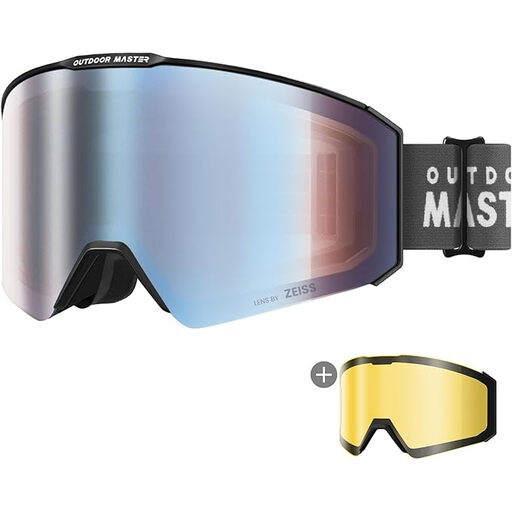
Why It Stands Out: The Falcon's main advantage lies in its optics. The collaboration with ZEISS, a world-renowned leader in lens technology, results in exceptional clarity and contrast enhancement. This allows you to read the terrain with greater confidence. The frameless ski goggles design also maximises your peripheral vision.
Pros:
Who is it for: Riders who demand premium optical quality and want to discern every detail in the snow, from icy patches to subtle contours.
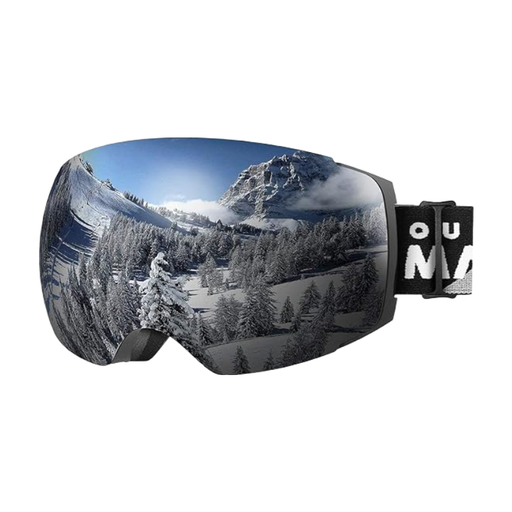
Why It Stands Out: The PRO model is a popular choice that delivers on the fundamentals. It features a large, frameless spherical lens that provides a massive, unobstructed field of view. While the lens change system is not magnetic, it is part of a modular system compatible with over 20 different lenses (sold separately), offering great long-term flexibility.
Pros:
Who is it for: Skiers and snowboarders looking for a proven, high-value goggle with an excellent field of view and the option to build a collection of lenses over time.
These three models represent a strong balance of features and performance, but every rider has unique preferences. If you are still exploring different styles, lens colours or frame shapes, you can browse our full collection of ski and snowboard Goggles to find the perfect match for your mountain adventures.
1. What is the difference between ski goggles and snowboard goggles? Functionally, there is no difference. The terms ski goggles and snowboard goggles are used interchangeably in the industry. The most important considerations are personal fit, helmet compatibility and the right lens technology for your typical skiing conditions, regardless of whether you are on one plank or two.
2. How do I stop my ski goggles from fogging up? To prevent fog, choose anti-fog snow goggles with dual-layer lenses, an anti-fog coating and good frame ventilation. When you take a break, avoid placing your goggles on your forehead, as the heat and moisture from your skin will cause them to fog. If snow gets inside, shake it out rather than wiping the inner lens, which can damage the delicate anti-fog coating.
3. Can I wear ski goggles over my glasses? Absolutely. Many brands offer specific ski goggles for glasses, often marked as 'OTG' (Over-The-Glasses). These models are deeper and have small channels in the side foam to accommodate the arms of your prescription frames without creating uncomfortable pressure points on your temples or nose bridge. Always check for OTG compatibility if you plan to wear glasses underneath.