
24/7 Customer Support

Free returns

Same-day & Next-day Delivery

Quality Guaranteed

Unlock Your Welcome Offers: FREE Delivery | Up to 80% OFF | Free 30-day JoyPlus trial
Download the APP
Over time, even the most cared-for vehicle can lose its showroom gleam. Swirl marks from car washes, the dull haze of oxidation and minor scratches can leave your car's paintwork looking tired and faded. When faced with this, many UK drivers reach for a familiar name: T-Cut. As a long-standing automotive paint restorer, it has a reputation for bringing back colour and shine.
However, the world of car care is filled with products making bold claims. Choosing the wrong one can not only be a waste of money but could potentially cause more harm than good to your vehicle's finish. Before you begin, it's crucial to understand what you're buying and how to avoid common missteps.
Navigating the car care aisle can be confusing. Many products promise miraculous results, but often fall short due to hidden drawbacks. Here are three frequent traps to be aware of.
To make an informed choice, you need to look past the marketing and understand the core function of the product. When considering a product like CarPlan T-Cut, here are the essential parameters to check.
The primary function of a traditional automotive paint restorer is to gently cut back the top layer of paint. This is how you remove oxidation from car paint and smooth out the edges of light scratches, making them less visible. T-Cut Original is a classic example of a cutting compound. It is not a polish, which contains much finer abrasives designed to refine the surface, nor is it a wax, which is purely for protection and shine. Understanding this distinction is key to using the product correctly and achieving the desired result.
For a true restoration, a silicone-free formula is often preferable. As mentioned, silicone can temporarily fill scratches, giving a false impression of a repair. A product without silicone, such as T-Cut Original, provides an honest finish. It reveals the true state of the paintwork after application, ensuring that you are genuinely restoring the surface, not just covering it up. This is particularly important if you plan to apply a new layer of wax or a ceramic coating, as silicone can interfere with proper bonding.
The right product also depends on the job at hand. For tackling widespread dullness or oxidation across a large panel, a liquid formula in a bottle like the classic T-Cut 500ml is practical. For more targeted jobs, such as acting as a tar remover for cars or dealing with baked-on insects and localised scuffs, a trigger spray version can offer more control and convenience, preventing overuse on a small area.
Matching the right product to your specific vehicle and needs is the final piece of the puzzle. Here are a few recommendations based on common user profiles.
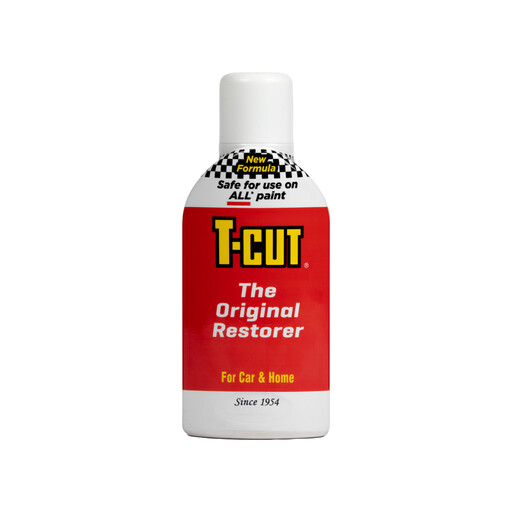
Why This Fits Their Persona: This user likely has a classic car, caravan or a trusty older vehicle with solid paint that has become dull and oxidised. They need a reliable, no-nonsense solution to restore car paint lustre without paying for professional detailing.
Its silicone-free formula provides a true fix, not a temporary filler. It genuinely removes the oxidised layer rather than just masking it.
Highly effective on oxidised paint and surface scratches. The 500ml bottle offers great value for tackling larger areas or multiple vehicles.
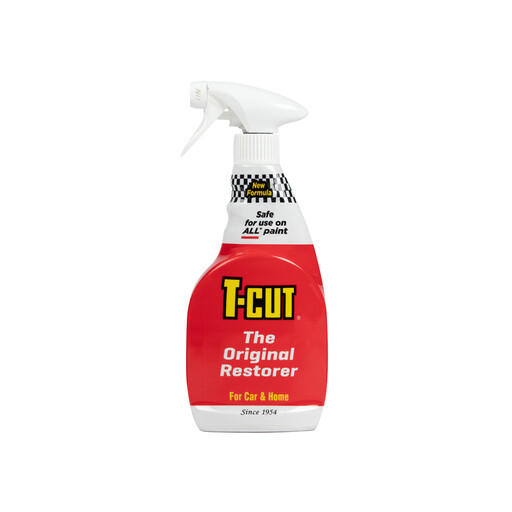
Why This Fits Their Persona: This driver has a modern car and needs a quick, convenient solution for isolated issues like tar spots from a motorway run, bird droppings or a light scuff from a tight parking space. Ease of use is paramount.
The trigger spray allows for precise application, preventing you from applying an abrasive compound to a wider area than necessary, which is a key concern on modern clear coats.
Extremely convenient for spot treatments. It's an effective tar remover for cars and also handles ingrained grime and baked-on insects with minimal fuss.
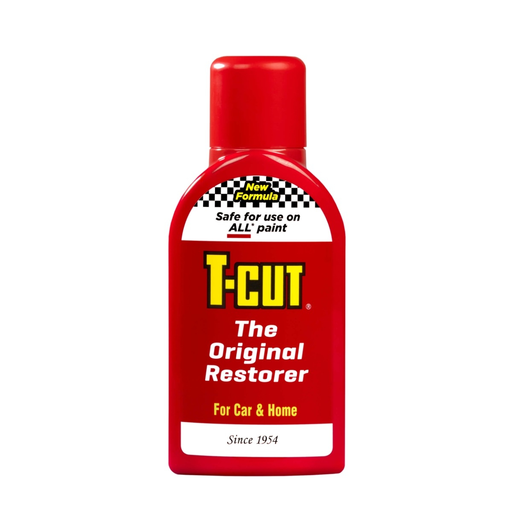
Why This Fits Their Persona: This enthusiast understands that the process is as important as the product. They will use this for careful, occasional paint correction and will pair it with high-quality microfibre cloths and a dedicated wax for the final protective layer.
By using a quality applicator, like a soft microfibre cloth or a dedicated car wash glove, they avoid the trap of creating more swirl marks with a poor-quality rag, ensuring the abrasive works as intended.
The classic, trusted formula in a smaller 350ml bottle is ideal for controlled, less frequent use. It encourages a methodical approach to paint restoration.
We have compiled a complete, real-time list of products that fully satisfy these strict selection criteria and UK safety regulations.
1. Can T-Cut be used on modern metallic or pearlescent paint? Yes, but it must be done with caution. Modern paint finishes have a "clear coat" layer on top. While T-Cut is suitable for use on these, it is an abrasive compound. Always work on a cool, clean surface and test on a small, inconspicuous area first (such as a door shut) to see how your paint reacts. Apply with gentle pressure and use a soft, clean cloth.
2. How often can you use T-Cut on your car? T-Cut should be used sparingly. It is a restorative product designed to fix a problem, not a regular-use polish or wax. Because it works by removing a very fine layer of paint, repeated or excessive use in the same area can eventually thin the paint or clear coat. Use it only when needed to correct specific issues like oxidation or scratches.
3. Do I need to wax my car after using T-Cut? Absolutely. This is a critical step. After using T-Cut to restore the paint surface, you must apply a good quality car wax. This will protect the newly exposed paint from UV rays, rain and dirt, while also sealing in the shine and providing a deep, glossy finish. Skipping this step will leave your paintwork vulnerable.