
24/7 Customer Support

Free returns

Same-day & Next-day Delivery

Quality Guaranteed

Unlock Your Welcome Offers: FREE Delivery | Up to 80% OFF | Free 30-day JoyPlus trial
Download the APP
Choosing between table lamps and night lights is not simply a matter of picking a colour or shape. The right light depends on where it will be used, how often it will be moved and whether you need focused illumination, soft ambient lighting or automatic activation.
Marketing descriptions can make almost any lamp sound versatile. However, a product that looks attractive online may have limited battery life, unsuitable brightness or a sensor that activates at the wrong time. This guide explains the main buying pitfalls and the specifications worth checking before you order.
Wattage describes how much power a light uses, not how much illumination it produces. A 1W LED night light may be suitable for a hallway, but it will not provide the same light coverage as a bedside table lamp with a larger shade.
For running-cost comparisons, look for the wattage, operating hours and whether the product is mains-powered, rechargeable or battery-operated. A rechargeable night light can reduce disposable battery purchases, while a plug-in lamp may be more convenient for continuous use.
A rechargeable lamp may advertise a high-capacity battery, but runtime usually changes according to brightness, colour mode and sensor use. Check whether the stated operating time applies to the highest setting or a lower mode.
Also look for the charging connection. USB charging is useful beside a laptop, power bank or standard USB adaptor, while Type-C charging can make cable replacement more convenient. Charging time, low-battery indicators and whether the lamp can operate while charging are also practical details.
A motion sensor night light normally depends on both movement and ambient brightness. A sensor may not activate in a bright hallway, and its range can be affected by furniture, doors or the direction in which the unit is positioned.
For bedrooms, bathrooms and landings, check the detection range, activation light level and whether the product has a constant-light mode. A sensor light should also be positioned where it can detect movement without being blocked by bedding or storage.
Brightness may be listed in lumens rather than watts. Higher lumens generally indicate more light output, but the ideal level depends on the room. A soft LED night light is suitable for finding your way around at night, whereas a dimmable table lamp offers more flexibility for reading, dressing or relaxing.
Colour temperature is measured in Kelvin:
A colour-changing lamp can add decorative or sensory interest, but check whether colour selection is controlled by a button, touch control or remote. Dimming should also be clearly described as stepped levels or stepless adjustment.
Measure the intended surface before buying. A compact night light can fit on a shelf edge or narrow bedside table, while a decorative table lamp needs enough room for its base and cable.
Consider:
Ceramic, fabric, ABS plastic, metal and silicone each create a different appearance and maintenance requirement. Keep mains-powered products away from water unless they have a suitable stated ingress-protection rating. A bedroom or bathroom light should never be treated as waterproof simply because it is marketed for night-time use.
Read the supplied instructions and check the product’s voltage, adaptor type and charging requirements. In the UK, look for appropriate conformity information, clear manufacturer details and safety instructions. A mains table lamp should use the supplied adaptor or a compatible plug arrangement; do not substitute an unsuitable charger.
Place every lamp on a flat, stable surface, keep ventilation openings clear and avoid covering LEDs or control units. Child-friendly designs still require supervision, especially where small parts, cables, batteries or mains connections are accessible.
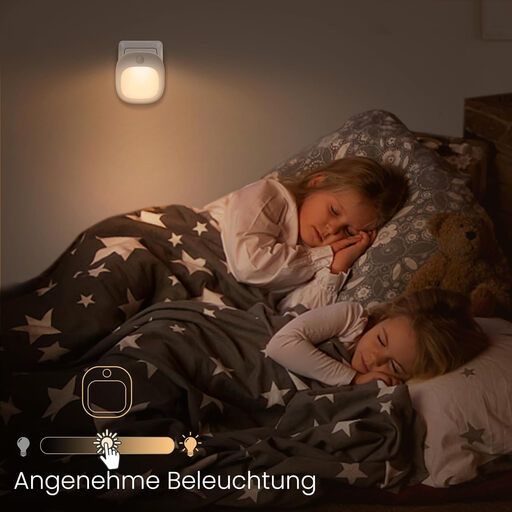
Why This Fits Their Persona: A two-pack can cover two locations, such as a bedroom and landing, without requiring a separate purchase for each area.
The listing specifies a 500mAh rechargeable battery, USB charging and up to 10 hours in sensor mode, making the power arrangement clearer than a vague “long-lasting” claim.
Three colour temperatures, five brightness levels, a 3–5m sensor range and a constant-light mode.
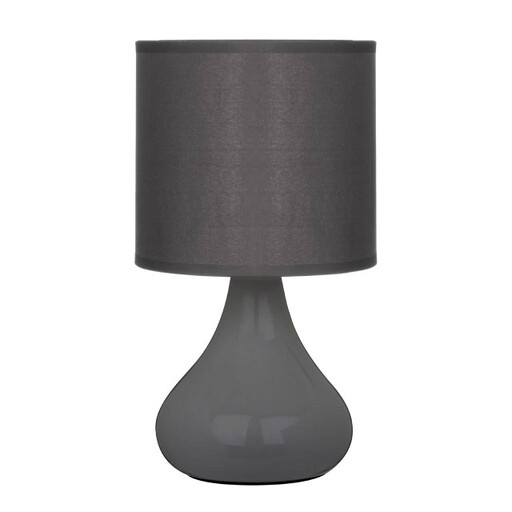
Why This Fits Their Persona: This decorative table lamp suits shoppers prioritising a coordinated bedside or living-room appearance alongside everyday illumination.
Its stated 26cm height and 14cm base dimensions help buyers plan shelf space before ordering, while the care guidance identifies soft-cloth cleaning and avoiding abrasive products.
Glossy grey dolomite base, cotton shade, 0.5kg listed weight and a neutral shape for bedroom lighting or lounge décor.
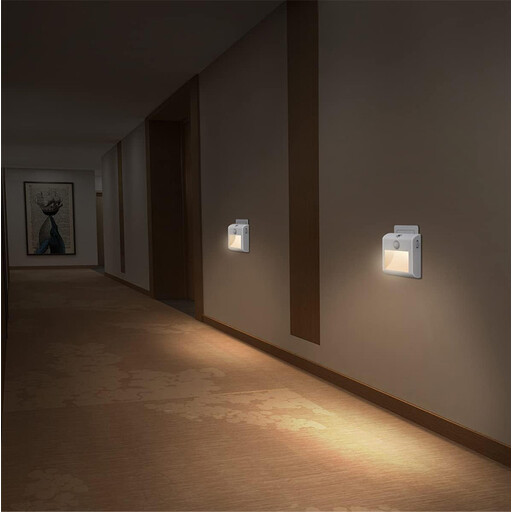
Why This Fits Their Persona: Designed for regular night-time movement around bedrooms, hallways and bathrooms where automatic activation and consistent placement matter.
The specified ≤20 LUX activation threshold and 3–5m detection range give clearer expectations for sensor placement than a general automatic-lighting description.
Two lights, 1W power consumption each, stepless touch dimming with memory and a 4000–4500K warm-white specification.
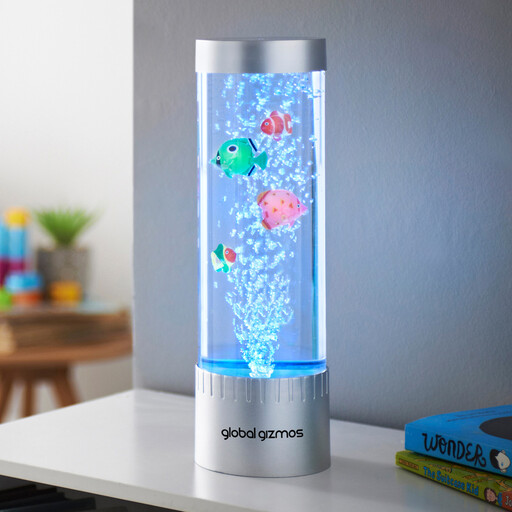
Why This Fits Their Persona: Its moving bubble effect and colour-changing LEDs are suited to decorative areas, children’s rooms, workplaces and sensory spaces.
The listing specifies its 12V adaptor, minimum 3.6W consumption, 1.8m lead and 32cm height, helping buyers check power and placement requirements first.
Four included plastic fish, 12 colour-changing LEDs and ABS/PETG construction.
We have compiled a complete, real-time list of products that fully satisfy these strict selection criteria and UK safety regulations.
LED products generally use less power for a comparable light output, but the actual cost depends on wattage, usage time and your electricity tariff. For a precise comparison, multiply the lamp’s kilowatt rating by the hours used and your current price per kilowatt-hour.
Position it near the floor or at the edge of a bedside table, hallway or landing where movement is visible to the sensor. Avoid placing it behind curtains, furniture or bedding. Check the stated detection distance and keep mains-powered models away from sinks, baths and other moisture.
Battery runtime varies with brightness, colour mode and activation frequency. Treat “up to” figures as a maximum under specified conditions, then check capacity, charging time and the manufacturer’s usage guidance. A model with several brightness settings can help balance illumination and charging frequency.