
24/7 Customer Support

Free returns

Same-day & Next-day Delivery

Quality Guaranteed

Unlock Your Welcome Offers: FREE Delivery | Up to 80% OFF | Free 30-day JoyPlus trial
Download the APP
A good night light can be a small but significant addition to a home. Whether it's a comforting glow in a child's bedroom, a guiding light in a dark hallway, or a convenient, portable lamp for late-night reading, the right one makes a real difference. However, the market is flooded with options, and it's easy to fall for common purchasing traps that lead to disappointment and wasted money.
As a Joybuy Product Recommendation Officer, my role is to help you navigate the options and identify what truly matters. Before you buy, be aware of these frequent pitfalls:
To avoid these issues, focus on a few core parameters. Understanding these will help you select a night light that is practical, reliable and suited to your needs.
Your first decision is how the light will be powered. This choice affects both convenience and running cost.
The type of light emitted is crucial, especially in a nursery or bedroom.
How you turn the light on and off can be a major factor in its day-to-day usability.
Instead of a generic list, we've matched specific products to the people who will get the most out of them.
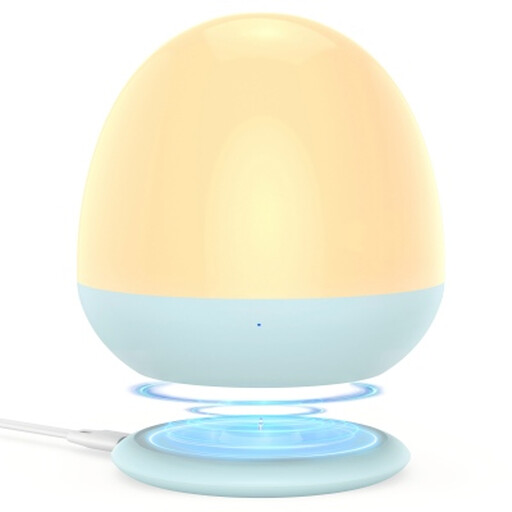
Why This Fits Their Persona: Designed for the nursery, its smooth, egg-like shape is safe for little ones. The touch controls are perfect for one-handed operation during late-night feeds, providing a soft, warm light that won't over-stimulate a sleepy baby.
It solves the rechargeable battery trap with a stable, wireless charging pad. There's no fumbling with flimsy micro-USB ports in the dark; just place the light on its base to charge.
Features intuitive touch controls, a timer function to automatically switch off and both warm and colour-changing light modes to suit different needs.
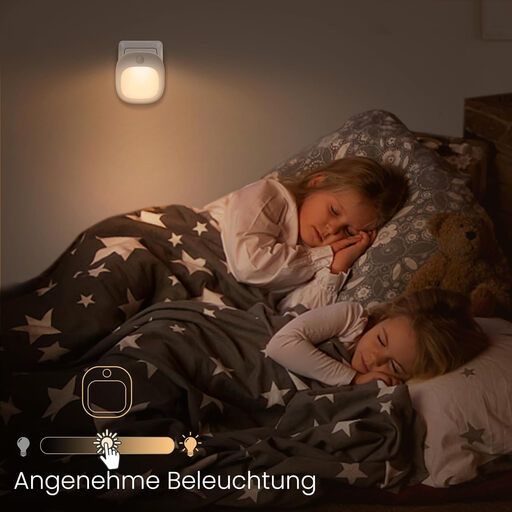
Why This Fits Their Persona: This is a purely practical solution for navigating your home after dark. The motion sensor provides light exactly when and where it's needed—on stairways, in hallways, or in the bathroom—preventing trips and saving energy.
By only activating in darkness when motion is detected, it maximises the life of its 500mAh battery. It avoids the need for constant recharging by being smart with its power consumption.
Offers three colour temperatures (warm, cool and mixed) and five brightness levels. The pack of two provides excellent value for outfitting multiple areas of the home.
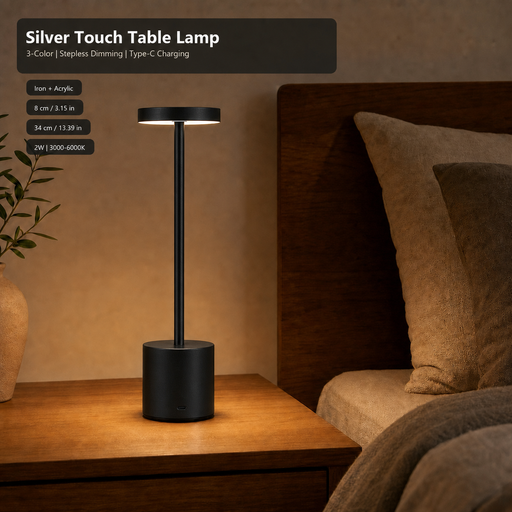
Why This Fits Their Persona: This is more than a night light; it's a piece of decor. Its sleek iron and acrylic design functions as a stylish, minimalist cordless table lamp for a living room or bedside table, offering sophisticated ambient light anywhere you need it.
It demolishes the poor battery life trap with a substantial 1800mAh battery, providing up to 48 hours of continuous light on its lowest setting—far superior to standard night lights.
Offers three distinct colour temperatures (warm, natural and cool) and stepless dimming via a simple touch control. Its 360° illumination provides beautiful, even light.
We have compiled a complete, real-time list of products that fully satisfy these strict selection criteria and UK safety regulations.
1. How long should a rechargeable night light last on one charge? This depends entirely on the battery's mAh rating and your usage. A basic model (around 500mAh) may only last 8-12 hours, requiring a daily charge. A higher-capacity model (1200mAh or more) can last for several nights or even over a week with intermittent use or on a low brightness setting. Always check the mAh rating before you buy.
2. What is the most suitable colour light for sleeping? Warm white light, typically in the range of 2800K to 3200K, is widely considered better for sleep. This amber-hued light has less of an impact on your body's production of melatonin, the hormone that regulates sleep, compared to the cool, blue-toned light emitted by many standard LEDs and electronic screens.
3. Are LED night lights expensive to run? No, LED night lights are extremely energy-efficient and cost very little to run. A typical LED night light uses between 0.5 and 1 watt of power. Even if left on for 8 hours every single night, the annual electricity cost would be negligible, likely amounting to just a few pounds per year. Models with motion sensors or timers are even more economical.