
24/7 Customer Support

Free returns

Same-day & Next-day Delivery

Quality Guaranteed

Unlock Your Welcome Offers: FREE Delivery | Up to 80% OFF | Free 30-day JoyPlus trial
Download the APP
For any serious table tennis player in the UK, the choice of ball is not a minor detail—it is fundamental to performance. Using the right ball ensures that your training translates directly to match play. However, the market is filled with options that can be misleading. This guide cuts through the clutter to help you identify genuine, competition-grade balls and avoid common purchasing mistakes.
As the Joybuy Product Recommendation Officer, my role is to provide clear, practical advice. Let's look at the pitfalls to avoid when selecting professional table tennis balls.
To ensure you are purchasing equipment that will aid your performance, focus on these non-negotiable specifications.
The most important factor for a competition ball is its certification.
The era of celluloid balls is over due to safety and performance reasons. The modern standard is plastic, specifically Acrylonitrile Butadiene Styrene (ABS).
The star rating is a straightforward indicator of a ball's quality and intended use.
Here are our recommendations, matched to different player profiles and needs within the UK.
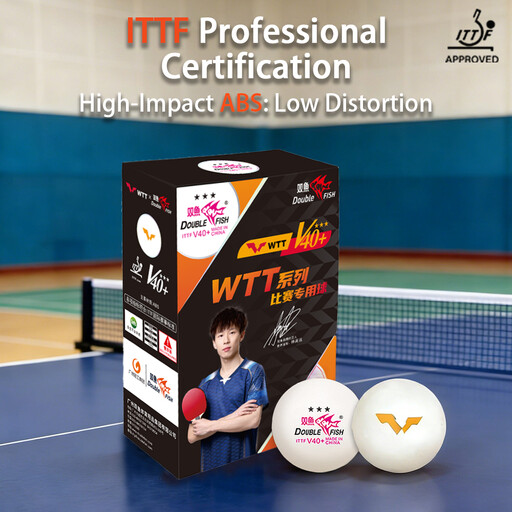
Why This Fits Their Persona: This player participates in UK tournaments and demands equipment that exactly matches what is used in professional WTT events. Consistency between their training and competition ball is non-negotiable.
It holds both ITTF Professional Certification and WTT Tournament-Level Certification, removing any doubt about its status. This is not a "professional-style" ball; it is the official article.
Crafted from high-impact ABS with seamed construction, it offers the flight stability and precision used by professional athletes, ensuring your shots remain accurate under pressure.
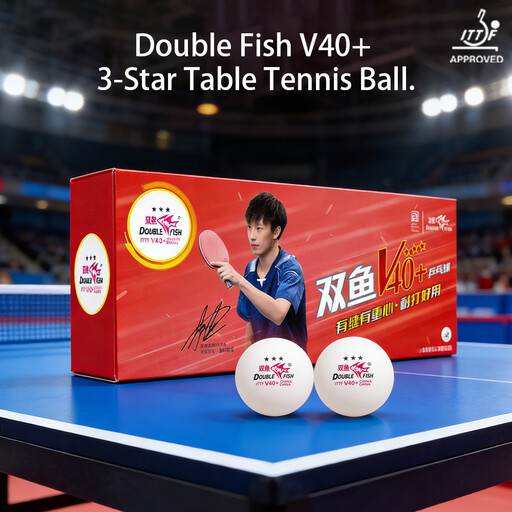
Why This Fits Their Persona: This player trains multiple times a week at their local club and needs a steady supply of high-quality balls for both practice and league matches. They require 3-star quality without compromise.
By choosing a certified 3-star ball, they ensure their training is always consistent with match conditions, avoiding the performance gap created by using inferior practice balls.
This ball meets the same strict tournament-grade specifications for roundness and bounce as the official WTT match ball, making it ideal for players looking to sharpen their competitive edge.
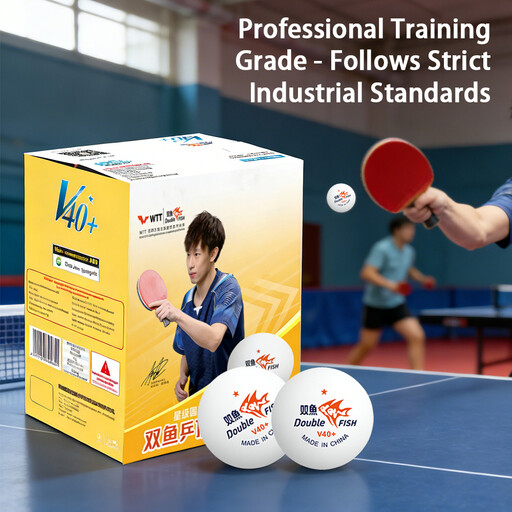
Why This Fits Their Persona: Coaches and clubs in the UK need a large quantity of durable, reliable balls for multi-ball drills and group sessions. Value and performance consistency are paramount.
It avoids the pitfall of buying cheap, unbranded balls that break easily and have inconsistent bounce. As a 1-star ball from the V40+ line, it offers a familiar feel to the 3-star version for effective practice.
Engineered with impact-resistant ABS material, these balls are built to withstand thousands of rallies in a high-intensity training environment, offering excellent long-term value for clubs.
We have compiled a complete, real-time list of products that fully satisfy these strict selection criteria and UK safety regulations.
An ITTF approval is the baseline certification that a ball meets the required technical specifications for sanctioned play. A WTT official ball is a specific model of ITTF-approved ball that has been selected by World Table Tennis for use in its elite professional tournaments. For players wanting to use the exact ball the pros use, the WTT designation is the one to look for.
The lifespan of a professional competition ping pong ball depends on usage intensity. In a competitive match, a ball might be replaced after a few games or if it hits the edge of the table hard. For training, a high-quality ABS ball can last for many sessions. You should replace a ball when you notice a change in sound, a visible crack or a loss of roundness, as this will affect its bounce and flight.
While "seamless" might sound better from a marketing perspective, the technology for producing high-quality seamed ABS table tennis balls has advanced significantly. The two-piece construction allows for a more uniform wall thickness and a more reliable centre of gravity. This is why seamed balls are the standard in all major WTT and ITTF international competitions today, as they provide the stability and consistency that professional players require.