
24/7 Customer Support

Free returns

Same-day & Next-day Delivery

Quality Guaranteed

Unlock Your Welcome Offers: FREE Delivery | Up to 80% OFF | Free 30-day JoyPlus trial
Download the APP
Buying a tumble dryer can look straightforward until you compare heat pump tumble dryers, condenser models, energy ratings, drum sizes and connected features. The wrong choice may leave you with long cycles, high electricity use or an appliance that does not fit comfortably in your utility room.
This guide focuses on the practical details UK households should check before buying, with recommendations matched to different laundry habits rather than broad marketing promises.
Energy labels provide a useful comparison, but the rating should be considered alongside capacity, cycle frequency and purchase price. A 9kg or 10kg heat pump model may use less energy per cycle than a conventional condenser dryer, but it can cost more initially. If your household usually dries small loads, the additional capacity may not offer much practical benefit.
Also check that the rating applies to the exact model number. Product listings can contain similar-looking variants with different specifications.
An 8kg tumble dryer may suit a couple or medium-sized household, while 9kg tumble dryers and 10kg tumble dryers provide more room for bedding, towels and family laundry. However, a larger drum does not automatically mean faster drying. Overloading any dryer restricts airflow and can leave clothes damp.
Compare the drum capacity with your washing machine. A dryer that is significantly smaller than your washer may require loads to be split, while an oversized model may take up unnecessary floor space.
Smart tumble dryers and Wi-Fi tumble dryers can send cycle notifications, provide remote monitoring and offer additional programmes through an app. These features are useful if you regularly schedule laundry around work, off-peak tariffs or family routines.
They do not replace basic maintenance, however. You will still need to clean the lint filter, empty the water tank where applicable and follow the manufacturer’s installation instructions. A well-chosen non-connected model may be more suitable if you prefer simple controls.
Heat pump tumble dryers recycle warm air and generally dry at lower temperatures. This can reduce energy consumption compared with traditional condenser designs and may be gentler on fabrics. They can have longer programme times, so check for useful quick cycles if you often need clothes in a hurry.
Condenser tumble dryers collect moisture in a tank and do not require an external vent hose, making freestanding installation more flexible. They are often available at a lower purchase price, although their listed energy class and running costs should be compared carefully. For example, the CANDY Smart Pro 10kg condenser model is listed with a B energy class, while the Sharp 8kg heat pump model is listed as A++.
Every dryer needs adequate ventilation and clearance. Check the product dimensions, door swing and access route before ordering. A standard width is approximately 60cm, but depth varies considerably.
Use the care label on garments and avoid drying items contaminated with flammable substances, oils or solvents. Empty pockets before loading and do not exceed the stated maximum load.
A sensor dry tumble dryer measures moisture and adjusts or stops the cycle when the selected dryness level is reached. This can help avoid unnecessary drying, but it is not a substitute for selecting the correct programme.
Noise is measured in decibels, with the supplied models ranging from around 60dB to 68dB. Lower figures may be preferable in open-plan homes or when the appliance is near a bedroom.
For condenser and heat pump models, check the position of the water tank and lint filter. Drawer-style or in-door tanks can make emptying easier, but maintenance access differs between models.
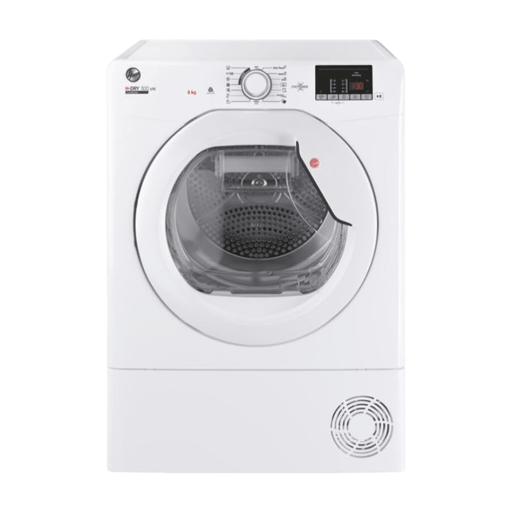
Why This Fits Their Persona: An 8kg white condenser dryer with a 53cm listed depth suits couples and smaller households needing flexible freestanding placement without smart controls.
Its listed B energy class and condenser design make the running-cost and installation trade-off clearer than an unspecified “efficient” claim.
8kg load, 12 programmes, four dryness levels and a front-accessible water tank.
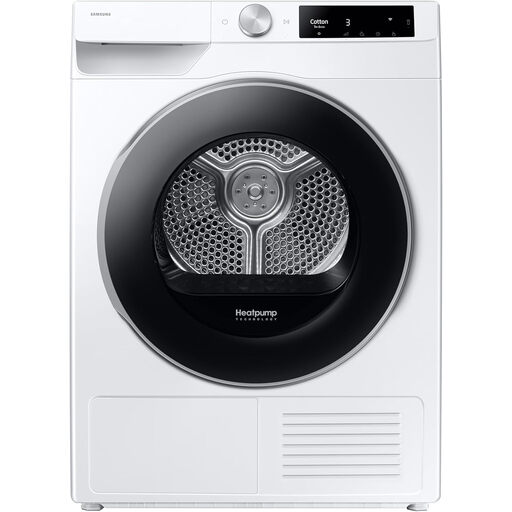
Why This Fits Their Persona: This freestanding 9kg model suits households wanting heat pump drying, app connectivity and a lower listed noise level for shared living spaces.
The listing specifies its 63dB noise level, 9kg capacity, A+++ class and SmartThings Wi-Fi functions, making key comparisons easier.
OptimalDry sensors, Quick Dry 35' for a 1kg load, reversible door and a five-year manufacturer warranty listed.
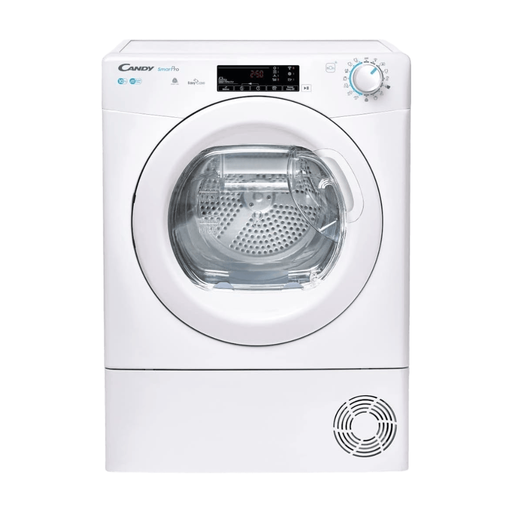
Why This Fits Their Persona: A 10kg drum is suited to large households regularly drying bedding, towels and extensive laundry loads.
The condenser type and B energy class are clearly specified, while sensor drying helps prevent relying only on timed cycles.
Wi-Fi control through the Candy Simply-Fi app, 16 programmes, a 24-hour delay timer and Easy Case drawer system.
We have compiled a complete, real-time list of products that fully satisfy these strict selection criteria and UK safety regulations.
Before using your new appliance:
They generally use lower-temperature drying and recycle warm air, which can reduce electricity use compared with conventional models. Actual running cost depends on the appliance’s energy class, programme, load size, tariff and frequency of use.
Many freestanding tumble dryers are approximately 60cm wide and 85cm high, but depth can range from the low 50cm range to over 60cm. Measure the appliance location, door opening and delivery route, then follow the specified ventilation clearances.
Lifespan depends on build quality, usage, installation and maintenance. Cleaning the lint filter, keeping airflow clear, emptying the tank and following the manual can help maintain performance. Check the exact warranty terms, including whether extended parts cover requires registration.