Single-computer document users
Students who want accounts, invoices, spreadsheets and browser documents visible together from one laptop or desktop.


A 34-inch, 21:9 monitor with 3440 × 1440 resolution is a useful starting point for keeping accounts and invoices visible together on one computer; LG and Philips describe this format as suited to side-by-side documents and spreadsheet columns. Check that it fits your desk, then consider USB-C video and charging only if your laptop can use them, or Picture-by-Picture (PBP) and a keyboard, video and mouse (KVM) switch only if you regularly connect two devices.
Students who want accounts, invoices, spreadsheets and browser documents visible together from one laptop or desktop.
Students who want a simpler desk connection, provided their laptop supports video output and suitable charging over USB-C.
Students who regularly work across a laptop and another computer, and may use PBP or KVM rather than switching between separate screens.
Start with document space and physical desk fit. Decide on laptop docking or two-device controls only after you know how you will connect your equipment.
| Concern | What to check | Who this matters to |
|---|---|---|
| Side-by-side documents | Check for 3440 × 1440 resolution and a 21:9 aspect ratio; consider whether your applications will leave both documents readable at your chosen window sizes. | If accounts and invoices come from one computer, I want both open without repeatedly changing windows. Around 34% of consumers put document workspace first. |
| Desk fit and positioning | Measure usable desk width and depth, including space for the stand and paperwork; check the available height and tilt adjustment. | A wide screen must still leave me room to work at a small desk and position it comfortably. Roughly 33% of consumers prioritise fit and positioning. |
| Laptop connection | Check whether your laptop sends video over USB-C and whether the monitor’s stated power delivery meets its charging requirement. | With a compatible laptop, I would rather connect the display and charge through one cable. About 20% of consumers make that connection their primary concern. |
| Two-device use | If connecting two sources, check supported PBP input combinations and whether a built-in KVM switch is included. | When accounts and invoices are on different computers, I need to view or control both; each PBP source will occupy only part of the screen. Around 13% of consumers put two-device use first. |
A 34-inch monitor can take substantial horizontal space: Dell lists its P3424WE at 81.57 cm wide with the stand. The space left for a keyboard and paperwork matters too.
Measure clear desk width and depth, then check the chosen monitor’s assembled dimensions, stand footprint and adjustment range.
A different desk arrangement or a compatible monitor arm may be needed if the supplied stand does not fit your setup.
Video output and charging requirements depend on the laptop and monitor. Lenovo says the maximum 100 W output of its ThinkVision T34WD-40 requires compatible Lenovo VDM support and that actual output may be lower.
Check your laptop’s USB-C video capability and charging requirement against the exact monitor specification and the cable you intend to use.
You may still need a separate laptop charger or a suitable cable.
PBP divides a monitor between separate inputs; it is not required to arrange two applications on one computer. A KVM switch is relevant when sharing a keyboard and mouse across connected devices.
If all your documents are on one laptop or desktop, focus on the workspace, desk fit and connections you will actually use.
The Health and Safety Executive identifies workstation arrangement, glare and breaks as considerations for extended display-screen work. A monitor setting does not replace positioning the screen and desk appropriately.
Arrange the screen to suit your seating position, manage glare and vary your activity during long study sessions.
LG’s UltraWide range includes 34-inch 3440 × 1440 models with different connection and stand options.
The ViewFinity S65UC is a reference point for a 34-inch setup using two source devices.
Lenovo’s ThinkVision T34WD-40 illustrates a docking-oriented ultrawide for a compatible laptop.
Dell’s P3424WE provides a specification reference for a USB-C hub ultrawide.
The Philips 346E2CUAE/00 combines a 3440 × 1440 display with USB-C and MultiView.
These 34-inch monitors are relevant to keeping accounts and invoices on one wide screen. Compare their connections and stand options against your desk and computer; gaming-oriented specifications need not decide a document-work choice.
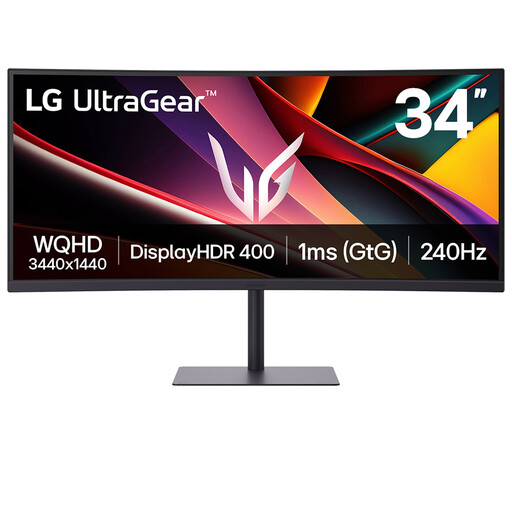 No image available
Consider this for accounts and invoices on one computer if its connections and assembled footprint suit your desk.
The product name specifies a 240 Hz refresh rate. Check your laptop’s video and charging requirements separately before planning its connection.
 No image available
Its wide format and stated stand adjustments are worth considering where documents must share one screen and positioning matters.
The product name specifies 3440 × 1440 resolution, two HDMI inputs, DisplayPort, and height, swivel and tilt adjustment. Check the assembled footprint against your desk.
 No image available
Consider it for a single-computer document workspace if its stand and connections meet your setup needs.
Check the assembled width and stand footprint before choosing it for a compact desk.
 No image available
This is another wide-screen option for documents from one computer; make desk fit the deciding check before considering its gaming specifications.
The product name specifies 3440 × 1440 resolution, a VA panel, two HDMI inputs and two DisplayPort 1.4 inputs. Check dimensions with the stand attached.
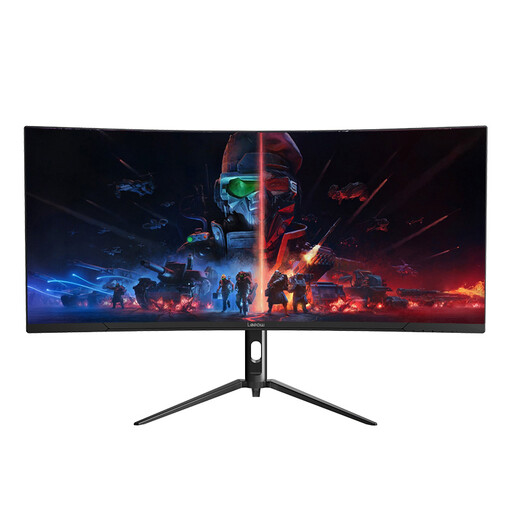 No image available
Its stated resolution is relevant to viewing accounts beside invoices from one computer.
The product name specifies 3440 × 1440 resolution and a 165 Hz refresh rate. Check its stand adjustment and assembled footprint if positioning space is limited.
Yes, if both documents are on one computer and the monitor fits your desk. LG and Philips describe 21:9, 3440 × 1440 displays as offering space for multiple programmes, comparisons and spreadsheet columns; you will still need to arrange your application windows.
USB-C is useful for a one-cable setup only when your laptop supports video through that port and the monitor’s power delivery suits its charging requirement. LG lists up to 90 W for the 34WQ75C-B; Lenovo lists up to 100 W for the T34WD-40 but says that maximum depends on compatible Lenovo VDM devices and actual output may be lower.
No, not when both windows are on one laptop or desktop: you can arrange them within that computer’s display space. PBP is for separate input sources, while a KVM switch can let connected devices share a keyboard and mouse; Samsung lists those functions on its ViewFinity S65UC.