
24/7 全天候客户支持

免费退货

当日/次日达

品质保障

开启新人专享福利: 全场免邮 | 低至 2 折 | 免费试用 30 天 JoyPlus 会员
下载 Joybuy
A weekly pill organiser can make daily routines easier, but the wrong design may create more frustration than convenience. Compartments that are too shallow, stiff lids and unclear day markings can make a 7-day pill organiser difficult to use, particularly for older adults, people with arthritis or carers preparing medication.
Marketing descriptions can also make simple storage boxes sound more advanced than they are. Before buying, watch for these common pitfalls.
A compartment advertised as suitable for a certain number of pills may not accommodate larger fish-oil capsules, irregular tablets or several supplements together. A daily pill box should be judged by compartment dimensions and shape, not only by a headline capacity figure.
Snap-shut lids and push-button closures can help prevent accidental opening in a handbag or suitcase. However, they are not automatically child-resistant or suitable for every medicine. Keep all medicines and organisers away from children and pets, and follow the storage advice supplied with the medicine.
A moisture-proof pill container may help reduce exposure to damp air, but it does not guarantee complete protection from humidity. Some medicines should remain in their original packaging. Check the label or ask a pharmacist before transferring prescription medicines, especially those affected by light or moisture.
Start by mapping your routine:
The VVM weekly model states that each compartment can hold up to eight fish oils or 17 capsules, although the actual fit will vary according to capsule size. Its seven compartments are intended for daily medication, vitamins and supplements.
A lid that is secure but difficult to open can make a medicine organiser impractical. Look for:
An arthritis-friendly pill box should not require pinching a small recessed tab with considerable pressure. If a carer fills the box but another person opens it, both users should be considered.
BPA-free plastic is commonly used for tablet organisers because it is lightweight and easy to wipe clean. The important practical points are whether the compartments close properly, whether labels remain readable and whether the organiser can be dried fully after cleaning.
Do not refill a damp organiser. Wash or wipe it according to the product instructions, allow every compartment to dry and inspect hinges, seals and lids for cracks. A silicone sealing ring, such as the one listed on the JORDAN&JUDY 21-compartment model, may provide a closer seal, but the product should still be stored in a cool, dry place.
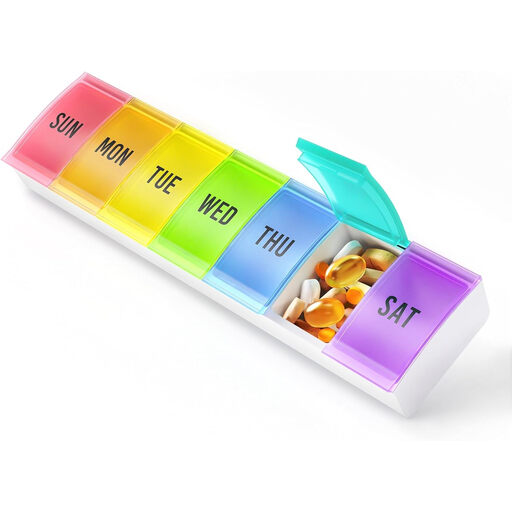
Why This Fits Their Persona: A straightforward seven-compartment layout suits people starting a weekly medication or supplement routine without needing multiple dosing periods.
The coloured covers and 3D day labels provide visible identification, while the secure snap-shut lids address the risk of compartments opening in a drawer or bag.
BPA-free plastic, seven compartments and stated capacity for larger capsules. The listed dimensions are 7.6 x 2.28 x 1.1 inches.
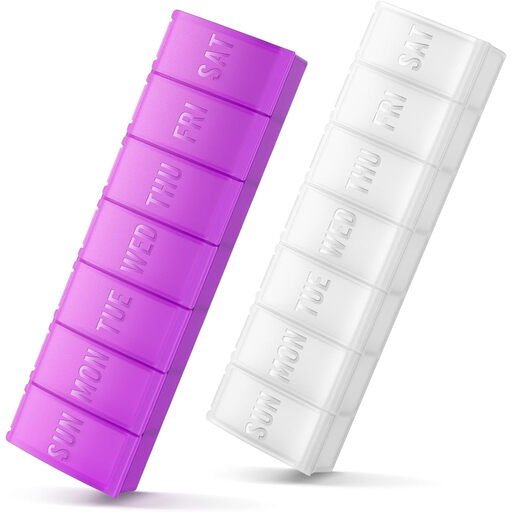
Why This Fits Their Persona: This two-piece set is useful for someone who wants one organiser at home and another for travel, work or a carer’s preparation routine.
Permanently etched day labels are designed to remain readable, avoiding reliance on labels that may peel or fade with use.
BPA-free medical-grade plastic, smooth hinges, easy-open lids and compartments described as suitable for large vitamins and fish oil.
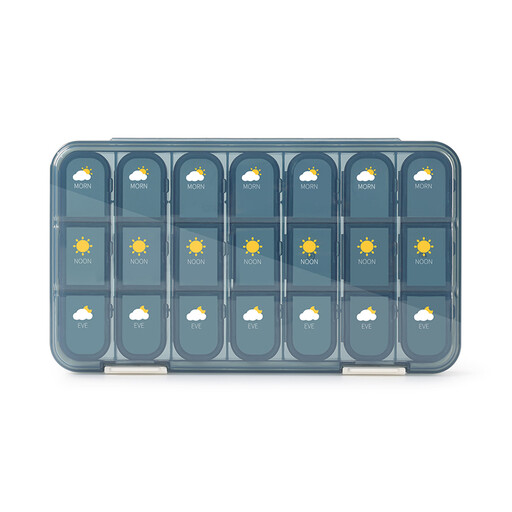
Why This Fits Their Persona: Twenty-one sections suit users taking different tablets or supplements at several points during the day, while removable daily boxes can help with planning.
Separate daily compartments reduce the need to mix all doses together. The snap-lock lid and silicone sealing ring address loose closures and provide a closer seal against everyday damp air.
Food-grade PP plastic, seven removable daily boxes and a stated airtight silicone seal. It is listed for home, office, bedside and travel use.
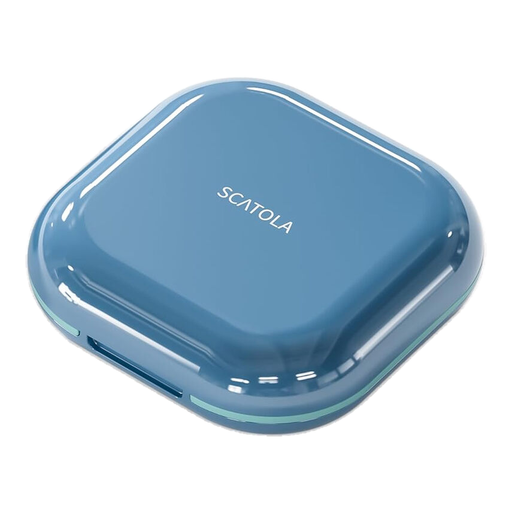
Why This Fits Their Persona: A compact four-compartment layout works for short trips, a handbag, work bag or carrying a limited selection of vitamins and medication.
Its smaller format avoids paying for unused weekly sections when only a few doses need to be carried. Check the internal size before selecting large capsules.
Four compartments and a compact portable format designed for medicines, vitamins and supplements on the move.
We have compiled a complete, real-time list of products that fully satisfy these strict selection criteria and UK safety regulations.
Before filling a daily pill box, compare each compartment with the tablets and capsules you actually take. Prepare it on a clean, dry surface and keep the original medicine packaging and instructions available. A carer should check the day and dose markings carefully after filling.
For travel, a portable pill box should be kept in hand luggage where possible, particularly when carrying prescription medicine. Take medicines in their original labelled packaging when required for travel, and check the destination’s rules before departure. A small travel pill case can supplement, rather than replace, that packaging.
There is no universal replacement period. Lifespan depends on the plastic, hinges, labels and frequency of opening. Replace the organiser if lids no longer close securely, labels become unclear, compartments crack or the seal deteriorates. Inspect it regularly rather than relying on a fixed time period.
No. Some medicines must remain in their original blister or container because of moisture, light, stability or identification requirements. Read the medicine label and ask a pharmacist if you are unsure before transferring tablets into a medicine organiser.
A standard 7-day pill box generally provides one compartment for each day. An AM/PM pill organiser separates morning and evening doses, while some larger designs provide three or four sections per day. Choose the layout that matches the prescribed or planned routine, and check that the printed labels are easy for every user to read.