As a Joybuy Product Recommendation Officer, my role is to help you navigate the crowded market of kitchenware. Choosing a wok for an induction hob can be particularly tricky. While the promise of sizzling, restaurant-quality stir-fries at home is appealing, many find their new wok delivers a lukewarm, disappointing reality. This guide will help you sidestep common purchasing mistakes and identify the features that truly matter.
Many shoppers fall into a few predictable traps. Understanding them is the first step to making a smart purchase.
- The "Induction Compatible" Myth: A wok might be labelled "induction ready," but if it only has a small magnetic disc on its base, it will heat slowly and unevenly. For the high, consistent heat a stir-fry requires, the entire flat base of the wok must be ferromagnetic and make full contact with the hob.
- The Fragile Non-Stick Surface: Low-quality non-stick coatings can't withstand the high temperatures needed for proper stir-frying. They can scratch easily, begin to peel after a few months and force you to replace the pan far too soon.
- The Unstable Base: A traditional round-bottom wok is completely unsuitable for a flat induction cooktop. It will wobble, make poor contact and fail to heat effectively. A flat bottom wok is not just a recommendation; it's a necessity for induction cooking.
Core Features to Check Before You Buy
To ensure your wok performs as expected, focus on these three non-negotiable parameters. They are the difference between a pan that gathers dust and one that becomes a kitchen workhorse.
1. The Base: Flat, Wide and Ferromagnetic
The performance of a wok on an induction hob is determined almost entirely by its base. The hob works by creating a magnetic field to generate heat directly in the cookware.
- Flat Bottom: The base must be completely flat to ensure maximum surface area contact with the glass cooktop. Any warping or curvature will create gaps and lead to inefficient, patchy heating.
- Ferromagnetic Material: The base must be made of a magnetic material like iron or magnetic stainless steel. A simple test is to see if a refrigerator magnet sticks firmly to the bottom of the wok. If it doesn't, or the pull is weak, it won't work effectively on an induction hob.
- Base Diameter: A wider base provides a larger heating zone, which is crucial for getting the entire wok hot enough for a proper stir-fry. A base that is too small will only heat the very centre, leaving the sides cool.
2. The Material: Carbon Steel vs. Non-Stick vs. Stainless Steel
The material of your wok dictates its cooking properties, heat responsiveness and maintenance routine.
- Carbon Steel Wok: This is the traditional choice for authentic Asian cooking. Carbon steel is highly responsive to temperature changes, allowing for precise control. It can achieve the intense heat needed to create the coveted smoky flavour known as wok hei. These woks require an initial "seasoning" process (heating with oil) to build up a natural non-stick layer. A pre-seasoned wok is a great option that allows you to start cooking immediately.
- Non-Stick Wok: Ideal for beginners or those prioritising convenience and low-fat cooking. A quality non-stick wok makes cooking and cleaning effortless. Look for models with reinforced, PFOA-free coatings that are designed to handle higher temperatures without degrading. They are excellent for everyday meals but may not reach the searing temperatures of carbon steel.
- Stainless Steel Wok: Known for durability and a non-reactive surface that won't affect the taste of acidic ingredients. A stainless steel wok often features a multi-ply construction with an aluminium or copper core to improve heat distribution. While they can be prone to food sticking, this can be managed by preheating the pan properly before adding oil.
3. Size and Design: Ergonomics for Your Kitchen
Finally, consider the practical aspects of using the wok.
- Size: A 27-30cm wok is generally suitable for individuals or couples, while a 32-36cm wok is better for families of four or more.
- Handles: A long, sturdy handle that stays cool is essential for tossing ingredients. For larger, heavier woks, a "helper handle" on the opposite side provides stability when lifting and serving.
- Lid: A wok with lid adds versatility, allowing you to steam, braise or keep food warm.
Our Top Product Recommendations
Based on these practical criteria, we've matched several woks to different types of home cooks.
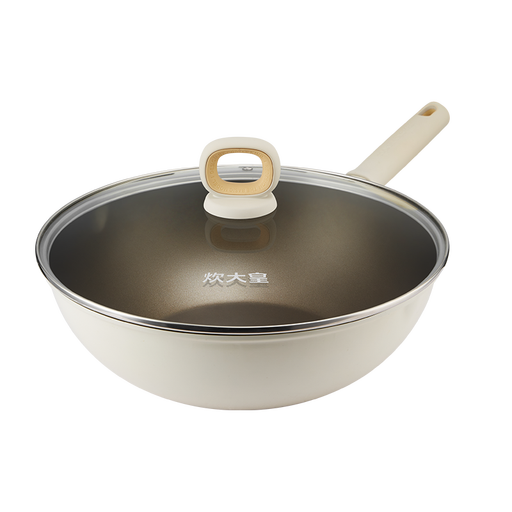
MATCH FOR: The Convenience-Focused Cook
Why This Fits Their Persona: This user wants reliable results for weeknight meals with minimal fuss and easy cleanup. This wok's generous size, non-stick surface and included lid make it a practical, all-in-one solution.
How It Avoids the Trap
Its titanium-reinforced coating is designed for greater durability than basic non-stick surfaces, addressing the fragile coating pitfall. The flat base is built for induction, ensuring proper heat transfer.
Key Advantage & Pros
PFOA-free non-stick surface for easy food release and cleaning. Comes with a glass lid for versatile cooking methods like steaming and simmering.
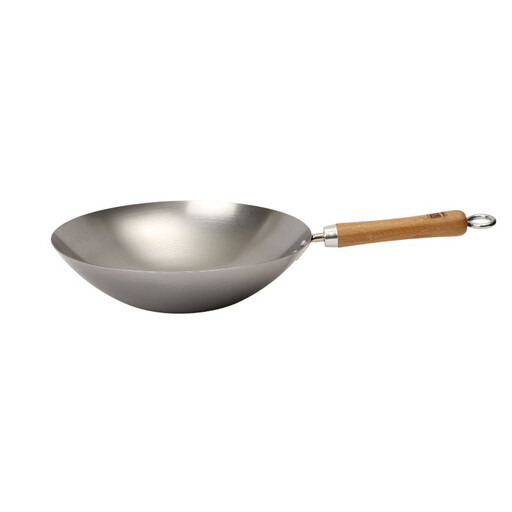
MATCH FOR: The Aspiring Stir-Fry Enthusiast
Why This Fits Their Persona: This user is ready to move beyond non-stick to achieve authentic results. They are willing to learn the process of seasoning and maintaining a carbon steel wok for superior flavour.
How It Avoids the Trap
As an uncoated carbon steel wok, there is no fragile coating to damage. Its flat bottom is specifically designed for modern hobs, ensuring stable, efficient heating on induction cooktops.
Key Advantage & Pros
Made from carbon steel for rapid heat response and authentic stir-fry results. Develops a natural non-stick patina over time with proper care.
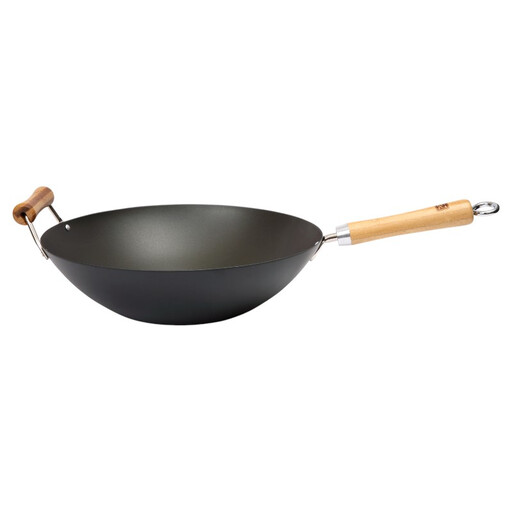
MATCH FOR: The "Ready-to-Go" Traditionalist
Why This Fits Their Persona: This user wants the high-heat performance of carbon steel without the initial step of seasoning it themselves. The larger size and helper handle are perfect for cooking family-sized meals.
How It Avoids the Trap
This pre-seasoned wok removes the barrier of entry for carbon steel. Its flat bottom is designed for all modern hobs, including induction, ensuring stability and excellent heat transfer.
Key Advantage & Pros
Ready to use straight out of the box. The large 36cm size and helper handle make it ideal for cooking for 4-6 people and handling larger dishes like curries or stews.
Looking for More Options?
We have compiled a complete, real-time list of products that fully satisfy these strict selection criteria and UK safety regulations.
Frequently Asked Questions
Why isn't my wok getting hot enough on my induction hob?
This is the most common issue and it almost always comes down to the wok's base. For an induction hob to work efficiently, it needs a wok with a wide, completely flat, ferromagnetic base. If the base is too small, warped or not made of a magnetic material, the hob cannot transfer energy effectively, resulting in slow and uneven heating. Always check that a magnet sticks strongly to the entire flat bottom of the wok before purchasing.
Can I use metal utensils in my wok?
This depends entirely on the wok's material.
- Carbon Steel & Stainless Steel Woks: Yes, these are durable enough to handle metal utensils. In fact, the scraping of a metal spatula on a carbon steel wok is part of the traditional cooking process.
- Non-Stick Woks: It is strongly advised to use only wood, bamboo or silicone utensils. Even "scratch-resistant" non-stick coatings can be damaged by metal, which will shorten the lifespan of the pan.
How do I season a new carbon steel wok?
Seasoning creates a natural, protective, non-stick layer. While you should always follow the manufacturer's specific instructions, the general process is:
- Clean: Wash the new wok with hot, soapy water to remove the factory coating, then dry it thoroughly.
- Heat: Place the wok on high heat. You will see the metal change colour, often turning blueish.
- Oil: Once it has changed colour, turn the heat down, add a small amount of high-smoke-point oil (like sunflower or vegetable oil), and carefully swirl it to coat the entire interior surface.
- Cool & Wipe: Let the wok cool down completely, then use a paper towel to wipe out any excess oil. Your wok is now seasoned and ready for its first use.