
24/7 Customer Support

Free returns

Same-day & Next-day Delivery

Quality Guaranteed

Unlock Your Welcome Offers: FREE Delivery | Up to 80% OFF | Free 30-day JoyPlus trial
Download the APP
Choosing women’s hygiene pads can seem straightforward until you are faced with different absorbency levels, lengths, materials and product types. The wrong choice may lead to leaks, uncomfortable bulk, skin irritation or buying more packs than you need.
This guide explains the practical differences between sanitary pads, menstrual pads, period pads and women’s incontinence products, helping you select protection for your flow, lifestyle and budget.
“Normal”, “long”, “night” and “extra” are useful indicators, but brands do not always use identical sizing systems. A Size 2 from one range may not provide precisely the same coverage as a Size 2 from another. Check the pad length, shape and intended flow level, rather than relying on the name alone.
Ultra-thin sanitary pads can feel less bulky under clothing, but thinness alone does not indicate suitable protection. For heavier menstrual flow or overnight use, look for extended length, a wider rear section, wings and a clearly stated absorbent core.
Menstrual pads are designed for menstrual fluid, while incontinence pads for women are designed for urine. The absorbent core, shape and fluid-management properties can differ. Some products are also labelled for postpartum incontinence, but they should still be selected according to the type and amount of leakage experienced.
Fragrance can also be an unnecessary irritant for some users. If you have sensitive skin, compare the packaging for fragrance-free or unscented options and stop using a product if redness, itching or discomfort develops.
Start by identifying the type of protection required:
Do not interpret phrases such as “up to 12 hours” as a requirement to wear one pad for that entire period. Change pads according to your flow and personal hygiene needs, and follow the instructions on the packaging.
Length is particularly important for overnight or heavier use. A 240–245 mm pad may suit some daytime or lighter needs, while products around 360 mm are designed for broader night-time coverage. Wings wrap around the underwear and can reduce sideways movement, but they need to match the gusset width and be pressed down securely.
For bladder leak protection, a contoured shape and adhesive strip can help the pad sit correctly in close-fitting underwear. Incontinence pads are not generally intended for use with loose-fitting underwear unless the product instructions say otherwise.
Common materials include non-woven fabrics, cellulose or wood pulp, superabsorbent polymers, adhesive layers and a moisture-resistant back sheet. These materials help draw fluid away from the surface, but individual skin tolerance varies.
Check for:
Used sanitary and incontinence pads should be wrapped and placed in a household waste bin. Do not flush them down the toilet, as they can contribute to blocked pipes and sewer systems.
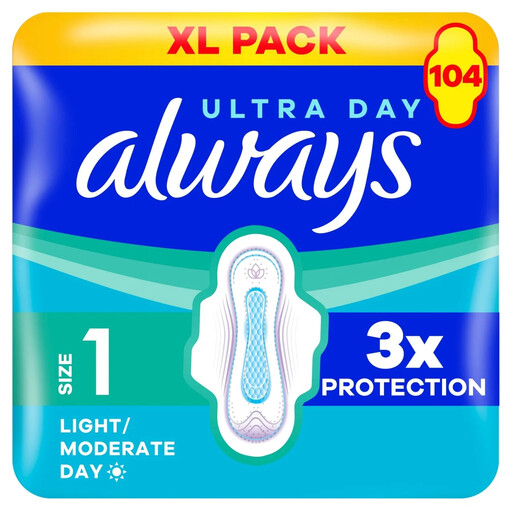
Why This Fits Their Persona: A large 104-pad pack is practical for regular daytime menstrual use, shared household storage or planning ahead between shopping trips.
Its normal Size 1 format is clearly described for regular daytime flow, avoiding the assumption that a large pack automatically means heavy-flow protection.
Ultra-thin construction, standard Size 1 coverage and 104 individual pads.
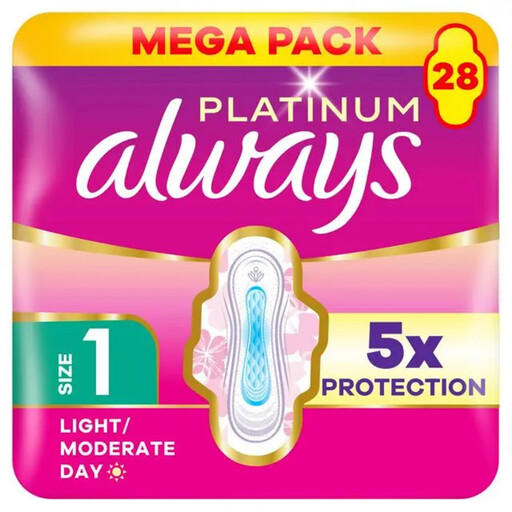
Why This Fits Their Persona: Suitable for users who prioritise a soft-feeling surface and a secure fit during normal-flow days at work, commuting or daily activities.
It combines a stated normal-flow specification with wings, rather than relying on a premium-sounding material description alone.
Soft surface, flexible wings, ultra-thin structure and a 28-pad pack.
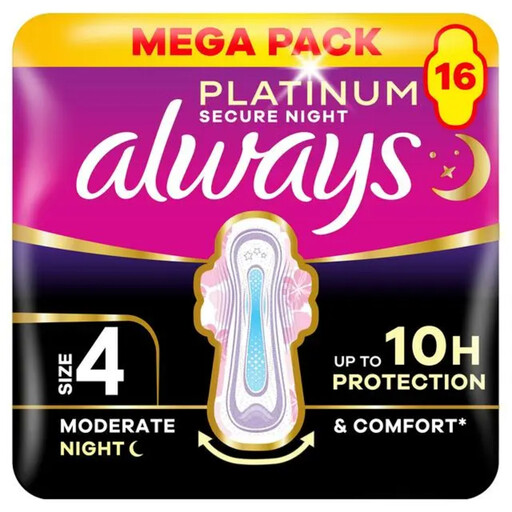
Why This Fits Their Persona: The 360 mm-style night coverage is suited to medium or heavy menstrual flow and people who want more protection while sleeping.
It uses an extra-long Size 4 night format with wings, addressing the coverage gap that can make standard ultra-thin pads unsuitable overnight.
Extra-long night design, wings and a 16-pad pack for overnight menstrual protection.
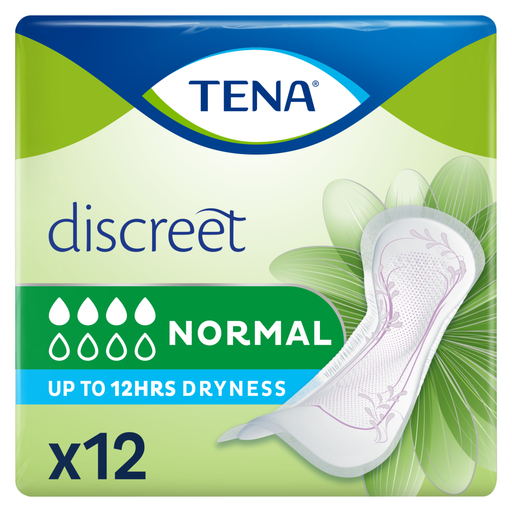
Why This Fits Their Persona: Designed for light to moderate bladder weakness, it suits commuting, shopping and carrying discreetly in a handbag or pocket.
It is explicitly labelled for incontinence rather than menstrual use, reducing the risk of selecting the wrong absorbent structure.
Single-wrapped pads, breathable textile-like outer material and stated triple protection against leaks, odour and moisture.
We have compiled a complete, real-time list of products that fully satisfy these strict selection criteria and UK safety regulations.
Change a pad when it feels wet, full or uncomfortable, and follow the product instructions. Some packaging suggests intervals such as four to eight hours, but flow levels vary. More frequent changes may be appropriate during heavier menstrual flow or warmer weather.
They are designed for bladder leaks rather than menstrual fluid, so they should not automatically be treated as interchangeable with menstrual pads. Select sanitary pads for periods and incontinence pads for urinary leakage. Always check the product’s intended use before buying.
Keep unopened packs in a clean, cool and dry place, away from prolonged direct sunlight and high heat. Individually wrapped pads are convenient for work, travel and discreet storage. Check the packaging for the batch, materials, expiry or shelf-life information where provided.