
24/7 Customer Support

Free returns

Same-day & Next-day Delivery

Quality Guaranteed

Unlock Your Welcome Offers: FREE Delivery | Up to 80% OFF | Free 30-day JoyPlus trial
Download the APP
For any serious table tennis player in the UK, the ball is not just a piece of equipment; it's the heart of the game. The difference between a well-struck shot and an unforced error often comes down to the ball's consistency, roundness and flight stability. Yet, the market is filled with options that can be confusing. Many players find themselves wasting money on balls that crack prematurely, have an inconsistent bounce, or simply don't meet the standards required for competitive play.
Before you make your next purchase, it's crucial to understand the common pitfalls. Many brands use a "3-star" label without any official backing, leading to poor performance. Another frequent issue is the misconception around "seamless" balls, which are often marketed as superior but can lack the flight stability of professionally recognised ABS seamed balls. Finally, buying balls made from low-grade plastic results in poor durability, forcing you to replace them far too often.
To ensure your equipment enhances your game rather than hindering it, focus on these non-negotiable parameters. These are the factors that separate casual toys from professional table tennis balls.
The single most important factor for a competition-level ball is official certification. A genuine 3 star table tennis ball must be approved by the International Table Tennis Federation (ITTF). This isn't just a marketing label; it's a guarantee that the ball has passed rigorous tests for:
Balls used in top-tier events, known as WTT competition balls, carry this certification. If a ball isn't listed on the official ITTF approved list, its "3-star" rating is purely a brand's own claim and offers no guarantee of quality.
Since the transition away from celluloid, the standard for all modern 40+ ping pong balls has become ABS (Acrylonitrile Butadiene Styrene) plastic. However, not all ABS balls are created equal. The construction method is key. While some brands promote seamless designs, the professional standard has settled on ABS seamed balls.
The seam, when manufactured correctly, helps to stabilise the ball's centre of gravity. This results in a more consistent and predictable flight arc and bounce, which is essential for high-level rallies. High-impact ABS material also provides superior durability, resisting cracks and maintaining its shape even after hours of intense play.
We've analysed the market based on these critical factors to match different player needs with suitable options.
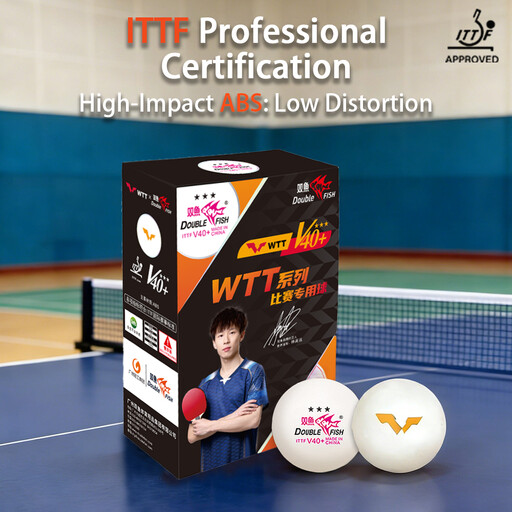
Why This Fits Their Persona: For players competing in leagues or tournaments in the UK, using the official ball is non-negotiable. This ball provides the exact feel, bounce and flight characteristics they will encounter in a competitive match.
It carries both ITTF and WTT certifications, eliminating the risk of buying a ball with a fake "3-star" rating. Its quality is verified for professional use.
Manufactured to strict tournament-grade specifications for superior stability and precision. It is the official ball for international matches.
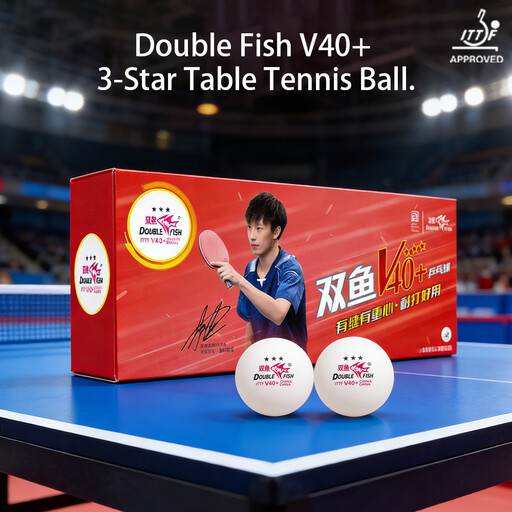
Why This Fits Their Persona: This player trains multiple times a week and needs a reliable supply of high-quality balls that replicate match conditions. This 10-pack offers better value for frequent practice sessions without compromising on quality.
It is also an ITTF approved table tennis ball, ensuring that every hour of training builds muscle memory that is directly applicable to competition play.
Offers certified performance in a more economical pack size. The high-impact ABS material ensures good durability for intensive training drills.
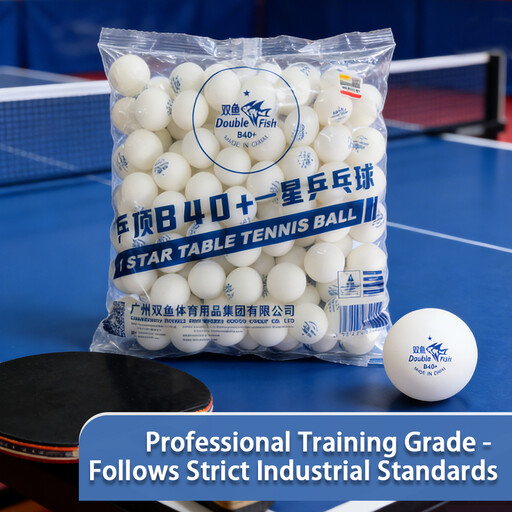
Why This Fits Their Persona: For club coaches and managers running multi-ball drills or stocking up for general play, cost and durability are paramount. This bulk pack of 100 training balls provides a consistent and reliable option that can withstand heavy use.
It is honestly marketed as a 1-star training ball, not an imitation 3-star. This avoids the pitfall of buying cheap, unrated balls that break easily and offer poor performance.
Excellent value for high-volume training. The new ABS material is designed for high-intensity use, offering good resilience and a consistent bounce for a training-grade ball.
We have compiled a complete, real-time list of products that fully satisfy these strict selection criteria and UK safety regulations.
The star rating system is a general indicator of quality and manufacturing tolerance.
The lifespan of a tournament grade table tennis ball depends heavily on the intensity of play. For a professional or high-level club player, a ball might only be used for a single match to ensure peak performance. In a training environment, a high-quality ABS ball can last for several weeks of regular use. Factors that reduce lifespan include frequent edge hits, powerful smashes and improper storage in extreme temperatures.
For competitive play, high-quality ABS seamed balls are generally considered the standard. The manufacturing process for seamed balls allows for a more perfectly spherical shape and a more stable centre of gravity. This translates to a more predictable and reliable flight path and bounce, which is what professional players require. While seamless technology is improving, the seamed ball remains the benchmark for WTT competition balls.