
24/7 Customer Support

Free returns

Same-day & Next-day Delivery

Quality Guaranteed

Unlock Your Welcome Offers: FREE Delivery | Up to 80% OFF | Free 30-day JoyPlus trial
Download the APP
A flat battery is more than an inconvenience; it can disrupt your entire day, whether you are on the way to an important meeting, doing the school run or setting off on a holiday. A powerful and reliable car jump starter is an essential piece of kit for any UK driver. However, the market is flooded with options, and it is easy to fall for marketing hype.
As a Joybuy Product Recommendation Officer, my role is to help you see past the exaggerated claims. This guide will focus on the critical factors you need to consider, helping you select a device that offers genuine peace of mind, particularly if you own a vehicle with a large petrol or diesel engine.
Before you invest in a new jump starter, be aware of these common pitfalls that lead to buyer's remorse:
To make an informed choice, focus on these three non-negotiable parameters.
Understanding the difference is crucial.
Always check the manufacturer's recommended engine displacement ratings (measured in litres). As a rule of thumb, choose a model rated for a slightly larger engine than your own to ensure reliable performance in cold weather.
The battery capacity, measured in milliamp-hours (mAh), determines how many jump starts you can perform on a single charge and how effectively it functions as a fast charging power bank for your devices. A larger capacity (e.g., 20,000mAh or more) offers more versatility.
A device handling this much power must be safe. Look for smart clamps that offer protection against:
A rugged, durable casing is also important for a tool that will live in your vehicle.
We have analysed the market to find jump starters that deliver on their promises. Here are our recommendations, matched to different UK driver profiles.
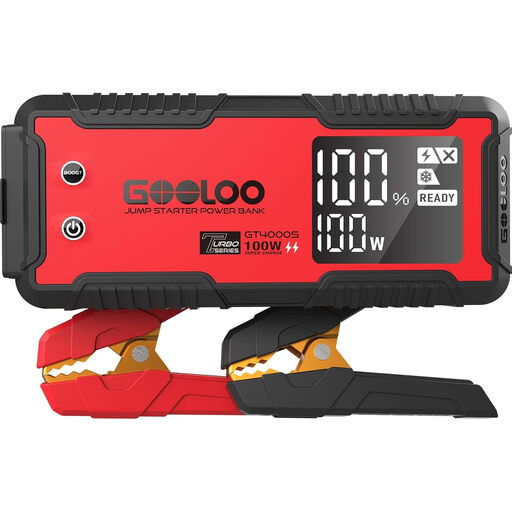
Why This Fits Their Persona: This is a serious tool for UK drivers of large vehicles. If you own a diesel truck, van, RV or a high-displacement SUV, this unit provides the necessary power to start your engine reliably, even in the cold.
It sidesteps the "Peak Amps Illusion" by backing its 4000A peak rating with the genuine ability to start large 10.0L diesel engines, providing the real-world power that many competitors only promise.
Its standout feature is the 100W two-way fast charging. Not only can it power a laptop, but the unit itself can be fully recharged in just over an hour, making it exceptionally practical for professionals.
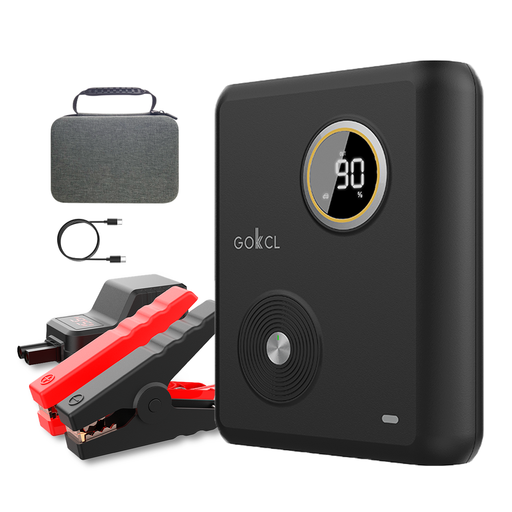
Why This Fits Their Persona: For the driver who values long-term reliability and safety above all. This is a "set and forget" device you can trust to be ready after years in the boot, thanks to its advanced battery technology.
It directly solves the "Standby Charge Failure" pitfall. Its sodium-ion battery has a very low self-discharge rate, allowing it to hold a charge for up to 5 years, unlike lithium models that require recharging every few months.
Its chemistry is inherently safer and more stable across a wide temperature range (-40°C to 80°C), making it a dependable choice for the unpredictable UK climate. It can also be reactivated from 0V, a feature most lithium units lack.
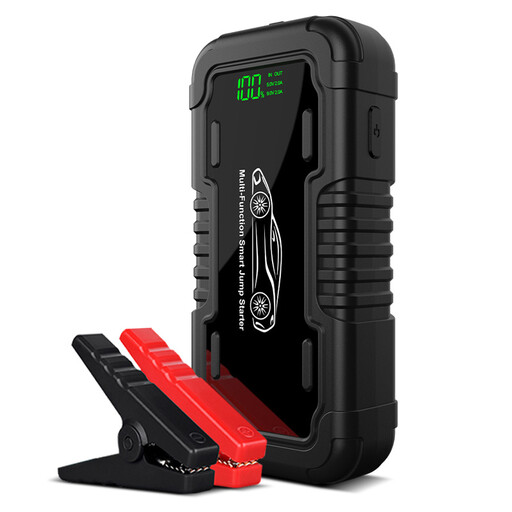
Why This Fits Their Persona: This is a superb all-rounder for the majority of UK drivers with standard petrol or diesel cars, SUVs and small vans. It offers a great balance of power, portability and price, making it a practical addition to any emergency kit.
It provides a realistic 2000A peak current and a large 20,000mAh battery, avoiding the trap of paying a premium for an overpowered 4000A unit that is unnecessary for a typical family car.
It doubles as an effective portable car battery charger and power bank, featuring QC3.0 18W fast charging to quickly power up your phone or tablet. The smart LCD display is a practical touch for monitoring its charge level.
We have compiled a complete, real-time list of products that fully satisfy these strict selection criteria and UK safety regulations.
1. How many amps do I really need to jump-start my car in the UK? For most petrol cars up to 3.0L, a jump starter with 1200A to 1500A peak current is usually sufficient. For larger petrol engines (V6/V8) and diesel engines up to 3.0L, stepping up to a 2000A-2500A model is advisable. For heavy-duty vehicles like large vans, motorhomes or trucks with diesel engines over 3.0L, a powerful jump starter for trucks with 3000A to 4000A peak current is recommended, especially for reliable starting in cold weather.
2. Can a 4000A car jump starter damage my car's electronics? A quality jump starter with modern safety features will not damage your car. Reputable models include "smart clamps" with built-in protections against reverse polarity, short circuits, over-voltage and surges. These systems ensure that the correct amount of power is delivered safely, protecting both the jump starter and your vehicle's sensitive electronic control units (ECUs). Always follow the manufacturer's instructions carefully.
3. How long does a lithium jump starter hold its charge? This varies significantly by quality. A low-quality unit might lose 20-30% of its charge in just a few months. A well-made 12V lithium jump box should retain at least 80% of its charge for 6 to 12 months. Some newer technologies, like the sodium-ion model mentioned above, have much lower self-discharge rates and can hold a usable charge for several years. We recommend checking and recharging your jump starter every 3-4 months to be safe.