
24/7 全天候客户支持

免费退货

当日/次日达

品质保障

开启新人专享福利: 全场免邮 | 低至 2 折 | 免费试用 30 天 JoyPlus 会员
下载 Joybuy
For dedicated tennis players in the UK, finding consistent, high-quality practice can be a constant challenge. Court time with a coach is valuable but limited, and a willing hitting partner with a flexible schedule is a rare find. This is where modern tennis practice equipment has evolved. An AI tennis ball machine is no longer just a device that fires balls at you; it's a sophisticated training partner designed to sharpen your reflexes, perfect your technique and build match-winning stamina.
This guide is designed to help you navigate the features of today's advanced models. We will break down the key considerations for choosing the right machine for your skill level and training goals and present some of our top recommendations for 2026 to help you make an informed decision.
Before diving into specific models, it’s useful to understand what sets these machines apart. Focusing on a few key areas will help you identify the features that matter most to you.
Consider how you will transport and set up your machine. If you frequently travel between different clubs or courts, a lightweight and compact design is crucial. Look for models described as a portable tennis ball launcher, often featuring integrated wheels, carry handles or even an all-in-one suitcase design. Check the weight (in kg) and dimensions to ensure it fits your vehicle and is manageable for you to handle alone. Battery life is also a key part of portability; a machine with a 3-4 hour battery life allows for substantial training sessions without needing a power source nearby.
The "AI" in these machines refers to their intelligent capabilities. A basic machine offers pre-set drills, but a true smart tennis robot provides much more. Look for features like:
Your machine should be able to challenge you as you improve. Pay close attention to the performance specifications. A versatile tennis serving machine should offer a wide range of ball speeds (e.g., from a gentle 20 km/h for beginners up to a formidable 140 km/h for advanced players), as well as significant topspin and backspin capabilities. The ability to create and save your own custom drills, combining different shots into complex sequences, is what transforms a simple ball feeder into a long-term training tool.
Here are a few standout models that offer a compelling combination of performance, intelligence and user-focused design.
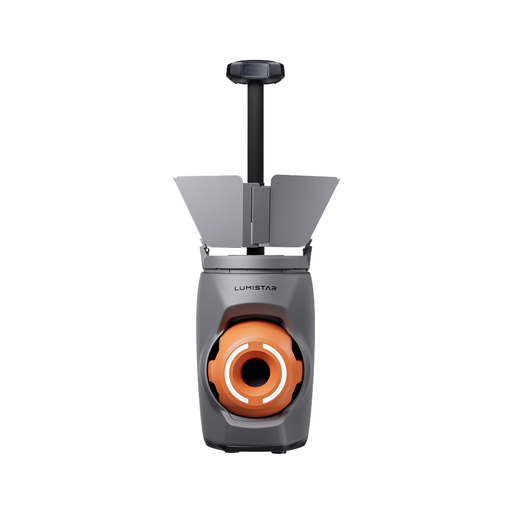
Why It Stands Out: The Lumistar Tero is engineered for serious players who demand high performance. Its standout feature is the pro-level serving capability, reaching speeds up to 87 MPH (140 km/h) with remarkable stability and accuracy. The all-in-one suitcase design is also a major plus, making it surprisingly portable for such a powerful unit.
Pros:
Who is it for? This machine is an excellent match for competitive club players and semi-professionals who need to practice against high-speed, challenging shots and want a wide variety of complex, pre-programmed drills.
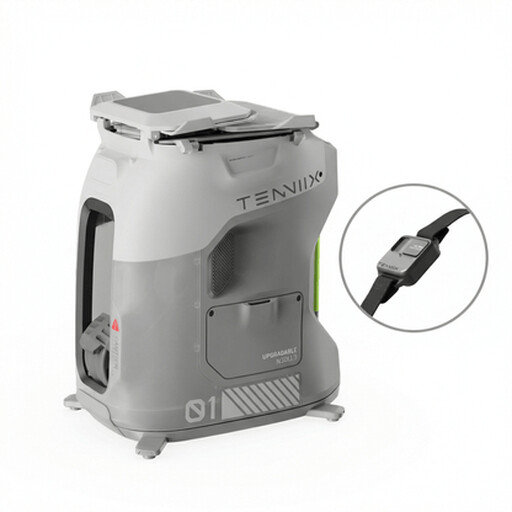
Why It Stands Out: The TENNIIX Basic strikes a fine balance between portability, smart features and future-proofing. Weighing only 18.7 lbs (approx. 8.5 kg), it's one of the lighter smart trainers available. Its most unique feature is the clear LED screen on the unit, which visualises the upcoming shot type and direction, helping you anticipate and prepare.
Pros:
Who is it for? Ideal for advanced beginners and intermediate players who prioritise portability and a user-friendly interface. The modular upgrade path also makes it a great long-term investment for those committed to improving.
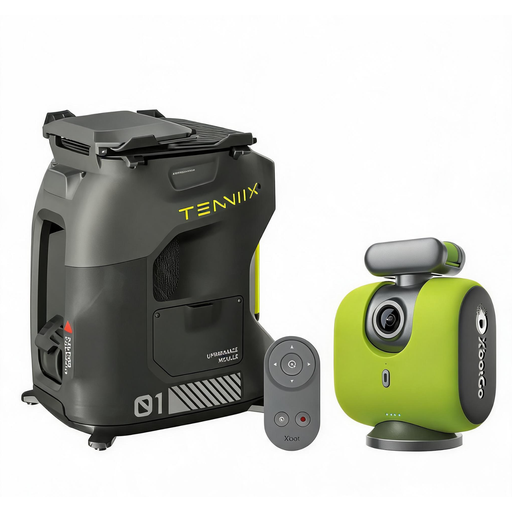
Why It Stands Out: This kit elevates the TENNIIX system into a complete performance analysis tool. By integrating an AI camera, it moves beyond just ball delivery. The system records your sessions and provides data-driven feedback on your form, footwork and stroke mechanics, offering insights that were once only available from a human coach.
Pros:
Who is it for? This is the ultimate choice for the data-driven player. If you love analysing your performance and want concrete, visual feedback to perfect your technique, this complete training kit is designed for you.
If the models above aren't the perfect fit, or if you're interested in exploring a wider variety of training aids and accessories, there are many other types of equipment to consider.
Browse our full collection of sports trainers to discover more options.
1. What makes an AI tennis machine 'smart'? Unlike a traditional ball machine that repeats a single shot, a smart or AI machine uses software to add variety and intelligence. This includes the ability to randomise ball placement, speed and spin to simulate a real opponent, offer complex pre-programmed drills and in some cases, even adjust its feed rate based on the timing of your returns.
2. Are portable tennis ball launchers powerful enough for advanced practice? Yes, many modern portable models are designed to challenge advanced players. For example, models like the Lumistar Tero can deliver balls at speeds up to 140 km/h (87 MPH) with heavy spin, which is more than sufficient for high-level training. Always check the maximum speed and spin specifications to ensure they meet your practice needs.
3. How important is a voice control feature? A voice control feature, typically operated via a wristband, adds a significant layer of convenience. It allows you to start, pause or switch between drills without walking back to the machine or fumbling with your phone. This creates a more seamless and efficient practice session, maximising your time hitting balls on the court.