
24/7 Customer Support

Free returns

Same-day & Next-day Delivery

Quality Guaranteed

Unlock Your Welcome Offers: FREE Delivery | Up to 80% OFF | Free 30-day JoyPlus trial
Download the APP
As a Joybuy Product Recommendation Officer, my role is to help you navigate the crowded market of home technology. The promise of a truly automated cleaning solution is appealing, but not all devices deliver. The latest trend, the robot vacuum with bagless self-empty station, aims to solve the final piece of the puzzle: hands-free cleaning for weeks on end.
However, many shoppers find themselves disappointed, caught out by clever marketing and hidden flaws. Before you invest, let's look at the common pitfalls to avoid and what really matters when choosing a machine that will genuinely make your life easier.
To ensure you get a device that performs as promised, focus on these non-negotiable specifications.
For a robot hoover to clean your home efficiently, it needs to understand the layout. This is where its navigation technology is critical.
The primary reason to upgrade is the convenience of an robot hoover with auto empty capabilities. The choice between a bagged or bagless system has significant long-term implications.
A bagless self-empty station uses multi-cyclone separation technology to pull debris from the robot's bin into a larger, sealed container within the dock. You simply empty this container into your household bin every 60-90 days. This approach offers two key advantages:
A powerful motor is a good start, but performance is about the whole system. For homes with mixed flooring and pets, look for:
Instead of a generic list, we've matched specific models to different household needs, helping you find the right fit.
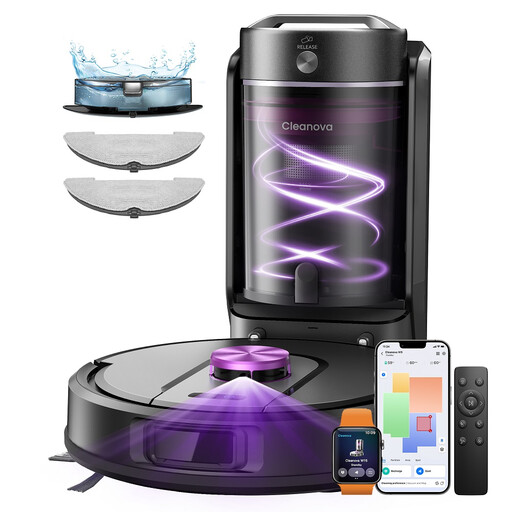
Why This Fits Their Persona: Ideal for busy households with pets and larger floor plans. The combination of high suction, LiDAR mapping and a bagless station provides a truly "set-and-forget" cleaning solution that tackles the challenges of pet hair and saves money in the long run.
Its bagless self-empty station directly counters the "hidden costs" trap of disposable bags. The 10000Pa suction is paired with precise LiDAR navigation, avoiding the "inflated power" and "dumb smart" pitfalls by delivering power where it's actually needed.
The innovative multi-cyclone docking station provides up to 90 days of hands-free cleaning without recurring costs. It's an economical and eco-friendly robot vacuum choice.
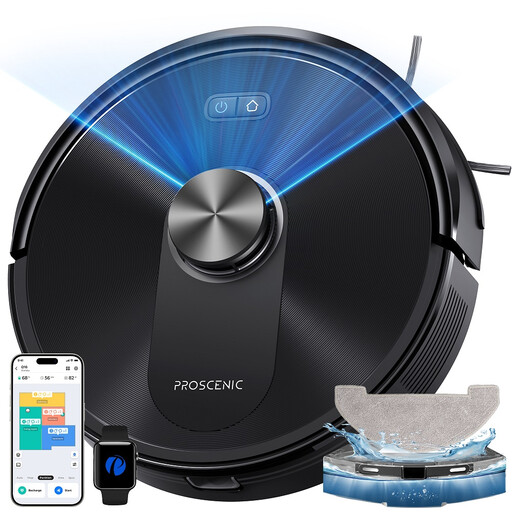
Why This Fits Their Persona: A great option for those in flats or smaller homes who want high-end navigation and cleaning features without the higher cost of a self-emptying station. It offers a significant upgrade in cleaning intelligence and performance over basic models.
This model sidesteps the "dumb smart" navigation flaw by incorporating a true LiDAR system. This ensures you get the efficient, methodical cleaning path and customisation features typically found on more expensive machines.
It provides access to premium LiDAR mapping and 3-in-1 vacuuming and mopping functions at a more accessible price point. The 200-minute runtime is excellent for its class.
We have compiled a complete, real-time list of products that fully satisfy these strict selection criteria and UK safety regulations.
1. How often do you need to clean a bagless self-empty station? While the main dust container may hold up to 90 days of debris, the station's filters (such as the HEPA and cyclone components) require periodic maintenance. It is good practice to check and clean these filters once a month to ensure the station maintains its suction efficiency and operates correctly. This is still far less work than emptying the robot's small internal bin after every clean.
2. Can a 10000Pa robot vacuum replace my main hoover? For daily and weekly maintenance cleaning, a high-performance 10000Pa suction robot vacuum can dramatically reduce your manual cleaning workload, especially for keeping on top of dust and pet hair. However, for tasks like cleaning stairs, car interiors, upholstery, or performing an occasional deep clean, a powerful cordless or upright vacuum remains a valuable tool to have.
3. Is a LiDAR robot vacuum difficult to set up with Alexa? Not at all. Modern LiDAR robot vacuums are designed for user-friendly setup. The process typically involves downloading the manufacturer's app to connect the robot to your Wi-Fi. To enable smart vacuum with Alexa control, you simply open the Alexa app, find and enable the corresponding 'skill' for the vacuum brand and link your accounts. The entire process usually takes less than five minutes.