
24/7 Customer Support

Free returns

Same-day & Next-day Delivery

Quality Guaranteed

Unlock Your Welcome Offers: FREE Delivery | Up to 80% OFF | Free 30-day JoyPlus trial
Download the APP
A perfect bake starts long before you preheat the oven. It begins with choosing the right equipment. Yet, many of us have faced the disappointment of a beautiful cake sticking stubbornly to its tin, or a cheesecake batter leaking all over the oven floor. Finding reliable baking tins can feel like a lottery, with many products failing to live up to their promises.
As the Joybuy Product Recommendation Officer, my role is to help you navigate the market and make informed choices. Before you add another tin to your collection, let's look at the common pitfalls that lead to wasted money and baking frustration.
To ensure your next bake is a success, focus on these core features rather than marketing hype.
The material of your tin has the biggest impact on its performance.
For cakes that can't be inverted, like cheesecakes or delicate tortes, a tin with a release function is non-negotiable.
A good non-stick cake tin will have a durable coating that can withstand regular use. Some tins specify the type of coating used, such as Xylan or Goldflon, which can indicate a higher standard. For health and safety, checking for BPA-free and PFAS-free materials is also a wise step. Finally, feel the weight of the tin. A sturdier, heavier tin is less likely to warp and will provide the even heating needed for a perfect bake.
Based on these practical criteria, here are a few options from our catalogue, matched to different types of home bakers.
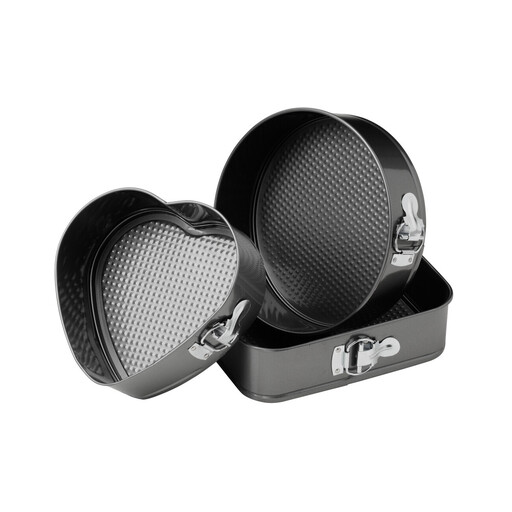
Why This Fits Their Persona: This baker enjoys making treats for birthdays, holidays and weekend fun. They need a reliable and versatile cake tin set that covers different occasions without cluttering the cupboards.
The simple but effective springform mechanism on all three tins addresses the fear of leaky or stuck cakes, making them suitable for beginners and family baking activities.
Includes three popular shapes (round, square, heart) in one package. The non-stick carbon steel is dishwasher safe, simplifying cleanup after a fun baking session.
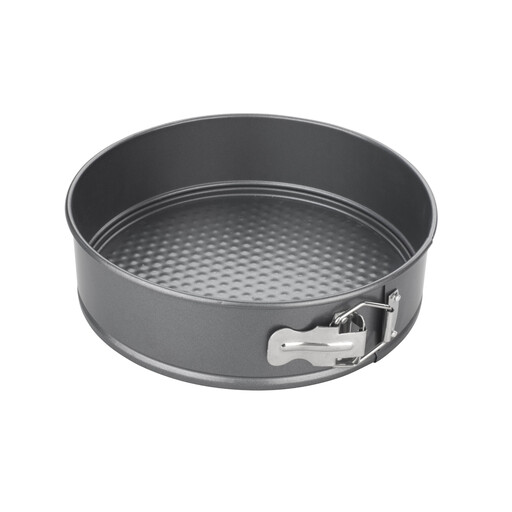
Why This Fits Their Persona: This baker loves making cheesecakes, mousses and layered tortes. For them, a clean release is not just a convenience—it's essential for a successful result. Reliability is their top priority.
It directly counters the pitfalls of poor coatings and leaky seals. The secure latch prevents batter from escaping, and the specified Goldflon non-stick coating offers a higher level of performance than generic alternatives.
The tin is exceptionally versatile, being safe for the dishwasher, fridge and freezer. The robust carbon steel construction ensures even heat distribution for consistent baking.
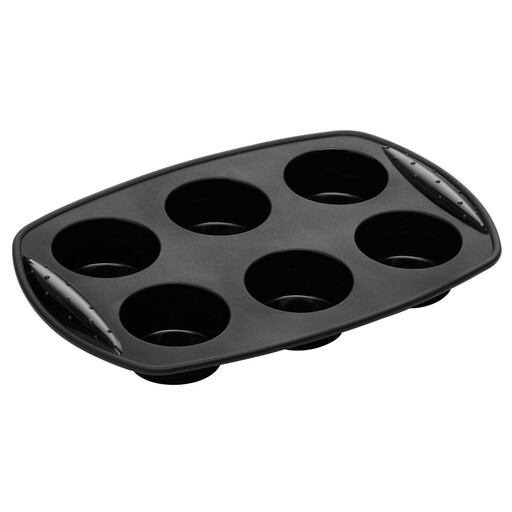
Why This Fits Their Persona: This person frequently bakes muffins, cupcakes or individual savouries. They need a durable muffin tray that offers a quick, clean release and is simple to wash, ready for the next batch.
By using durable silicone, it completely bypasses the issues of scratched non-stick coatings and warping metal. The flexible material ensures muffins pop out perfectly every time without leaving residue behind.
It is heat resistant up to 230°C and safe for the microwave, freezer and dishwasher, offering maximum convenience for both baking and storage. The side handles provide a secure grip.
We have compiled a complete, real-time list of products that fully satisfy these strict selection criteria and UK safety regulations.
To preserve the non-stick surface, always avoid using metal utensils, knives or abrasive scourers. Wash with a soft sponge and warm, soapy water. While some tins are listed as dishwasher safe, hand washing is often gentler and can prolong the life of the coating. Always let the tin cool completely before washing to prevent thermal shock, which can degrade the surface over time.
Neither is inherently "better"; they simply excel at different tasks. Metal tins, particularly those made of carbon steel, provide superior heat conduction for even browning, making them ideal for traditional cakes, pies and bread like a classic loaf tin. Silicone moulds are unmatched for their flexibility, making them perfect for releasing intricately shaped bakes, chocolates or frozen items. Many bakers keep both types in their kitchen.
Both are designed for easy removal of delicate cakes. A springform cake tin has a detachable side that unclips and expands. A loose bottom cake tin has a solid ring and a base that you push upwards from below to release the cake. Springform tins are very common for cheesecakes, while loose bottom tins are often favoured for tarts and quiches where a crisp, straight edge is desired.