
24/7 Customer Support

Free returns

Same-day & Next-day Delivery

Quality Guaranteed

Unlock Your Welcome Offers: FREE Delivery | Up to 80% OFF | Free 30-day JoyPlus trial
Download the APP
From seasonal pollen and urban pollution to lingering pet dander and household dust, maintaining clean indoor air can feel like a constant challenge. An effective air purifier can make a significant difference to the comfort and quality of your home environment. However, with so many models and technical terms, choosing the right one can be confusing.
As the Joybuy Product Recommendation Officer, my role is to help you navigate the options. This guide offers practical advice and highlights a selection of air purifiers to help you find a suitable match for your home and needs.
Before looking at specific models, consider these key factors to narrow down your search.
The most important specification for any air purifier is its CADR (Clean Air Delivery Rate). Measured in cubic metres per hour (m?/h), this rating tells you how quickly the unit can clean the air within a specific room size. A higher CADR means faster purification.
To find the right fit, measure your room's area (length x width in metres). A purifier's recommended room size is usually listed in square metres (m?). Choosing a model with a CADR appropriate for your room ensures it can circulate and clean the air effectively, rather than struggling to keep up. For instance, a large room air purifier will have a significantly higher CADR than a compact model designed for a small bedroom.
The type of filter determines what pollutants an air purifier can remove. Most quality units use a multi-stage system:
An air purifier is only useful if you're willing to run it. A noisy unit can be disruptive, especially in a bedroom or office. Look for the noise level, measured in decibels (dB). A quiet air purifier will often feature a dedicated 'sleep mode' that operates at a very low fan speed, typically between 20-30 dB, which is comparable to a whisper.
Additionally, a smart air purifier can offer enhanced convenience. Features like Wi-Fi connectivity for app control, automatic modes that adjust fan speed based on real-time air quality sensors and timers can help you manage your indoor air with minimal effort.
Here is a selection of models that cater to different room sizes and user needs.
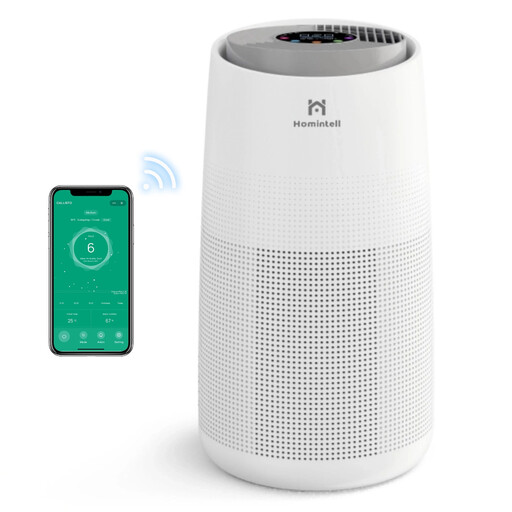
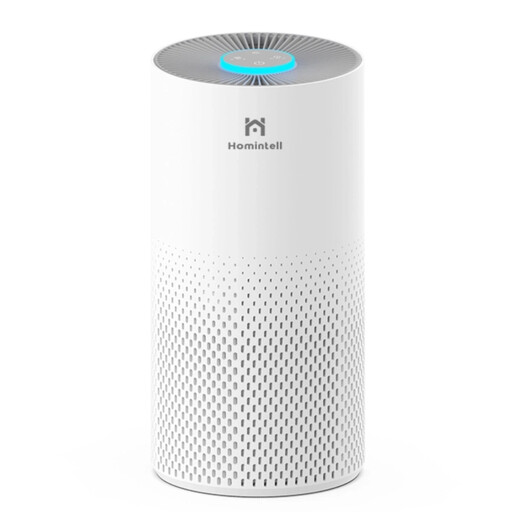
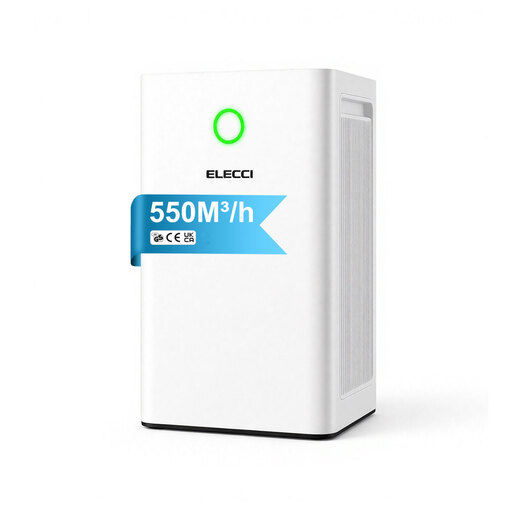
If these models aren't quite what you're looking for, there are many other purifiers available with different specifications and features. To see a wider selection, you can explore our complete range of HEPA purifiers to find the perfect fit for your home.
1. How often do I need to change the filter in an air purifier? This depends on the model and your household air quality. Generally, HEPA and carbon filters should be replaced every 6 to 12 months. Many modern air purifiers, including the models mentioned above, come with a filter replacement indicator that alerts you when it's time for a change. A washable pre-filter can help prolong the life of the main filters.
2. Can an air purifier help with hay fever and pet allergies? Yes, an air purifier can be very effective. A model equipped with a True HEPA filter is specifically designed to capture tiny airborne particles like pollen, pet dander, mould spores and dust mite debris. By continuously filtering these allergens from the air, a purifier can help reduce exposure and alleviate common allergy symptoms indoors.
3. Where is the best place to put an air purifier in a room? For optimal performance, place your air purifier in the room where you spend the most time, such as the bedroom or living room. Position it with at least 30-50 cm of clear space on all sides to ensure unrestricted airflow. Avoid placing it in tight corners or directly against a wall, as this can block the air intake and outlet vents.