
24/7 Customer Support

Free returns

Same-day & Next-day Delivery

Quality Guaranteed

Unlock Your Welcome Offers: FREE Delivery | Up to 80% OFF | Free 30-day JoyPlus trial
Download the APP
Choosing a blood glucose monitor kit is not simply about finding the lowest-priced meter. For regular home blood sugar testing, the ongoing cost of strips, model compatibility and ease of use can matter more than the device itself.
A suitable kit may help adults with diabetes, pre-diabetic users and carers organise routine readings at home, at work or while travelling. However, product pages often highlight speed and “advanced” technology without making the practical limitations clear. The following guide explains what to check before buying.
Test strips are usually model-specific. A Yuwell strip designed for a Model 710 meter cannot be assumed to work with another Yuwell device or a different brand. The same applies to Sinocare Safe-Accu2, Safe AQ Pro and Safe AQ Smart systems.
A low-cost glucose meter can become expensive if compatible replacement strips are difficult to source or cost more than expected. Before ordering, check:
A five-second result is convenient, particularly for users testing frequently or managing readings around meals. However, speed does not remove the need for correct handwashing, adequate blood sampling and proper strip storage.
Look for clear instructions, an easy-to-read screen and a lancing device with adjustable depth. These features can make regular home blood sugar testing less awkward, especially for older users or carers assisting someone else.
Test strips are sensitive to moisture, heat and air exposure. Leaving a vial open or storing strips in unsuitable conditions may affect their performance. Check the stated shelf life and follow the manufacturer’s instructions after opening.
Some products specify a shorter period once the vial is opened. For example, the Safe-Accu2 replacement strips listed below should be used within three months of opening, while other Sinocare products specify six months. Keep the container tightly closed and avoid transferring strips into another box.
The required sample is measured in microlitres. A smaller requirement may make lancing more comfortable, but the sample still needs to be applied correctly.
The Sinocare Safe-Accu2 system specifies a 0.6 μL blood sample and a result within 10 seconds. Several Safe AQ Pro, Safe AQ Smart and AILE systems specify results within 5 seconds, with sample requirements ranging from 0.6 μL to 1 μL.
These are product specifications rather than a guarantee that every reading will be suitable for medical decision-making. Always follow the supplied manual and speak to a healthcare professional if a result appears unexpected.
UK users generally look for an mmol/L glucose meter, so confirm the measurement unit before buying. Some devices offer selectable units, while others are supplied in a transparent mmol/L version.
A no-code blood glucose meter reduces manual setup because the user does not need to enter a code for each new strip batch. Automatic coding or factory calibration may also simplify operation. Nevertheless, only use the strips specified for that meter; “no-code” does not mean universal compatibility.
A meter with stored results can help users review readings with dates and times. Storage capacity varies:
A large screen, colour indicators and 7-, 14- or 30-day averages may be helpful, but stored readings should not replace advice from a GP, diabetes nurse or other qualified professional.
For UK buyers, also check the packaging for applicable conformity marking, manufacturer details, instructions for use and the relevant responsible-person information. ISO 15197 is a recognised standard covering performance requirements for blood glucose monitoring systems; where a listing refers to certification, read the product documentation for the precise scope.
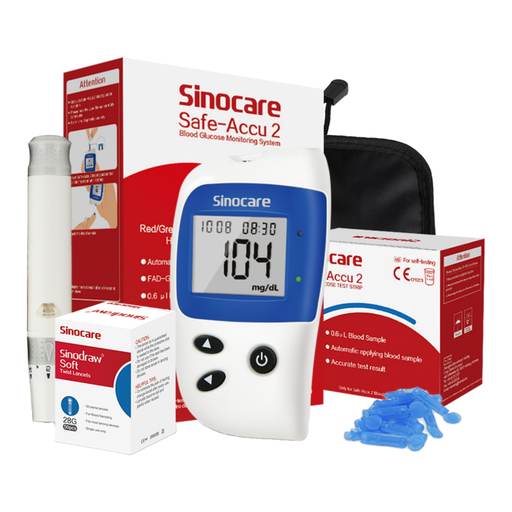
Why This Fits Their Persona: A straightforward starter set for UK households that want a meter, lancing device and 50 test strips in one purchase. It uses an mmol/L display, has a large screen and stores up to 200 dated results.
The listing states a 0.6 μL sample requirement and 10-second result time, while the included 50 strips make the initial running supply clear.
Large display, 200-result memory and a strip-eject button for simpler handling.
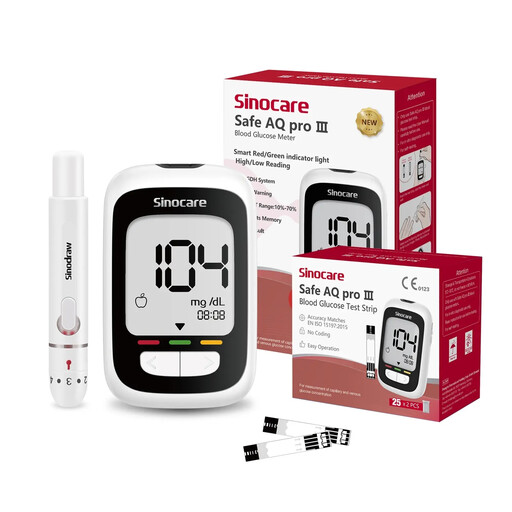
Why This Fits Their Persona: Suitable for users who value fast blood glucose testing, a larger result history and a complete carry case for regular use outside the home.
The kit identifies the compatible Safe AQ Pro III system and lists automatic coding, helping reduce confusion during setup.
Five-second readings, 50 strips and 50 lancets, with a stated 1 μL sample requirement.
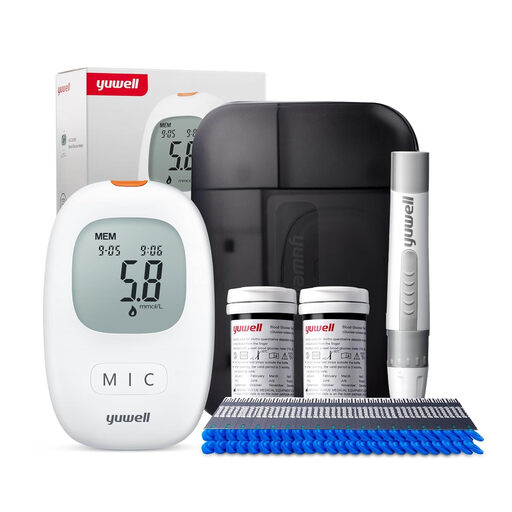
Why This Fits Their Persona: Designed for people who record readings frequently and want dated memory, average values and a compact meter for home, work or travel.
The listing clearly states that the meter only accepts Yuwell strips for Model 710, preventing an incompatible refill purchase.
Stores up to 250 readings, provides 7-, 14-, 30-, 60- and 90-day averages, and includes a battery and travel case.
Once your meter is chosen, replacement supplies are the main ongoing purchase. For example, Sinocare Safe-Accu2 test strips and lancets are specified for the Safe-Accu2 meter only. Similarly, Yuwell Model 710 test strips and lancets contain 50 strips and 50 lancets, but are not interchangeable with other models.
Before adding a refill to your basket, compare the model number on the meter, strip box and product page. Store strips as directed, check expiry dates and dispose of used lancets in a suitable sharps container. Never share a meter or lancing device.
We have compiled a complete, real-time list of products that fully satisfy these strict selection criteria and UK safety regulations.
Read the manual first, wash and dry your hands, insert a compatible strip and use the lancing device according to its instructions. Apply the blood sample to the stated collection area and wait for the displayed result. Do not share equipment, and ask a healthcare professional to demonstrate the process if you are unsure.
The expiry date varies by product. Some strips also have a separate after-opening period, such as three or six months. Keep the vial closed, protect it from humidity and do not use strips after the stated date.
The meter is usually only part of the cost. Calculate the price of replacement blood glucose test strips and lancets, how often you expect to test and how many strips are included initially. A kit with 50 strips may offer a more transparent starting point, but always confirm the price and availability of compatible refills.