
24/7 Customer Support

Free returns

Same-day & Next-day Delivery

Quality Guaranteed

Unlock Your Welcome Offers: FREE Delivery | Up to 80% OFF | Free 30-day JoyPlus trial
Download the APP
A customisable mechanical keyboard can improve typing comfort, gaming control and desk organisation, but the specification sheet does not always tell the full story. Buyers can easily pay for features they will rarely use or overlook details that affect everyday usability.
Three common purchasing pitfalls are worth checking before you choose:
The right layout depends on your daily tasks.
Many products use a US QWERTY keyboard arrangement, also called ANSI. This can differ from the UK ISO layout, particularly around the Enter key, left Shift key and symbol positions. Check the keycap legends and your operating system settings before ordering. A US layout can work in the UK, but it may require adjustment if you regularly use UK-specific symbols.
Switch type affects sound, resistance and key travel. Linear switches provide a smooth press without a tactile bump, while tactile switches provide a noticeable point of resistance. Silent switches can be more appropriate for shared offices or late-night use, although the case and keycaps also influence overall noise.
A hot-swappable mechanical keyboard allows compatible switches to be replaced without soldering. Confirm whether the PCB supports 3-pin, 5-pin or both types. The Ticktype EVO75, for example, specifies support for both 3-pin and 5-pin switches.
Mounting style also changes the typing feel:
Neither system is automatically suitable for every user. Those who prefer a firmer, direct keystroke may favour a less flexible construction, while users seeking a softer typing experience may appreciate gasket or leaf spring designs.
An aluminium mechanical keyboard made with CNC-machined aluminium can provide a substantial desk feel, but it may also weigh more than a plastic model. Check the stated dimensions, weight and finish if you frequently move between home and office.
For connectivity, a tri-mode wireless mechanical keyboard normally combines Bluetooth, 2.4GHz wireless and USB-C wired operation. Confirm how many Bluetooth devices it can pair with, whether a receiver is included and how charging is handled.
Battery capacity is measured in mAh, but it does not directly guarantee a particular runtime. RGB brightness, wireless mode, screen functions and firmware settings can all affect battery consumption. Use the supplied cable and follow the manufacturer’s charging and battery safety guidance.
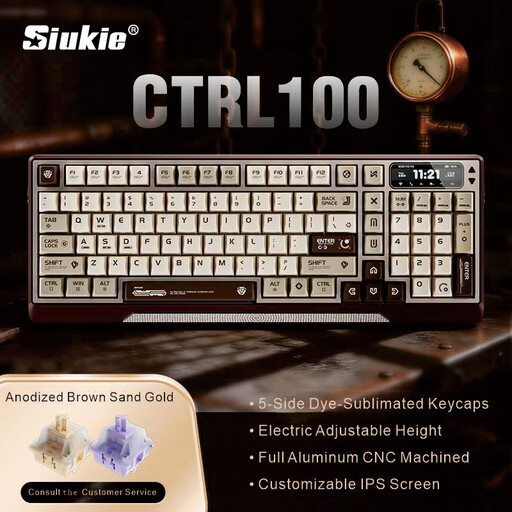
Why This Fits Their Persona: A suitable starting point for users wanting a substantial keyboard with wireless flexibility and a condensed layout without moving straight to a full-size board.
Its product specification clearly identifies the 96% US QWERTY layout and tri-mode connection types, helping buyers avoid vague wireless or layout descriptions.
CNC aluminium construction, HMX Cream Taro HIFI linear pre-lubricated switches, motorised lift and Bluetooth, 2.4GHz and USB-C connectivity.
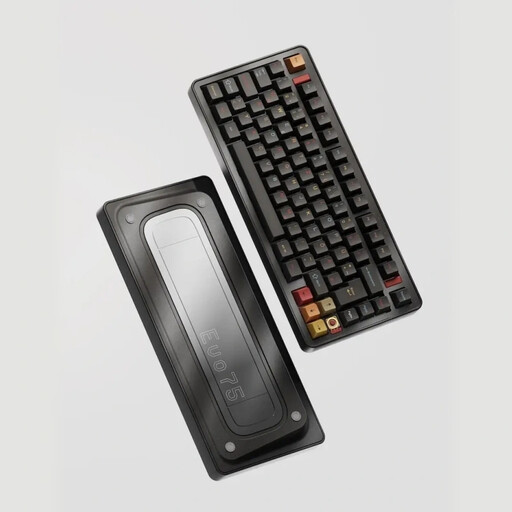
Why This Fits Their Persona: Suited to enthusiasts who want to tune the typing experience, customise lighting and move between a desktop, laptop and other compatible devices.
It specifies hot-swappable support, leaf spring mounting, per-key RGB and custom software rather than presenting lighting as the only form of personalisation.
75% 80-key layout, full aluminium construction, 8000mAh battery, RGB, three connection modes and support for 3-pin and 5-pin switches.

Why This Fits Their Persona: A practical match for programmers, office users and gamers who rely on a number pad while still wanting wireless operation and custom controls.
Its full-size 108-key format avoids the common compromise of losing the number pad simply to obtain wireless and customisation features.
Full aluminium full-size layout, hot-swappable design, leaf spring mount, 8000mAh battery, RGB and customisable pixel screen.
We have compiled a complete, real-time list of products that fully satisfy these strict selection criteria and UK safety regulations.
Most models can be used in USB-C wired mode without extensive configuration. Wireless pairing normally involves selecting Bluetooth or connecting the 2.4GHz receiver. Software may be needed for macros, RGB effects, screen settings or remapping. Keep the keyboard’s firmware and configuration software updated where the manufacturer provides updates.
There is no single guaranteed lifespan. It depends on switch design, usage frequency, spill exposure, battery care and whether replacement parts are available. A hot-swappable PCB can extend practical serviceability because compatible switches can be changed individually. Keep liquids away from the board and avoid forcing switches into their sockets.
RGB lighting uses additional power, particularly at high brightness and with animated effects. On a wireless keyboard, this can reduce the interval between charges. Lower brightness or turning lighting off can help conserve battery power. If you use the keyboard mainly at a desk, USB-C wired mode can avoid relying on battery power during long work sessions.