Meeting-to-meeting presenters
If you move slide decks, PDFs and linked media between your laptop and other computers, straightforward connections and manageable copying times matter most.


For routine presentation hand-offs, choose a portable SSD whose connector, cable and file format work with the computers you will actually use. Consider a rugged model for frequent travel or exposure to dust and splashes, and check encryption and password protection before carrying sensitive files. Advertised transfer speeds depend on the host device and connection.
If you move slide decks, PDFs and linked media between your laptop and other computers, straightforward connections and manageable copying times matter most.
Taking files to client sites, classrooms or events makes the conditions in which you carry and handle the drive part of the choice.
Personal or confidential content calls for a closer look at encryption, password setup and your organisation’s rules for removable storage.
Start with the devices that must open your files; then decide whether travel conditions or sensitive content call for features beyond a standard portable SSD.
| Concern | What to check | Who this matters to |
|---|---|---|
| Copying and compatibility | Check the ports, cable ends and file system needed by both your own device and the presentation computer. Treat advertised MB/s figures as maximums, not promised copying rates. | If I move decks and linked media between computers, I need the files to open without a last-minute connection problem. Around 50% of consumers put straightforward copying and compatibility first. |
| Travel durability | Check the exact model’s dust-and-water rating and stated drop-test conditions; neither replaces a separate copy of your files. | When I carry a drive between venues, drops, dust or splashes are my main concern. For around 30% of consumers, durability takes priority. |
| Sensitive-file protection | Check how encryption or password protection is enabled and whether it works on the computers you use. | If the slides contain personal or confidential material, I need to manage what happens if the drive is lost. That protection comes first for around 20% of consumers. |
Samsung UK notes that T7 performance varies with the host configuration; Crucial’s stated X9 maximum was measured on a high-performance desktop system. The figure on a drive is not a guaranteed copying rate on a venue computer.
Check the ports and cable available at both ends of the hand-off before paying for a higher-rated interface.
A suitable connector does not settle file-system compatibility. Crucial says its X9 ships formatted as exFAT and that compatibility can vary with formatting and host capability.
Test the drive, cable and final presentation files on the computers you expect to use before the event.
If that drive is lost or cannot be opened, the presentation may be inaccessible. The UK National Cyber Security Centre describes a backup as a separate copy kept in a safe location.
Keep another accessible copy of the final files before travelling.
A drive containing personal or confidential material may be lost. The Information Commissioner’s Office advises using encryption for personal information stored on removable media as part of security appropriate to the risk.
Check the exact drive’s protection method and follow your organisation’s removable-media policy.
The T7 and T7 Shield illustrate different choices within Samsung’s portable-SSD range: routine transfers and travel-oriented protection.
The Extreme Portable SSD is a model to examine when both travel protection and file-access controls matter.
The compact X9 is relevant when moving files between devices is the main task and you can check format compatibility in advance.
These portable SSDs cover routine file hand-offs, travel-oriented protection and a software-encryption option. Compare each listing’s exact connections and setup requirements with the computers you use for presentations.
 No image available
A standard portable SSD for moving presentation folders between compatible devices.
The listing states USB 3.2 Gen 2, up to 1,050 MB/s read and 1,000 MB/s write, and includes USB-C-to-C and USB-C-to-A cables. Actual speeds depend on the host and connection.
The T7 is not waterproof or dustproof; do not treat its stated drop protection as an ingress-protection rating.
 No image available
Consider this model if the drive regularly travels between presentation venues where dust, splashes or drops are a concern.
The listing states IP65 resistance, drop resistance up to 3 metres and USB 3.2 Gen 2 transfer speeds of up to 1,050 MB/s read and 1,000 MB/s write. Samsung’s Shield protection claims reflect controlled test conditions.
IP65 does not mean the drive can be submerged. If you need encryption for sensitive slides, confirm the feature and its setup for this exact listing.
 No image available
A compact option for copying presentation files from a compatible USB-C laptop or tablet.
The listing states USB 3.2 Gen 2×2, up to 2,000 MB/s read and 1,800 MB/s write. Check the host’s USB capability before relying on those maximums.
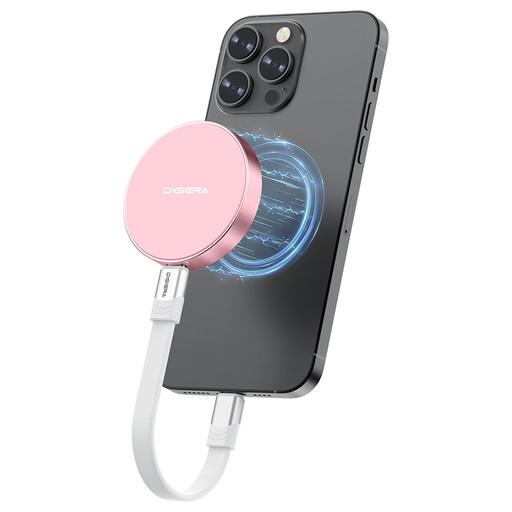
The described magnetic attachment applies to specified iPhone 15/16 Pro and Pro Max models; check the connection you need for presentation computers separately.
 No image available
This model is worth checking if your presentation files need password-controlled encryption and the software works on your computers.
The listing states USB 3.2 Gen 2, up to 1,050 MB/s read and 1,000 MB/s write, and includes USB-C-to-C and USB-A-to-C cables. Its 256-bit AES encryption uses Lexar DataShield software, which requires installation, activation and a password.
Check file-system compatibility before first use. Formatting the drive erases files already on it.
 No image available
The 2TB capacity may suit someone carrying a larger collection of presentation files.
The listing states read speed of up to 800 MB/s and drop protection of up to 2 metres. Check the connector, included cable and file format against the devices you intend to use.
This Portable SSD is a different product from the SanDisk Extreme Portable SSD discussed above; do not assume it has the Extreme model’s protection or encryption features.
No: either type can store slide decks. If copying time matters, compare the connection and stated speeds of the drives you are considering, then check what your computers and cables can support; a quoted maximum is not a promised transfer rate.
Check the port, cable and readable file format, then open the actual presentation files on the intended computer before the meeting. Crucial says its X9 ships formatted as exFAT and can be reformatted, but compatibility varies with formatting and host capability. Copy existing files elsewhere before reformatting.
Not every presentation file must be encrypted. The Information Commissioner’s Office says UK GDPR does not specifically require encryption of all personal information, but security must be appropriate to the risk; its guidance advises encryption for personal information stored on removable media. Follow your organisation’s policy when carrying such material.
Treat it as electrical waste and address any files on it before disposal. GOV.UK says waste electrical products can be taken to a local household waste recycling centre; follow the drive maker’s erasure instructions and any organisational data-retention policy first.