
24/7 Customer Support

Free returns

Same-day & Next-day Delivery

Quality Guaranteed

Unlock Your Welcome Offers: FREE Delivery | Up to 80% OFF | Free 30-day JoyPlus trial
Download the APP
A reliable frying pan is the workhorse of any kitchen. From a quick weekday omelette to a slow-simmered weekend sauce, the right pan makes all the difference. But with so many materials, sizes and features available, choosing one can feel overwhelming. Adding a lid to the equation makes it even more versatile, allowing you to braise, steam and control splatters with ease.
This guide is designed to help you navigate the options. We will break down the key considerations for selecting a frying pan with lid and present a few carefully chosen recommendations that cater to different cooking styles and needs.
Before looking at specific products, understanding a few core features will help you identify what matters most for your cooking habits.
The surface of your pan dictates how it cooks and how you clean it.
The dimensions of your pan should match the size of your household and the dishes you cook most often.
Look for features that match your appliances and cooking style. Compatibility with an induction hob pan is essential for many modern kitchens, identifiable by a flat, magnetic base. The ability to move a pan from the hob to the oven opens up a world of recipes, from searing a steak and finishing it in the oven to baking a skillet cookie.
Based on materials, versatility and user-focused features, here are our recommendations for 2026.
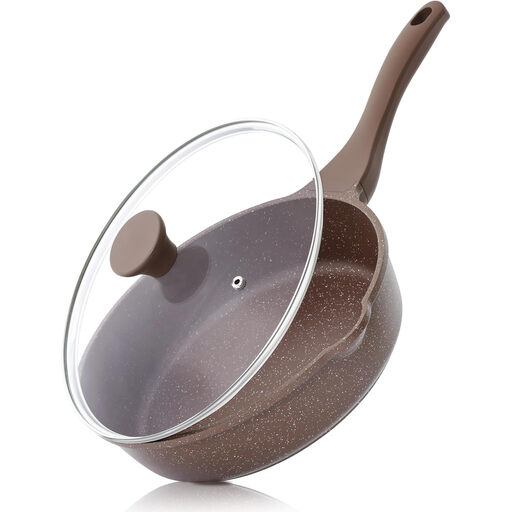
Why It Stands Out: This pan combines the convenience of non-stick with the capacity of a saute pan. Its deep, 12-inch (approximately 30cm) body is perfect for containing sauces and reducing splatters, while the granite-effect non-stick coating is made without PFOA, PFOS, lead or cadmium. The stay-cool Bakelite handle adds a layer of safety and comfort during use.
Pros:
Who is it for? This is an excellent all-rounder for home cooks who want a single, versatile pan for a wide range of everyday meals. Its large capacity and easy-clean surface make it ideal for busy families.
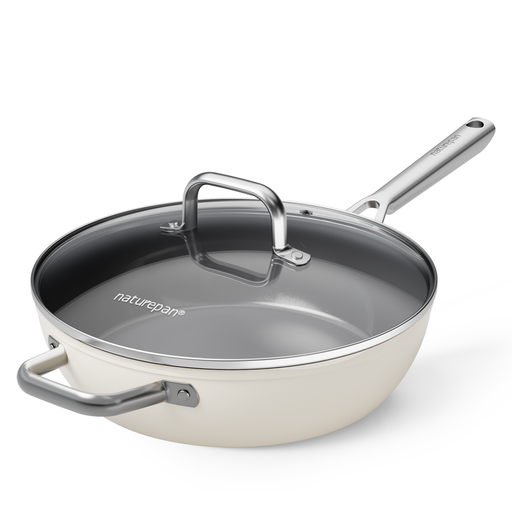
Why It Stands Out: The Naturepan stands out for its advanced ceramic coating, which is reinforced with diamond and titanium particles for enhanced durability. It is completely free from PTFE, PFOA and PFAS. Its most impressive feature is its high-temperature tolerance, being an oven safe frying pan up to a remarkable 260°C, making it suitable for serious hob-to-oven cooking.
Pros:
Who is it for? For the health-conscious cook who refuses to compromise on performance. If you want the benefits of non-stick but also need a pan that can withstand high oven heat for finishing dishes, this is a strong contender.
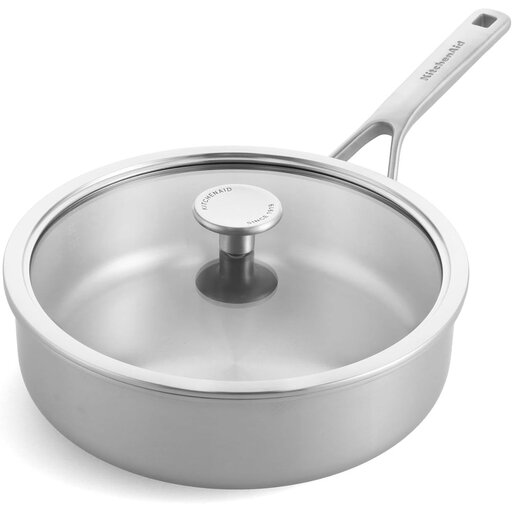
Why It Stands Out: This stainless steel skillet is built for performance and longevity. Its multi-layer construction features an aluminium core sandwiched between layers of stainless steel, ensuring rapid and exceptionally even heat distribution across the base and up the sides. This eliminates hot spots and gives you precise control, whether you're searing a steak or gently reducing a sauce. The tempered glass lid allows you to monitor cooking without losing heat.
Pros:
Who is it for? This is the pan for the cooking enthusiast who values precision and durability. If you enjoy techniques that require responsive temperature control and a perfect sear, this 24cm frying pan is a worthwhile addition to your kitchen.
While our recommendations cover a range of needs, the perfect pan is a personal choice. If you're looking for different sizes, materials or specific features, there are many other excellent pans to consider.
Explore our broader collection to find the ideal induction frying pan with lid that fits your kitchen and cooking style.
1. What is the difference between a frying pan and a saute pan? A frying pan (or skillet) typically has sloped, flared sides, which makes it easy to shake, toss and slide food out. A saute pan has straight, vertical sides and a wider flat base, giving it more volume and making it better for searing, pan-sauces and shallow-frying, as the straight sides help contain liquids and prevent splatters.
2. Are PFOA-free pans genuinely safer? Yes, pans labelled as a PFOA free pan are made without Perfluorooctanoic acid, a chemical that raised health and environmental concerns. Modern non-stick pans, including ceramic and newer-generation coatings, are manufactured without PFOA, offering the convenience of non-stick cooking while adhering to current safety standards.
3. How do I know if a pan is an induction hob pan? An induction hob pan must have a base made of a magnetic material (like iron or certain types of stainless steel). The easiest way to check is to hold a magnet to the bottom of the pan. If the magnet sticks firmly, the pan is induction-compatible. Most manufacturers also state this on the packaging or with a specific symbol.