Bright-room strategy players
If you play with daylight or room lights on, map labels and unit information need to remain visible. Screen placement and reflections deserve attention before a headline brightness figure.


Choose for the light in your room before choosing a panel type: if a window or lamp faces the screen, check the exact monitor’s reflection handling, finish and usable brightness so map labels remain visible. A 27-inch QHD IPS monitor is a practical starting point for PC play; consider a larger 4K Mini LED screen for finer detail if your PC can drive it, or OLED if you can control reflections and also value HDR contrast and fast pixel response.
If you play with daylight or room lights on, map labels and unit information need to remain visible. Screen placement and reflections deserve attention before a headline brightness figure.
If fine terrain detail and dense interfaces matter more to you than extreme refresh rates, consider screen size and resolution alongside what your PC can drive comfortably.
If you also play cinematic or fast-moving games, OLED contrast and high refresh rates may matter more to you—but direct reflections still need managing in a bright room.
For historical war games in a bright room, settle the visibility question first, then choose the map detail and connection modes you need. RTINGS notes that room lighting, brightness and reflection handling all affect how a monitor image appears.
Consider it when: You mainly play on a PC and want a desk-sized screen for maps and scrolling without the graphics demand of 4K.
Trade-off: QHD has fewer pixels than 4K, and IPS alone says nothing about a particular monitor’s reflections.
Consider it when: Fine map detail and a larger workspace take priority, and your desk and PC can accommodate them.
Trade-off: 4K places greater demand on the graphics hardware; an HDR peak figure does not establish everyday bright-room visibility.
Consider it when: You can keep direct light off the screen and also value HDR contrast and fast pixel response.
Trade-off: Check the exact finish and reflections rather than assuming OLED contrast will overcome a facing window or lamp.
| Concern | What to check | Who this matters to |
|---|---|---|
| Reflections and visibility | Check the exact screen finish, direct-reflection results and usable SDR brightness against your window and lamp positions. | If daylight catches the screen, I need to read unit counters without reflected light covering them. Around 42% of consumers put glare control first. |
| Map and interface detail | Compare QHD and 4K alongside screen size, viewing distance and what your PC can run at your preferred settings. | When a map is crowded with labels, I want more room to inspect terrain and information without straining to pick out details. Approximately 33% of consumers prioritise map detail. |
| Smooth play and connections | Confirm the resolution, refresh rate and variable-refresh mode supported by your device and chosen port. | If I switch devices or pan across large maps, I want the connection and motion settings to work as intended. Roughly 25% of consumers place smooth play and connectivity first. |
A peak figure does not tell you whether a window will obscure map labels or how bright the screen remains during ordinary desktop use. VESA DisplayHDR criteria distinguish peak-patch and longer-duration full-screen measurements.
Look for results for the exact monitor’s direct reflections and SDR brightness, and consider whether you can move a lamp or the desk.
RTINGS explains that glossy finishes can produce mirror-like direct reflections, while coatings also vary in how they spread light across an image.
Use model-specific reflection tests rather than treating a matte or anti-glare label as a complete answer.
A high refresh-rate specification is of limited use if your PC, port and cable cannot run the resolution and mode you intend to use.
Confirm the required resolution, refresh rate and adaptive-sync compatibility for the device and connection you will actually use.
Dell UK lists the Alienware AW2725DM as a 27-inch QHD Fast IPS gaming monitor with adaptive-sync support—a model-specific example of the QHD IPS route.
BenQ UK specifies a 32-inch 4K Mini LED display and 1,152 local-dimming zones for the MOBIUZ EX321UX.
LG UK specifies the UltraGear 27GX700A as a 27-inch QHD OLED monitor with a 280 Hz refresh rate and DisplayHDR True Black 500 certification.
These monitors cover larger screens for map viewing, QHD gaming models and a 4K Mini LED option. Compare each one with your desk lighting and PC rather than treating its panel type as a bright-room verdict.
 No image available
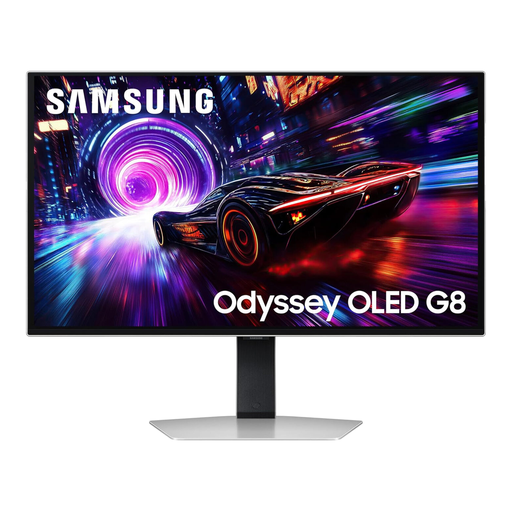
Consider this larger OLED screen if you want more physical space for maps and can manage reflections. Check its direct-reflection behaviour and whether your PC supports the resolution you plan to use.
 No image available
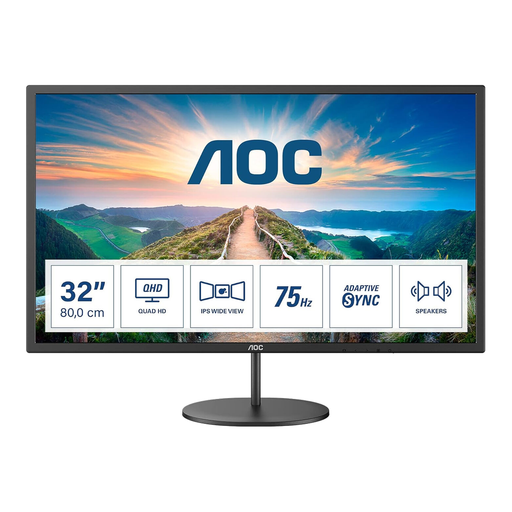
Consider this larger screen if map viewing matters more to you than choosing a dedicated gaming model. Its title specifies 2K resolution, Adaptive Sync and built-in speakers; check the exact screen’s reflections where you intend to place it.
 No image available
This desk-sized OLED model is worth considering if you also play games where its listed 240 Hz refresh rate matters. For historical war games in a bright room, check reflections and usable brightness before giving that speed priority.
 No image available
Consider this larger 4K display if fine map detail is a priority and your PC can drive the resolution. The title specifies 120 Hz and HDMI 2.1; check the exact model’s brightness, reflections and variable-refresh compatibility for your setup.
 No image available
This QHD gaming monitor suits a desk-sized map display if its listed 220 Hz refresh rate is useful to you. Its listed glossy finish calls for particular care if a window or lamp would reflect directly into the screen.
Check whether windows or lamps will reflect directly in the screen. Then look for reflection tests and usable brightness measurements for the exact monitor; RTINGS identifies lighting, brightness and reflection handling as separate factors affecting visibility.
No: an HDR peak figure cannot tell you how the monitor handles reflections or how its ordinary desktop image will look in your room. VESA DisplayHDR criteria include distinct peak-patch and longer-duration full-screen measurements, so check model-specific SDR brightness and reflection results as well.
Check your local authority’s electrical-equipment collection options or a retailer’s take-back arrangements. GOV.UK describes waste electrical and electronic equipment rules as measures intended to reduce equipment sent to landfill or incineration.