
24/7 Customer Support

Free returns

Same-day & Next-day Delivery

Quality Guaranteed

Unlock Your Welcome Offers: FREE Delivery | Up to 80% OFF | Free 30-day JoyPlus trial
Download the APP
Driving on poorly lit British roads at night can be a challenge, and many car owners look to upgrade their standard halogen headlights for better visibility. Switching to H4 LED headlight bulbs is a popular option, promising a brighter, whiter light. However, the market is filled with confusing claims and technical jargon, making it easy to choose a product that is either incompatible, unreliable or even illegal for road use.
As the Joybuy Product Recommendation Officer, my role is to help you navigate these choices. This guide cuts through the clutter, focussing on the practical details you need to find a suitable H4 halogen replacement that improves your night-time driving safety and confidence.
Before you buy, be aware of these common traps that can lead to wasted money and frustration:
To make an informed decision, focus on these three critical parameters instead of just the marketing headlines.
We have analysed the specifications of various models to match them with different UK driver profiles.
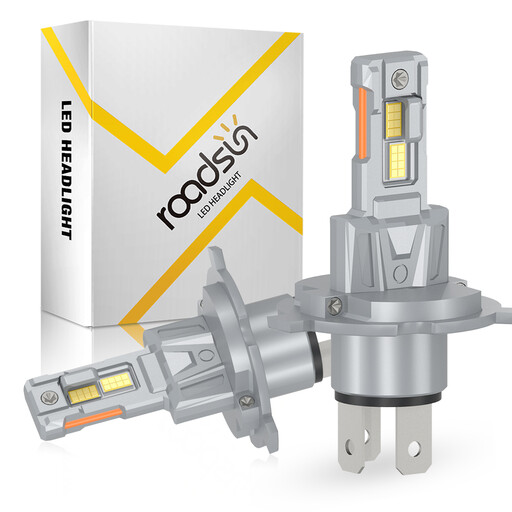
Why This Fits Their Persona: Ideal for the car owner seeking a straightforward and affordable upgrade from dim halogens. The emphasis on simple plug-and-play installation and a fanless design makes it a low-risk, low-maintenance choice for a first-time LED conversion.
Its fanless, compact design directly addresses the fitment pitfall, making it more likely to fit within tight headlight housings without modification to the dust cap. The silent operation also avoids the reliability concerns of a cheap fan failing.
Features a fanless design for silent, reliable operation and an integrated structure that simplifies installation. The 6000K H4 LED provides a clean, white light for improved clarity.
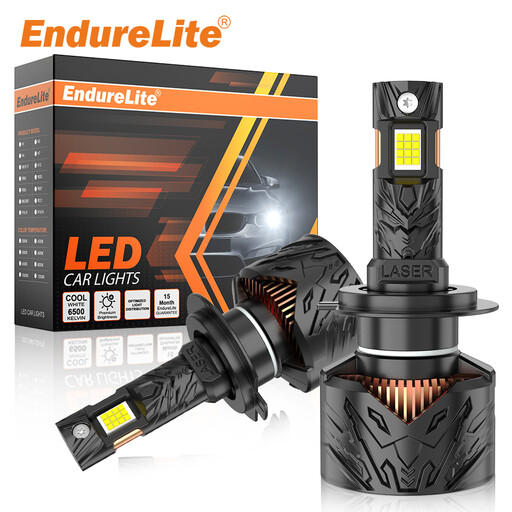
Why This Fits Their Persona: This driver needs a reliable, long-lasting solution for daily journeys on motorways and country lanes. This bulb offers a strong balance of brightness, an active cooling system for longevity and high vehicle compatibility, making it a dependable workhorse.
It tackles the longevity pitfall with an active cooling fan and aluminium body, designed to manage heat effectively and maintain performance over its stated lifespan. The "CANbus ready" design also aims to minimise electrical compatibility issues for a wide range of cars.
Features a powerful 10,000 RPM cooling fan for thermal stability and an IP68 waterproof rating for all-weather durability. The design aims to simulate the original beam pattern to reduce glare.
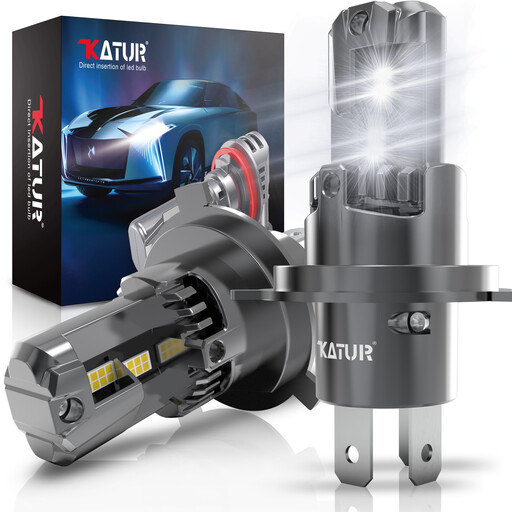
Why This Fits Their Persona: For the enthusiast who prioritises maximum illumination for off-road adventures or driving on unlit rural roads. The high power output and lumen rating, combined with a very powerful cooling fan, are geared towards performance and achieving the longest possible throw of light.
It counters the "brightness myth" by pairing high lumen output with claims of a focused beam shape and ultra-thin chip spacing, aiming to control the light. The high-speed 16,000 RPM fan is an aggressive solution to the heat-related lifespan pitfall, essential for a high-wattage bulb.
Offers a very high power output (100W per pair) for significant brightness. The combination of a powerful turbo fan and a hollow-carved heat sink provides a robust cooling system for sustained performance.
We have compiled a complete, real-time list of products that fully satisfy these strict selection criteria and UK safety regulations.
1. Are H4 LED headlight bulbs legal for road use in the UK? This is a critical point. According to current DVSA guidelines for MOT testing, it is a failure to replace halogen bulbs with LED versions in a headlight unit that was not designed for LEDs from the factory. Therefore, most aftermarket H4 LED headlight bulbs are sold for "off-road use only." Using them on public roads could invalidate your insurance and lead to an MOT failure. Always check the latest government and DVSA regulations before fitting them to your vehicle for road use.
2. Will a 6000K H4 LED bulb look too blue? No, a 6000K H4 LED produces a crisp, cool white light that is very close to natural daylight. This colour temperature is popular because it improves contrast and makes road signs and markings appear clearer than the yellowish light of a halogen bulb. It should not have a strong blue tint, which is often associated with higher colour temperatures (8000K and above).
3. Do I need a bulb with a fan? It depends on your priorities. A fan provides active, efficient cooling, which is essential for high-power bulbs to maintain brightness and reach their claimed lifespan. However, the fan is a moving part that can fail, and its size can sometimes complicate installation. A fanless bulb is silent and more reliable as it has no moving parts, but it must have a very well-engineered heat sink to be effective. For most standard upgrades, a quality fanless design or a bulb with a reliable, quiet fan will work well.