
24/7 Customer Support

Free returns

Same-day & Next-day Delivery

Quality Guaranteed

Unlock Your Welcome Offers: FREE Delivery | Up to 80% OFF | Free 30-day JoyPlus trial
Download the APP
As a Joybuy Product Recommendation Officer, my role is to help you navigate the crowded market of kitchen essentials. When it comes to aluminium foil, the difference between a standard roll and a professional one can mean the difference between a smooth service and a frustrating mess. For professional caterers, restaurant chefs and even dedicated home cooks, flimsy foil that tears, punctures or is simply too small for the job is a common and costly problem.
Before you add another roll to your basket, let's look at the common pitfalls that lead to disappointment and wasted money.
bulk foil roll seems economical, but if it's too narrow for your roasting tins, you'll waste time and material doubling up sheets. Conversely, a domestic-sized roll will run out far too quickly in a professional setting, proving inefficient.To ensure you get a product that performs as expected, focus on these key parameters. They are the true indicators of quality and suitability for demanding kitchen tasks.
The strength and durability of aluminium foil are directly related to its thickness. This is where the term micron becomes your most valuable guide. One micron is one-thousandth of a millimetre.
commercial kitchen foil. An 18 micron foil provides excellent tear resistant tin foil properties, making it reliable for wrapping large, heavy joints of meat (including those with bones), covering large bain-marie trays and withstanding high heat on a barbecue.The dimensions of the foil roll are just as important as its thickness, especially for efficiency in a professional environment.
wide aluminium foil, typically 300mm, 450mm or even 600mm, is essential for covering standard gastronorm pans and large baking sheets in a single pass. This prevents gaps and ensures a proper seal, which is crucial for locking in moisture.food service foil, look for a bulk foil roll of 75 metres or more. While the initial outlay is higher, the cost per metre is significantly lower, making it the most economical choice for high-volume users.Based on these practical criteria, here are some recommendations matched to different user needs.
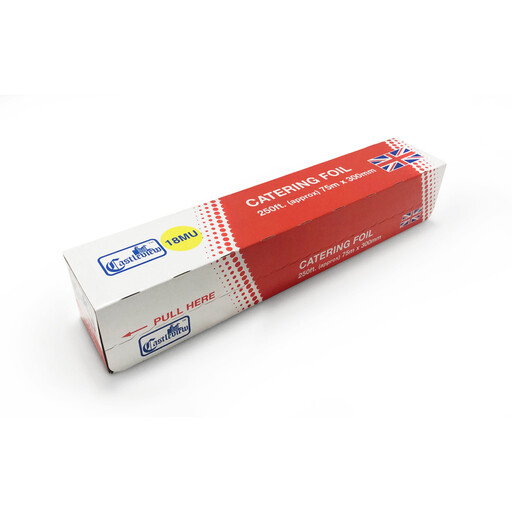
Why This Fits Their Persona: This product is built for the demands of a professional kitchen. The 75-metre length offers excellent value for high-volume use, while the 300mm width is practical for most commercial trays and pans. It's a workhorse product for daily prep, cooking and storage.
It clearly states its 18-micron thickness, moving beyond the vague "heavy duty" label and providing a verifiable measure of its superior strength and tear resistance.
Exceptional tear resistance suitable for wrapping bone-in meats. The 75m bulk roll provides a low cost-per-use for busy catering operations.
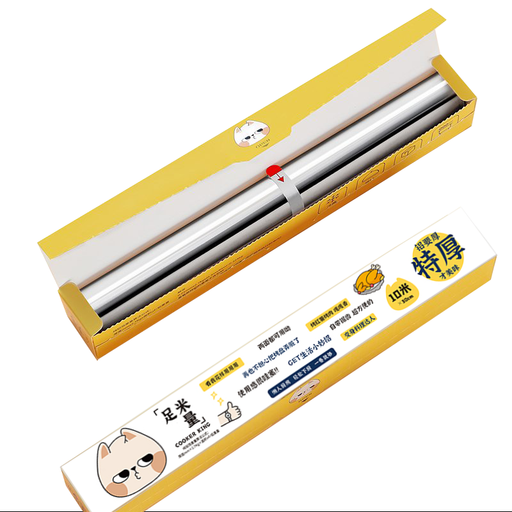
Why This Fits Their Persona: For the home cook who loves a Sunday roast or batch cooking, this foil offers a noticeable upgrade in performance without committing to a huge catering roll. It's strong enough for demanding domestic tasks like lining the grill or wrapping a large chicken.
It specifies its 15-micron thickness, giving you a clear, factual reason to choose it over standard supermarket foils for tasks that require more durability.
Provides a tangible increase in strength for better cooking results. The 10m roll is a practical size for a domestic kitchen, preventing waste.
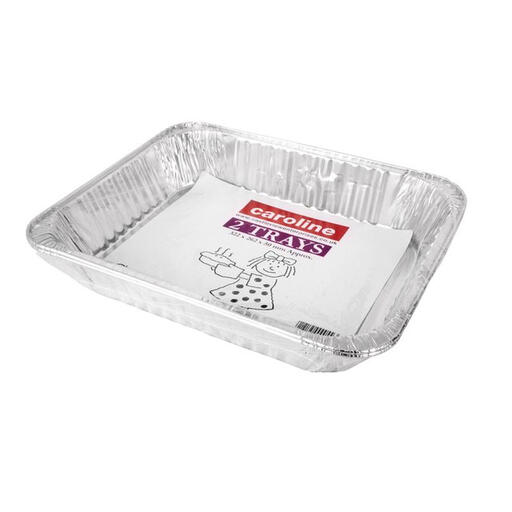
Why This Fits Their Persona: For caterers handling buffets, parties or drop-off meals, convenience is paramount. These pre-formed, deep foil trays eliminate the need to line your own pans, saving valuable time during prep and drastically reducing washing up post-event.
Instead of relying on foil rolls for every task, this product addresses the specific need for sturdy, disposable cookware, solving the problem of transporting and serving food efficiently.
The 50mm depth is ideal for lasagnes, pasta bakes and roasted vegetables. Being disposable and recyclable (check local guidance) makes post-event cleanup incredibly simple.
We have compiled a complete, real-time list of products that fully satisfy these strict selection criteria and UK safety regulations.
The primary differences are thickness, width and length. Catering foil is significantly thicker (e.g., 18 microns vs 10 microns) for greater strength and tear resistance. It also comes in wider and much longer rolls to accommodate professional kitchen equipment and high-volume usage, making it more cost-effective per metre.
Yes, 18 micron foil is widely considered an excellent standard for professional catering. Its thickness provides the durability needed to handle heavy joints of meat, line large pans without puncturing and withstand the high temperatures of ovens and grills, making it a reliable choice for most commercial kitchen tasks.
Absolutely. Heavy duty aluminium foil is well-suited for use on a barbecue. Its increased thickness helps it resist tearing on the grill grates and provides a robust barrier for cooking delicate items like fish or vegetables. It can also be formed into a sturdy parcel to lock in steam and flavour. However, do not allow the foil to come into direct contact with naked flames or electric heating elements.