
24/7 Customer Support

Free returns

Same-day & Next-day Delivery

Quality Guaranteed

Unlock Your Welcome Offers: FREE Delivery | Up to 80% OFF | Free 30-day JoyPlus trial
Download the APP
As a Joybuy Product Recommendation Officer, I often see how a seemingly simple kitchen staple can cause major frustration. When it comes to aluminium foil, the wrong choice can lead to torn sheets, burnt food and a messy clean-up. This is especially true for professional chefs and serious home cooks who rely on their tools to perform under pressure.
Before you purchase your next roll, it's crucial to understand the common pitfalls that lead to disappointment. Many find themselves wasting money on products that simply aren't up to the task.
To avoid these issues, you need to look past the marketing claims and focus on the technical specifications. These three parameters are non-negotiable for finding a truly reliable heavy duty aluminium foil.
The single most important indicator of foil strength is its thickness, measured in microns (?m). One micron is one-thousandth of a millimetre.
For professional and high-volume use, the size of the roll is critical for both practicality and cost-effectiveness.
Always ensure the foil is labelled as "food-grade" or "food-safe". While aluminium foil is excellent for cooking and storage, it's worth noting that prolonged contact with highly acidic or salty foods (like tomatoes or citrus fruits) can cause the foil to degrade. For most applications, including foil for roasting, this is not an issue.
Based on these practical criteria, we've matched a few standout options to different user needs. These selections are chosen for their clear specifications and suitability for demanding kitchen environments.
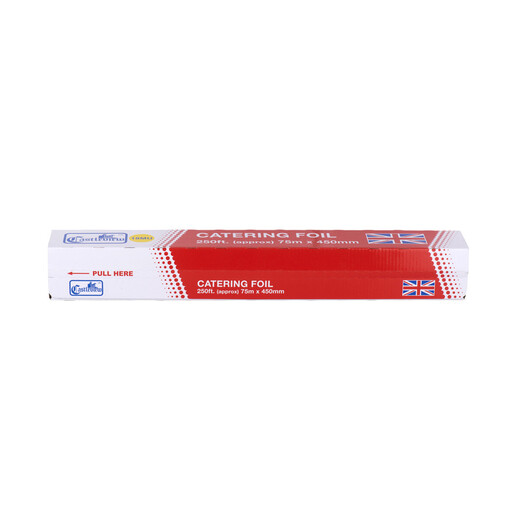
Why This Fits Their Persona: This roll is built for the demands of a commercial kitchen. The 450mm width is perfect for covering large gastronorm trays and roasting pans in a single sheet, while the 75m length ensures it lasts through busy service periods.
Its specified 18 micron thickness moves beyond the vague "heavy duty" label, providing genuine strength. The 450mm width and 75m length directly address the pitfalls of narrow, short rolls.
Excellent tear and puncture resistance. Cost-effective for high-volume use due to its bulk size.
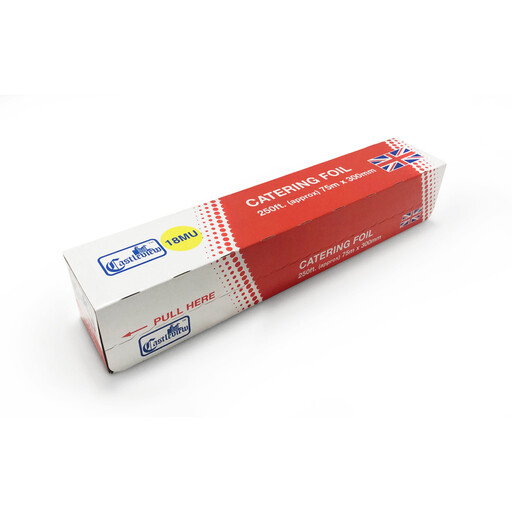
Why This Fits Their Persona: For the serious home cook who does a lot of batch cooking, meal prep or large Sunday roasts. This foil offers professional-grade strength in a standard 300mm width that fits easily in a kitchen drawer.
It provides the same reliable 18 micron thickness as the professional version, eliminating the risk of tearing. The 75m bulk foil roll offers fantastic value compared to buying multiple short supermarket rolls.
Professional strength in a domestic-friendly width. Excellent for freezing, as its durability helps prevent freezer burn.
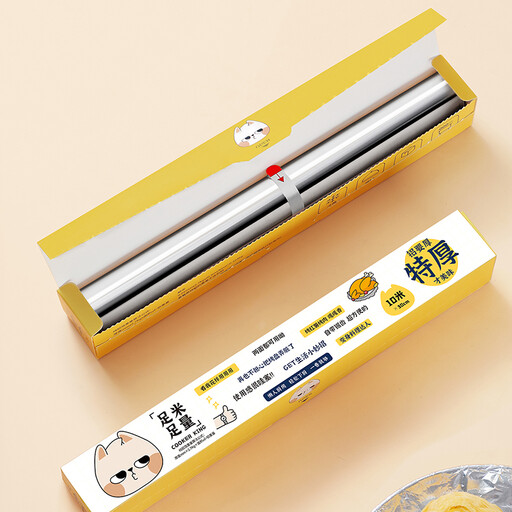
Why This Fits Their Persona: This is for the home cook who is tired of flimsy foil but doesn't need a massive catering roll. It's a significant upgrade for tasks like roasting chickens or covering lasagne, providing more confidence and better results.
The specified 15-micron thickness is a measurable step-up in quality from standard foil. The 20m roll offers a good balance of quantity and price for someone who needs strength but not commercial volume.
A noticeable improvement in durability for everyday cooking. Balances flexibility with strength, making it easy to handle.
We have compiled a complete, real-time list of products that fully satisfy these strict selection criteria and UK safety regulations.
The primary differences are thickness, width and length. Catering foil is significantly thicker (often 18 microns vs. 11 microns) for greater strength, wider (e.g., 450mm) to cover professional cookware and comes in much longer rolls (75m or more) for better value in high-volume settings.
Yes, 18 micron foil is an excellent choice for roasting. Its thickness prevents it from tearing when covering heavy joints of meat or poultry with bones. It creates a better seal to lock in moisture and heat, promoting even cooking and preventing the top from burning before the inside is cooked.
In most parts of the UK, aluminium foil is recyclable. However, it must be clean and free from grease and food residue. It's often recommended to collect used foil into a ball (about the size of a tennis ball) to help it get sorted correctly at the recycling facility. Always check the specific guidelines provided by your local council.