
24/7 Customer Support

Free returns

Same-day & Next-day Delivery

Quality Guaranteed

Unlock Your Welcome Offers: FREE Delivery | Up to 80% OFF | Free 30-day JoyPlus trial
Download the APP
Tired of fumbling for light switches in dark hallways or struggling to see inside a packed wardrobe? An indoor motion sensor light is a simple, effective solution that adds convenience, safety and a touch of modern efficiency to any home. These wire-free wonders activate automatically when they detect movement, providing light exactly when and where you need it, without the hassle of complex installation or increased energy bills.
As the Joybuy Product Recommendation Officer, my role is to help you navigate the options. This guide will walk you through the key features to consider and present some of our top recommendations to help you find the right fit for your space.
Making the right choice comes down to understanding a few key factors. Here’s what to look for when selecting a light for your home.
The power source is a crucial consideration for convenience and long-term use.
One of the main attractions of these lights is their simple, wire-free installation. Most models offer one or more of the following methods:
Not all motion-activated lights are created equal. Consider the brightness (measured in lumens) and any additional features. A motion activated night light for a hallway might only need 20-40 lumens to guide your way, whereas wireless under cabinet lighting for food preparation could require 200 lumens or more for clear visibility. Also, look for multiple operating modes, such as 'On' (continuously on), 'Off' and 'Auto' (motion-activated).
Based on features, user-friendliness and overall utility, here are a few standout options to consider for your home.
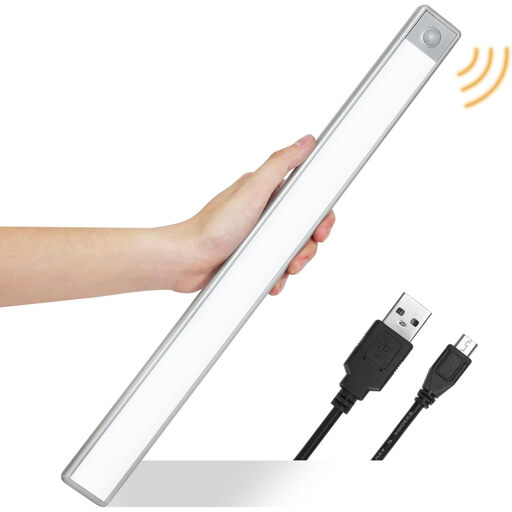
Why It Stands Out: This light combines a sleek, slim design with powerful performance. Its brushed aluminium casing is just 8.8 mm thick, allowing it to blend seamlessly under cabinets or inside wardrobes. The high-capacity 2400mAh rechargeable battery offers extended use between charges, and its 70 LEDs produce a bright 350 lumens of light, making it ideal for task-oriented spaces.
Pros:
Who is it for? This is an excellent choice for anyone needing bright, reliable illumination under kitchen cabinets, in a home office or along a dark corridor.
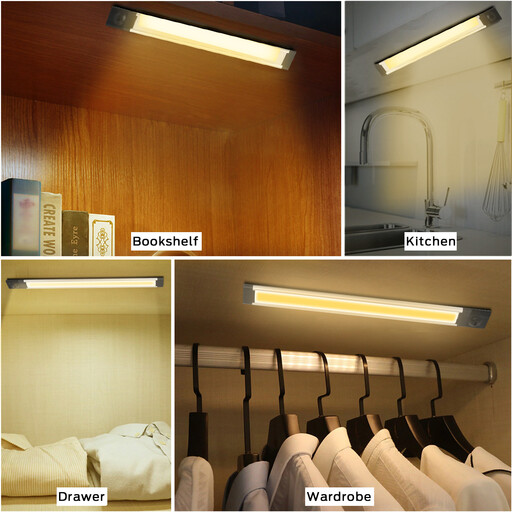
Why It Stands Out: This model moves beyond basic motion detection with its innovative gesture control and adjustable light settings. You can turn it on or off and adjust the brightness with a simple wave of your hand. It also allows you to change the colour temperature from a warm 2800K to a cool 6500K, giving you complete control over the room's ambiance. With 400 lumens, it's one of the brighter options available.
Pros:
Who is it for? Perfect for users who appreciate advanced features and want to customise their lighting for different moods and tasks, from a soft night light in a nursery to bright light in a garage.
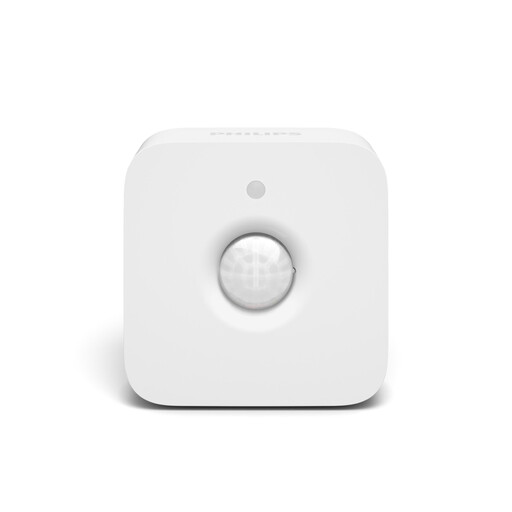
Why It Stands Out: This product is different—it's not a light, but a sensor that makes your existing smart lights even smarter. If you already use the Philips Hue system, this wireless, battery-powered sensor is a fantastic addition. Place it anywhere, and it will trigger your Hue lights to turn on when it detects movement. It also has an integrated daylight sensor to save energy by only activating lights when it's dark.
Pros:
Who is it for? This is specifically for homeowners and renters who have or are building a Philips Hue smart home system and want to automate their lighting with motion detection.
The products highlighted here are great starting points, but every home has unique needs. If you're looking for different sizes, brightness levels or specific features, there are many other solutions available.
Explore our full range of rechargeable motion sensor lights to find the perfect match for your space.
1. How do indoor motion sensor lights work? Most indoor motion sensor lights use a Passive Infrared (PIR) sensor. This sensor detects the infrared energy (heat) emitted by people and animals. When you walk into its detection zone, the change in heat signature triggers the light to switch on. It then turns off after a set period of no movement.
2. Where is the best place to install a motion sensor light? They are most effective in transitional or task-oriented spaces. Common locations include hallways, staircases, landings, walk-in wardrobes, under kitchen cabinets, pantries and garages. Placing them at entry points to a room ensures they activate as soon as you enter.
3. Are battery powered LED lights energy efficient? Yes, they are highly energy-efficient. LED technology itself consumes very little power. Combined with a motion sensor that only activates the light when needed, a single set of batteries or one full charge can last for weeks or even months, depending on usage. This makes them a much more efficient choice than leaving a conventional light on.