
24/7 Customer Support

Free returns

Same-day & Next-day Delivery

Quality Guaranteed

Unlock Your Welcome Offers: FREE Delivery | Up to 80% OFF | Free 30-day JoyPlus trial
Download the APP
Navigating your home after dark can be a challenge. Whether it's a late-night trip to the bathroom, checking on a sleeping child or grabbing a glass of water, fumbling for a light switch can disrupt the household and your own sleep. A harsh overhead light can be jarring, while leaving lights on all night is a drain on energy.
A motion sensor night light offers a simple and effective solution. It provides just enough illumination to guide your way safely, activating only when it detects movement and switching off automatically. As your Joybuy Product Recommendation Officer, my role is to help you understand the key features to look for, so you can choose a model that fits your home and lifestyle perfectly. This guide will walk you through the essentials and highlight a few of our top recommendations.
With so many options available, focusing on a few key characteristics can simplify your decision. Consider these factors to find the right fit for your needs.
How your night light is powered determines its placement and portability.
The type of light emitted is crucial for both comfort and function.
The "motion sensor" part is what makes these lights so practical. An automatic night light typically uses a Passive Infrared (PIR) sensor to detect movement, often within a 3-5 metre range. It also includes an ambient light sensor, ensuring it only activates when the room is dark, which helps to conserve energy.
Here are a few standout options that cater to different household needs, selected for their practical features and reliable performance.
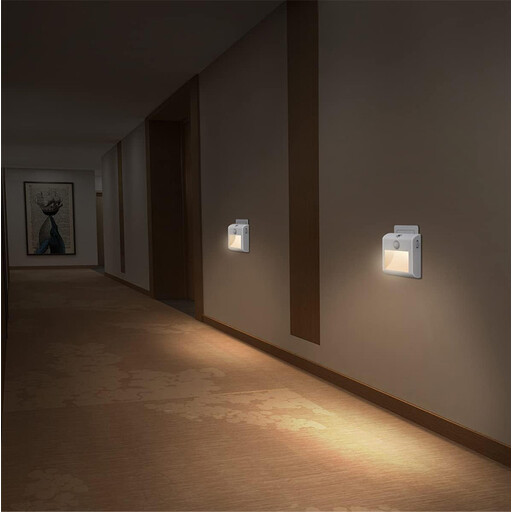
Why It Stands Out: This plug-in model is all about convenience and consistency. The touch-controlled dimming is intuitive and its memory function is a standout feature, remembering your last brightness setting so you don't have to readjust it every time. The pack of two provides excellent value for outfitting multiple areas at once.
Pros:
Who is it for? Homeowners looking for a reliable, low-maintenance lighting solution for hallways, landings and bathrooms where a consistent setup is preferred.
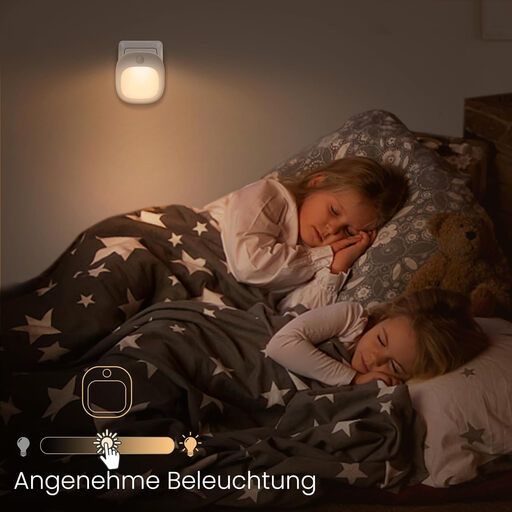
Why It Stands Out: Versatility is the main strength of this rechargeable model. With three distinct colour temperatures and five brightness levels, you can tailor the light for any situation—from a soft, warm glow for a nursery to a clear, cool light for a bathroom. The built-in battery and USB charging offer complete freedom of placement.
Pros:
Who is it for? Parents, renters or anyone who needs an adaptable lighting solution that can be moved easily and customised for different rooms and purposes, from a LED night light for children to a handy guide light in a guest room.
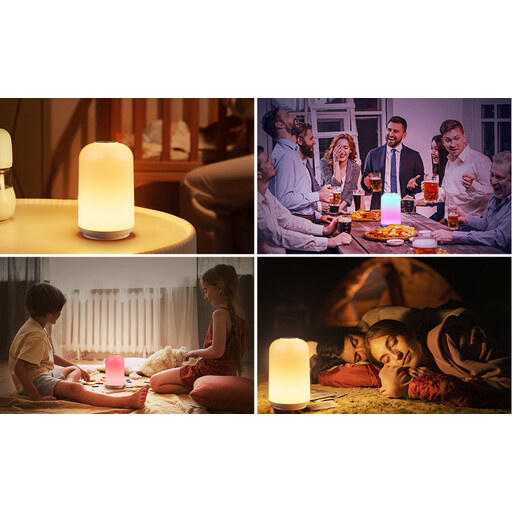
Why It Stands Out: This light combines practicality with a touch of fun. It functions as a standard warm white night light with stepless dimming for everyday use, but it also features an RGB mode with seven colours. This makes it a fantastic dual-purpose lamp, serving as a gentle guide light and a colourful mood light for a child's bedroom.
Pros:
Who is it for? Families with young children who would appreciate the colour changing night light feature or anyone wanting a versatile lamp that can switch between functional lighting and ambient mood lighting.
If these recommendations aren't quite what you're looking for or if you're interested in more decorative or character-based designs, there are many other styles available.
? Explore our full collection of Novelty Lamps to discover more smart and creative lighting solutions.
1. How do motion sensor night lights work? Most motion sensor lights use a Passive Infrared (PIR) sensor, which detects the infrared energy (body heat) emitted by people and pets. When you move into its detection range (usually 3-5 metres), the sensor triggers the light. They also have a built-in photocell or ambient light sensor, which prevents the light from turning on during the day to save energy.
2. Are LED night lights expensive to run? No, they are very energy-efficient. A typical LED night light consumes very little power, often just 0.5W to 1W. Because motion-activated models only turn on when needed, their running costs are minimal, making them a much more economical choice than leaving a standard lamp on all night.
3. What is the difference between warm white and cool white light? The difference lies in the "colour temperature," measured in Kelvin (K). A warm white night light (around 2700K-3200K) produces a soft, yellowish, candle-like glow that is considered more relaxing and less disruptive to sleep. Cool white light (5000K and higher) is a crisp, bluish-white light that appears brighter and is better for tasks where clarity is important, such as in a bathroom or workshop.