
24/7 Customer Support

Free returns

Same-day & Next-day Delivery

Quality Guaranteed

Unlock Your Welcome Offers: FREE Delivery | Up to 80% OFF | Free 30-day JoyPlus trial
Download the APP
Watching your child develop a passion for a new sport is exciting. But when it comes to table tennis, the sheer variety of equipment can be overwhelming. How do you choose a racket that helps rather than hinders their progress? What other gear is essential for effective training? As the Joybuy Product Recommendation Officer, my role is to help you navigate these choices. This guide provides practical advice on selecting the right foundational equipment to support your young player's journey, from their first rally to their initial competitions.
Before you purchase, understanding a few key features will ensure you get equipment that truly supports your child's development.
The core of any good children's ping pong racket is its construction. Many quality options feature a multi-ply wood blade, which provides a reliable balance of control and power for learners. A 7-ply solid wood blade, for instance, is a durable and responsive foundation. Pay close attention to the handle. A waist-cinched flared handle is ergonomically designed for a secure and comfortable grip, which is crucial for helping young players develop proper technique without the racket slipping.
A beginner table tennis paddle should prioritise control and have a larger "sweet spot" to be more forgiving of off-centre hits. This builds confidence and makes the initial learning phase more enjoyable. As skills advance and your child begins to develop a more attacking style, you might consider an entry-level competitive racket. These are engineered to offer more potential for speed and spin, supporting techniques like the Fast Attack with Loop. Star ratings (e.g., 2-star vs. 3-star) can be a helpful, though not absolute, indicator of a racket's performance capabilities.
A complete youth table tennis starter set is more than just a racket and balls. To make practice sessions as productive as possible, consider accessories that minimise downtime. A ping pong ball collector is an invaluable tool that saves young players from the tedious and back-straining task of constantly bending over to pick up balls. This keeps them focused on drills and, most importantly, keeps the fun in training.
Based on the principles of durability, age-appropriate design and performance for developing players, here are our recommendations.
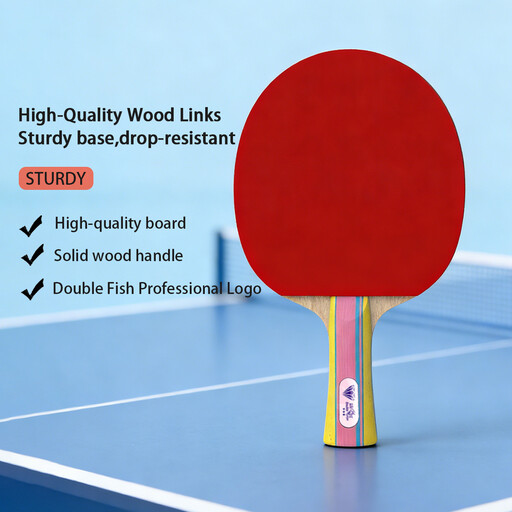
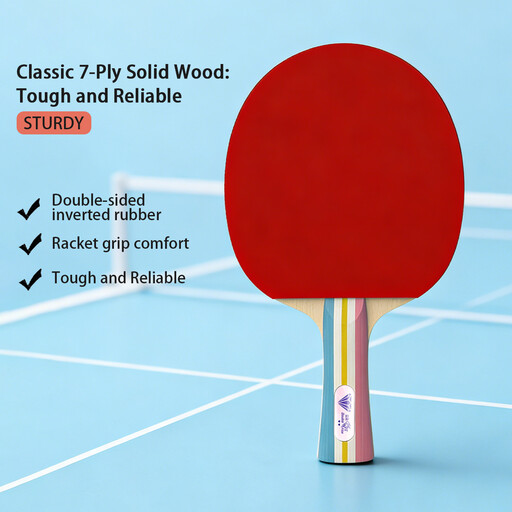
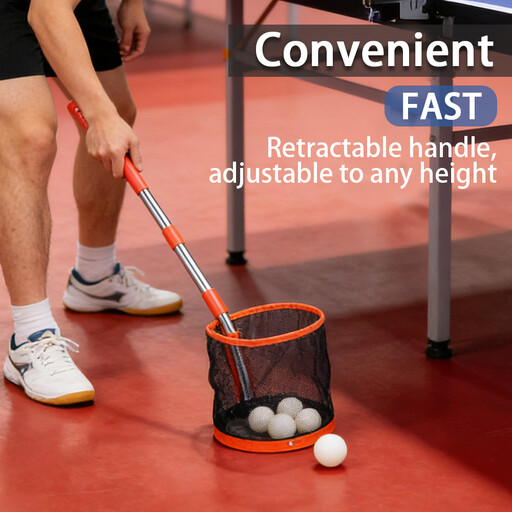
The equipment highlighted here provides a solid foundation for any young player. However, every child's needs are different, and you may be looking for a complete setup, including a table suitable for your home or garden.
For a wider selection of tables and other training accessories, we invite you to explore our Outdoor Childrens Table category.
Generally, children can start learning the basics of table tennis around 6 to 7 years old. At this age, their hand-eye coordination, balance and ability to concentrate have typically developed enough to grasp the fundamentals. The most important factor is to keep it fun and use lightweight, age-appropriate equipment to prevent frustration.
Star ratings are a general industry guide to a racket's performance characteristics. A 2-star racket is usually designed for beginners, with a focus on maximising control and forgiveness to help build a consistent technique. A 3-star racket offers an enhanced balance of speed, spin and control, making it suitable for players who are transitioning from a beginner to an entry-level competitive standard.
For children's table tennis rackets, the focus is less on overall blade size and more on the racket's weight and handle design. A lightweight racket is essential to prevent arm fatigue and allow for proper swing mechanics. A flared handle is often recommended for young players, as its shape provides a secure grip and prevents the racket from slipping from a smaller hand.