
24/7 全天候客户支持

免费退货

当日/次日达

品质保障

开启新人专享福利: 全场免邮 | 低至 2 折 | 免费试用 30 天 JoyPlus 会员
下载 Joybuy
From burnt-on food after a Sunday roast to daily washing up, the right kitchen scourer can make a significant difference to your cleaning routine. Choosing the wrong one can lead to scratched pans or hours of wasted effort. With so many options available, from heavy-duty metal to gentle sponges, it can be difficult to know which tool is right for the job.
This guide is designed to help you navigate the choices. We will outline key factors to consider when selecting a scourer and present some of our top recommendations to help you find a suitable match for your kitchen tasks.
Before looking at specific products, it's useful to understand the main features that differentiate kitchen scourers. Considering these points will help you narrow down the options based on your cookware and cleaning habits.
The material of a scourer dictates its cleaning power and which surfaces it is safe to use on.
A damp kitchen sponge can be a breeding ground for bacteria. Some products are designed with hygiene in mind. Look for features like an anti-bacterial sponge treatment, which helps to prevent the growth of bacteria on the pad itself. Materials like copper are also naturally anti-bacterial. Additionally, consider how easy the pot scrubber is to rinse clean and how quickly it dries, as this also contributes to better hygiene.
Some scourers are simple pads, while others offer dual-sided functionality. A common design features an abrasive side for scrubbing and a soft, absorbent side for wiping and polishing. Ergonomic shapes can also make them more comfortable to hold and use, allowing you to clean awkward corners more effectively.
Here are a few standout options that cater to different cleaning needs, from heavy-duty scrubbing to eco-conscious washing up.
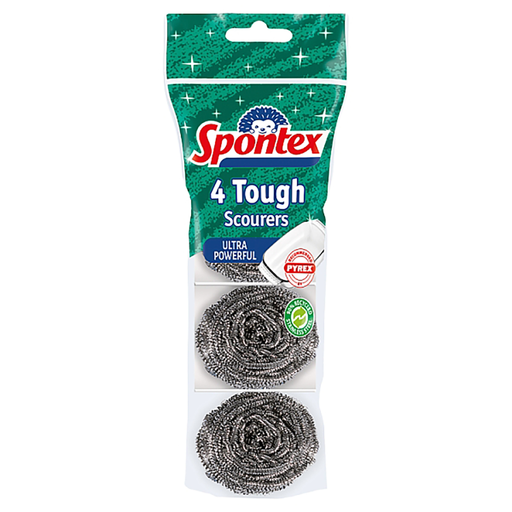
Why It Stands Out: This is a classic stainless steel scourer designed for the most demanding cleaning jobs. Made with 90% recycled stainless steel, it is both durable and rust-free. Its powerful cleaning action is particularly effective on oven trays, grills and even BBQs.
Pros:
Who is it for? Households that frequently cook with cast iron, stainless steel or glassware and need a powerful tool for deep cleaning.
View Spontex Tough Steel Scourers
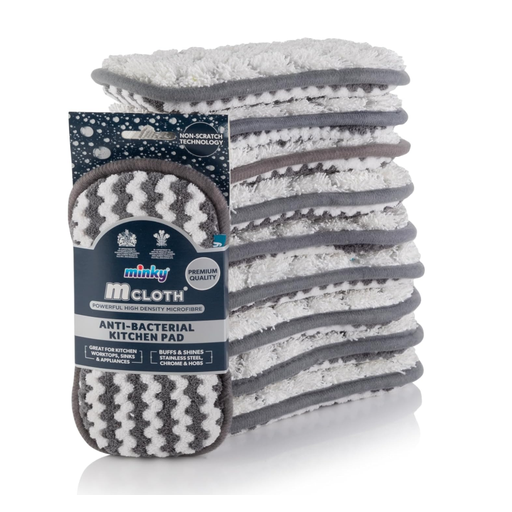
Why It Stands Out: The Minky pad is a versatile, multi-purpose cleaner. It features a non-scratch scourer side with a chequered pattern for breaking down grime and a 3D waffle microfibre side for absorbing moisture and polishing surfaces. Its anti-bacterial treatment is a key feature for maintaining kitchen hygiene.
Pros:
Who is it for? Anyone looking for a versatile, everyday cleaning pad that can handle a variety of tasks without scratching surfaces, with the added benefit of improved hygiene.
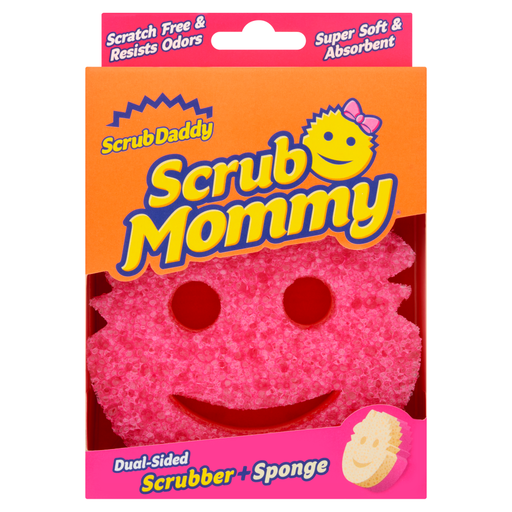
Why It Stands Out: The Scrub Mommy is known for its innovative design. One side is made of FlexTexture, a material that changes texture based on water temperature—firm in cold water for tough scrubbing and soft in warm water for gentle cleaning. The other side is a soft ResoFoam sponge for wiping and creating suds.
Pros:
Who is it for? Those who appreciate clever design and want a single tool that adapts to different cleaning challenges, from scrubbing pots to wiping down worktops.
View Scrub Mommy Dual-Sided Scrubber
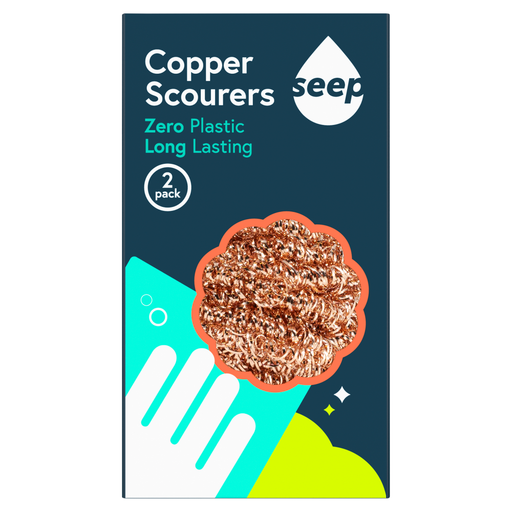
Why It Stands Out: These scourers offer a stylish and sustainable alternative to plastic-based options. Made from 100% copper, they are durable, non-rusting and naturally anti-bacterial. They provide strong cleaning power for tough grime on suitable surfaces.
Pros:
Who is it for? Eco-conscious individuals seeking a plastic-free, long-lasting and effective pot scrubber for non-delicate cookware.
View Seep Living Copper Scourers
Every kitchen is different, and the right tool often depends on your specific cookware and cleaning style. If you haven't found the perfect fit here, there are many other specialised options available.
Explore Our Full Range of Kitchen Cleaning Pads
1. Can you use a heavy duty pan scourer on non-stick pans? No, you should never use a metal or heavy-duty scourer on non-stick pans. The abrasive material will quickly scratch and damage the non-stick coating, rendering it ineffective and potentially causing particles of the coating to flake off into your food. Always use a product specifically labelled as a "non-scratch scourer" for these surfaces.
2. How often should you replace kitchen scourers? This depends on the material and frequency of use. For hygiene, it's good practice to replace sponge-based scourers every few weeks, or sooner if they develop an odour or start to fall apart. More durable options like stainless steel or copper scourers can last for several months but should be replaced when they become misshapen or less effective.
3. What is the difference between a scourer and a regular sponge? A regular washing-up sponge is primarily designed for absorbency and gentle wiping. A scourer, or a sponge with a scouring side, has an added abrasive layer designed specifically to scrub away stuck-on food and tough grime that a soft sponge cannot remove.