
24/7 Customer Support

Free returns

Same-day & Next-day Delivery

Quality Guaranteed

Unlock Your Welcome Offers: FREE Delivery | Up to 80% OFF | Free 30-day JoyPlus trial
Download the APP
From stubborn, burnt-on food that seems welded to your favourite pan, to mysterious scuff marks on the walls and greasy build-up on the hob, some household messes require more than just a bit of elbow grease. Using the wrong tool can lead to frustration and, even worse, permanent damage to your surfaces. The world of cleaning scourers is surprisingly diverse, with different tools designed for very specific jobs.
As the Joybuy Product Recommendation Officer, my role is to help you navigate the options and find the right product for your task. This guide will walk you through what to look for when choosing a scourer and highlight a few of our top recommendations to help you clean more effectively and protect your belongings.
Before you grab the first scourer you see, consider these key points. Matching the tool to the task is the secret to an effortless clean.
The most critical factor is the surface you intend to clean. Using a highly abrasive scourer on a delicate finish can cause irreversible scratches.
Different types of grime respond to different cleaning actions.
Good kitchen scrubbers should be easy to clean themselves. Look for options that rinse out easily and dry quickly to prevent the growth of odour-causing bacteria. Some pads even come with anti-bacterial formulations built-in. Durability is also key; while some scourers are designed for a single, tough job, others are built for weeks of regular use.
Based on common household cleaning challenges, here are our recommendations for effective and reliable cleaning scourers.
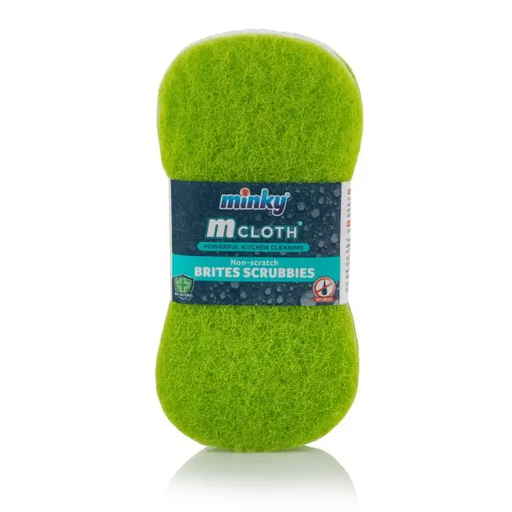
Why It Stands Out: The Minky Brites Scrubbies strike an excellent balance between cleaning power and gentleness. Their non-scratch technology provides enough abrasive force to remove stubborn marks from hobs and cupboard doors without damaging the surface. The integrated anti-grease technology helps the pad stay cleaner for longer by repelling grease, a common issue with standard kitchen sponges.
Pros:
Who is it for: Anyone looking for a versatile, everyday kitchen scrubber that is safe for most surfaces, especially in households with non-stick cookware and ceramic hobs.
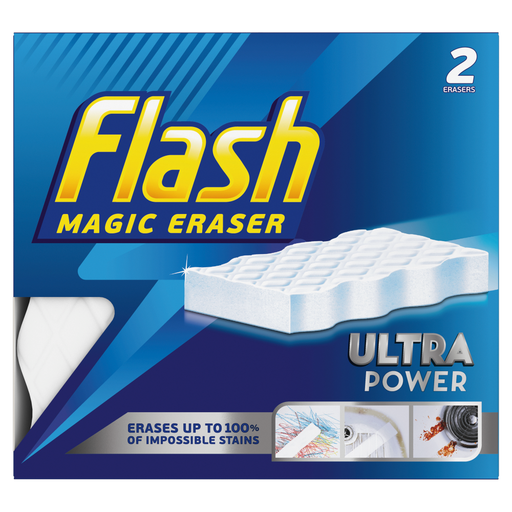
Why It Stands Out: This is not a traditional scourer; it's a specialist stain remover sponge. The Flash Magic Eraser uses melamine foam and water to tackle marks you thought were permanent. It works like an ultra-fine abrasive to lift crayon from walls, scuffs from skirting boards and built-up grime from tile grout, all without the need for additional cleaning chemicals.
Pros:
Who is it for: Parents, renters and homeowners who need to remove stubborn surface stains, scuffs or marks from walls, floors and fixtures without resorting to repainting.
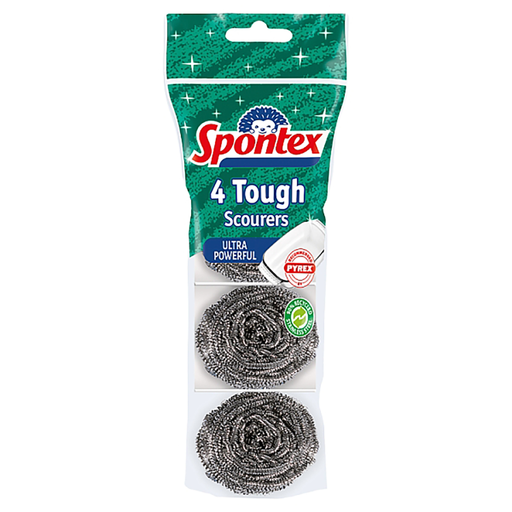
Why It Stands Out: When you need maximum power, the Spontex Tough Scourer is the tool for the job. As a classic steel wool scourer, it is the ultimate burnt on food remover. Made from 90% recycled stainless steel, it is exceptionally durable, rust-free and powerful enough to clean grills, BBQs and heavily soiled baking trays. Its effectiveness is highlighted by its recommendation from Pyrex for use on their glass dishes.
Pros:
Who is it for: Anyone who frequently battles with burnt-on food on baking trays, grills or robust cookware and needs a reliable, heavy duty cleaning sponge with maximum abrasive power.
Sometimes a single scourer isn't enough to tackle every job in your home. Building a small arsenal of specialised cleaning tools can save you time and protect your surfaces. For a wider selection of products and bundled kits, explore our full cleaning set collection to find everything you need.
Can I use a steel wool scourer on non-stick pans? No, you should never use a steel wool scourer on non-stick pans. The metal is extremely abrasive and will quickly scratch and destroy the non-stick coating. This not only ruins the pan's performance but can also cause particles of the coating to flake off. Always use designated non-scratch scouring pads for these surfaces.
How does a magic eraser sponge work? A magic eraser sponge is made from melamine foam, which, on a microscopic level, has a hard, glass-like structure. When you wet the sponge, it acts like an incredibly fine sandpaper, physically scrubbing away and trapping stains within its open-cell structure. It cleans through this micro-abrasion, which is why it's important to test it on a small, inconspicuous area first, especially on glossy or dark surfaces.
How often should I replace my kitchen scrubbers? The replacement frequency depends on the type of scrubber and how often you use it. As a general rule for hygiene, it's wise to replace everyday kitchen scrubbers every 2-4 weeks. Key signs that it's time for a replacement include a persistent unpleasant odour that doesn't wash out, visible signs of falling apart or a significant decrease in its cleaning ability.