
24/7 Customer Support

Free returns

Same-day & Next-day Delivery

Quality Guaranteed

Unlock Your Welcome Offers: FREE Delivery | Up to 80% OFF | Free 30-day JoyPlus trial
Download the APP
Upgrading your car's halogen bulbs to modern LEDs is one of the most impactful changes you can make. It's not just about achieving that crisp, modern look; it's a significant step towards better visibility and safer night-time driving. However, the market for LED car bulbs is flooded with options, and it's easy to fall into common traps that waste both time and money.
As a Joybuy Product Recommendation Officer, my role is to help you navigate the clutter. Before you add anything to your basket, let's look at the three most common pitfalls UK drivers face and how to sidestep them.
To make a smart purchase, you need to look past the marketing hype and focus on a few core parameters. Getting these right ensures your car headlight upgrade is effective, compliant and long-lasting.
This is the most critical starting point. Your vehicle's manual will specify the exact bulb fitment required for its headlights, fog lights and other lamps. The most common types are:
Using the wrong fitment will simply not work. Always confirm your car's required type before purchasing. Many products are designed as a 1:1 mini size replacement for the original halogen, which is a strong indicator of an easier, tool-free installation.
Most vehicles sold in the UK over the last 15-20 years use a Controller Area Network (CANbus) system. This is the car's internal computer network that monitors all electronic functions, including the lights. Standard LEDs draw less power than halogens, which can trick the CANbus system into thinking a bulb has failed, resulting in a dashboard error message or flickering.
To avoid this, look for bulbs listed as CANbus error free LED. These have built-in resistors or intelligent drivers to communicate properly with the vehicle's system. Note that some sensitive vehicles, particularly from German manufacturers, may still require an additional external decoder.
A quality LED bulb should do more than just produce light; it must control it.
Based on these practical criteria, here are a few options matched to different driver profiles.
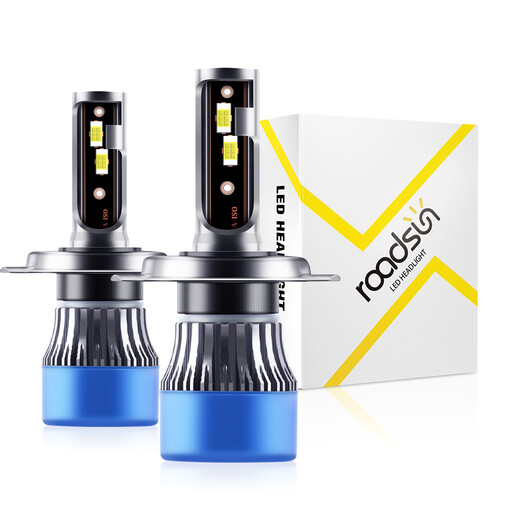
Why This Fits Their Persona: An ideal choice for a straightforward, noticeable upgrade on a family car or daily commuter. The H4 fitment is common, and the simple installation process means you can likely avoid a trip to the garage.
Its design focuses on a true plug and play headlights experience, directly addressing the "Compatibility Gamble." The beam pattern is engineered to mimic the original halogen, helping to avoid the "Dazzle Trap."
Features an integrated high and low beam function in one bulb and includes a cooling fan to counter the "Longevity Lie" by actively managing heat.
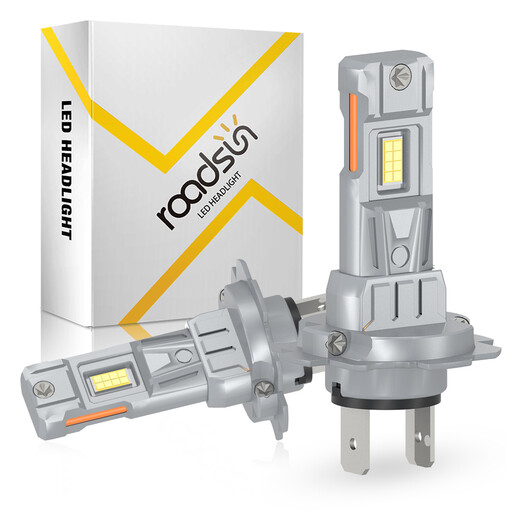
Why This Fits Their Persona: For the DIY enthusiast who drives on unlit country lanes and wants a significant jump in illumination. This bulb provides a powerful output while its compact size makes it suitable for tighter headlight housings.
The "Real 1:1 Mini Size" and "No Adapters Needed" design directly counters the fitment issues common with other high-power LEDs. Its calibrated light pattern ensures the increased brightness doesn't lead to dangerous glare.
Offers a substantial increase in brightness for superior visibility. Its durable, all-weather build makes it a reliable choice for both headlights and LED fog lights.
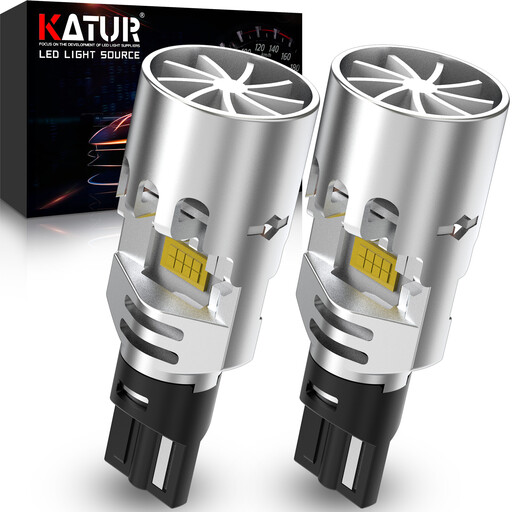
Why This Fits Their Persona: This is a specialist bulb for those looking to upgrade their dim, often-neglected reverse lights. It provides a huge improvement in visibility for reversing at night or navigating tight, poorly lit car parks.
As a specific-fitment bulb (T15/W16W), it avoids the one-size-fits-all "Compatibility Gamble." Its CANbus-compatible design is crucial for modern cars where even a reverse light can trigger a dashboard warning.
Delivers an intense, wide field of light when reversing. Uniquely for a small bulb, it includes a cooling fan to ensure consistent performance and longevity.
While upgrading your vehicle's lighting, it's worth considering how modern, efficient lighting can enhance your home's exterior. Eco-friendly solar garden lights and decorative outdoor fairy lights operate on the same principles of efficiency and durability, transforming a patio or garden with minimal effort. Options like the VIVREAL Solar Bubble Ball String Lights offer weatherproof construction and automatic dusk-to-dawn operation, providing an effortless way to add ambience to your outdoor spaces.
We have compiled a complete, real-time list of products that fully satisfy these strict selection criteria and UK safety regulations.
As of 2026, the rules for MOT tests state that a replacement light source must not adversely affect the beam pattern or cause dazzle. While any aftermarket LED conversion is technically for "off-road use," a high-quality bulb that is designed to replicate the original halogen's beam pattern is far less likely to cause issues. The key is choosing a bulb that produces a clean, sharp cut-off line and is correctly installed and aligned.
It depends on your vehicle. Many modern LED bulbs are "CANbus ready" and work flawlessly on most cars. However, vehicles from brands like Volkswagen, Audi, BMW and Mercedes are known to have more sensitive systems. If you install a bulb and experience dashboard errors or flickering, an additional CANbus decoder is likely required to resolve the issue.
Manufacturers often quote lifespans of 50,000 hours or more, but this is a theoretical maximum achieved in laboratory conditions. In the real world, the lifespan of bright car bulbs is determined almost entirely by their heat management. A bulb with a robust cooling system—typically a combination of an aluminium body and a high-speed fan—will maintain its brightness and last significantly longer than a passively cooled or poorly designed alternative.