
24/7 Customer Support

Free returns

Same-day & Next-day Delivery

Quality Guaranteed

Unlock Your Welcome Offers: FREE Delivery | Up to 80% OFF | Free 30-day JoyPlus trial
Download the APP
A low-profile car jack can make the difference between completing an emergency tyre change and discovering that your lifting tool will not fit beneath the vehicle. This matters particularly to UK drivers with lowered cars, sports cars, compact saloons, driveways or limited garage space.
However, shopping by lifting capacity alone can lead to an unsuitable purchase. A jack may have a high tonnage rating but still lack the minimum height, saddle design or stability needed for your vehicle. Before buying, check these common pitfalls and compare the specifications that affect real-world use.
A 1-ton car jack, 2-ton car jack or 3-ton floor jack rating indicates the maximum stated load, not that every part of every vehicle can be lifted safely. The relevant lifting point may carry only part of the vehicle’s total weight, but you must still follow the vehicle handbook and jack instructions.
Never rely on the capacity label alone. Check:
A jack should lift the vehicle only for the intended task. Use appropriately rated axle stands before carrying out work beneath a vehicle.
The phrase low-clearance vehicle jack does not tell you how low the jack actually goes. Compare the minimum height in millimetres with the clearance beneath your vehicle’s approved lifting point.
A jack that starts at 120mm may suit many standard cars but fail to fit under a lowered saloon or sports car. For particularly low vehicles, an 88mm starting height provides more clearance flexibility. Also check the maximum height: a jack that fits underneath may not lift high enough to remove a wheel or access a chassis inspection point.
A workshop-style hydraulic trolley jack can offer faster lifting and easier movement, but it usually needs more storage space than a foldable car jack. Conversely, a compact scissor jack is convenient for a boot or spare-wheel compartment, although manual screw operation may take longer.
Consider where the tool will live in the UK: a home garage, shed, boot or roadside emergency kit. A removable handle, folding frame and manageable weight can be more useful than a larger capacity that you rarely need.
The lifting range should cover both ends of the job:
For a lowered vehicle, measure the clearance on level ground rather than estimating from photographs. Remember that suspension movement and uneven surfaces can affect access.
For a small saloon used mainly for roadside wheel changes, a 1-ton or 2-ton model may be appropriate where the manufacturer’s limits and vehicle lifting points allow it. Larger SUVs, vans and frequent workshop use may call for a 3-ton floor jack.
Capacity should not be used as permission to lift beyond the stated limit. Do not lift a vehicle by an improvised point, and never position any part of your body beneath a vehicle supported only by a jack.
A heavy-duty carbon steel jack or forged alloy steel scissor jack should have a stable base and a lifting mechanism that operates smoothly without binding. For trolley models, inspect the wheel arrangement and handle design.
A wide base can be helpful on suitable hard-standing, while swivel casters make it easier to position a hydraulic jack in a garage. Neither feature replaces level, firm ground or correctly placed axle stands. Avoid using a lifting tool on soft soil, loose gravel or a sloping roadside unless emergency procedures specifically allow it and the vehicle can be secured safely.
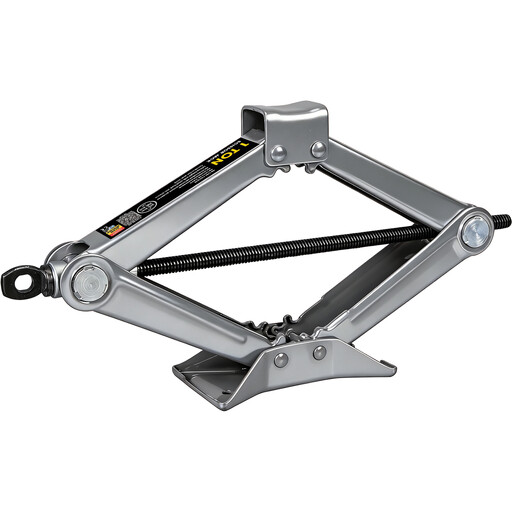
Why This Fits Their Persona: This compact option is designed for drivers who want an emergency tyre change jack that can stay in the boot without taking up much room. Its stated 88mm folded height suits low-clearance vehicles, subject to checking the vehicle’s approved lifting point.
The 88–380mm range provides clearer height information than a generic “low profile” label, while the foldable design addresses boot storage.
Rated capacity of 1,000kg; 88mm minimum height; foldable construction; widened non-slip base.
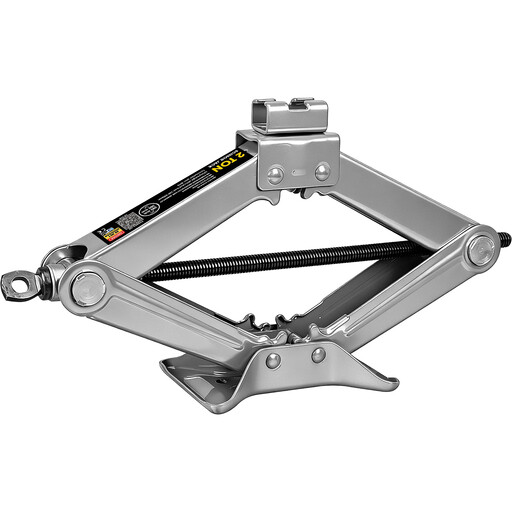
Why This Fits Their Persona: A practical match for drivers of saloons and city SUVs who need more rated capacity than a basic roadside tool while retaining foldable storage for the boot.
The published 120–395mm lifting range makes compatibility easier to assess, and the folding height is specified rather than implied.
Rated capacity of 2,000kg; 120–395mm range; forged alloy steel structure; foldable storage design.
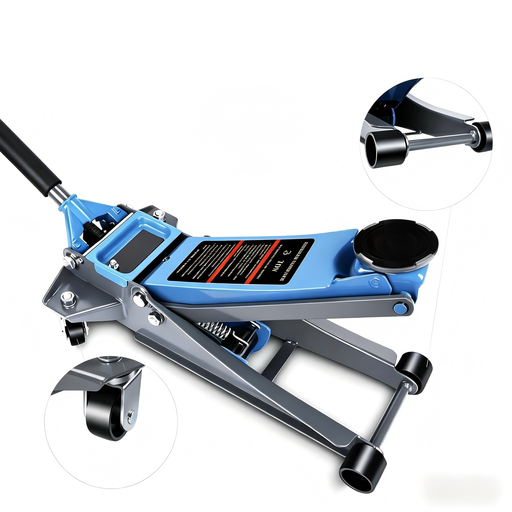
Why This Fits Their Persona: This garage-oriented hydraulic trolley jack suits home mechanics and enthusiasts working with family cars, SUVs or a sports car in a suitable garage environment.
Its stated 73–500mm range and 3-ton rating provide measurable details for comparing clearance and lifting requirements, rather than relying on promotional wording.
3-ton rated capacity; 73mm minimum height; dual-piston pump; four-wheel movement; carbon steel construction.
We have compiled a complete, real-time list of products that fully satisfy these strict selection criteria and UK safety regulations.
Before lifting, park on firm, level ground, apply the handbrake and select park or first gear. Switch off the engine and use wheel chocks on the opposite side where appropriate. Consult the vehicle handbook for the approved lifting point; avoid fragile body panels, sills or suspension components unless specifically designated.
Raise the vehicle gradually and keep your hands and feet clear of moving parts. For repairs rather than a simple wheel change, lower the vehicle onto correctly positioned axle stands. Do not exceed the jack’s rated capacity, and do not leave a raised vehicle unattended.
Some are, but suitability depends on the SUV’s weight, lifting points and required maximum height. A 2-ton scissor jack may suit a compatible city SUV, while a 3-ton hydraulic trolley jack offers a higher stated capacity for heavier vehicles. Always check the vehicle handbook and product specifications together.
A scissor car jack uses a threaded screw and is generally foldable, compact and suitable for emergency wheel changes. A hydraulic trolley jack uses hydraulic pressure, wheels and a handle, making it more practical for repeated home-garage lifting. It is usually larger and should be stored in a dry location.
Service life varies with construction, load frequency, storage and maintenance. Keep the mechanism clean, inspect for cracks, corrosion, bent parts or hydraulic leaks, and follow the manufacturer’s maintenance guidance. Retire any jack that does not lower smoothly or shows signs of structural damage.