
24/7 Customer Support

Free returns

Same-day & Next-day Delivery

Quality Guaranteed

Unlock Your Welcome Offers: FREE Delivery | Up to 80% OFF | Free 30-day JoyPlus trial
Download the APP
As a Joybuy Product Recommendation Officer, my role is to help you navigate the crowded market of car maintenance tools. Choosing a car jack might seem straightforward, but a few common pitfalls can lead to a purchase that is unsuitable, or worse, unsafe. This guide will break down the essential factors to consider, ensuring you select a tool that fits your vehicle and your needs perfectly.
Many buyers find themselves with a tool that doesn't work for their situation. Here are the most frequent missteps we see and how to avoid them:
To make an informed choice, you need to understand three key parameters. Getting these right will ensure your new car jack is a reliable partner for years to come.
This is the maximum weight the jack is certified to lift safely. It's crucial to note that you are only lifting a corner or one end of the vehicle, not its entire weight. A good rule of thumb is to choose a car jack with a capacity that is at least 75% of your vehicle's Gross Vehicle Weight (GVW), which can be found in your owner's manual or on the driver's side door jamb. For example, for a 2-tonne (2,000 kg) family car, a jack rated for 1.5 tonnes (1,500 kg) provides a safe margin. For heavier vehicles, a 3 ton trolley jack or a heavy duty car jack is often the standard.
This specification has two parts:
Different jobs call for different tools. The three main types you'll encounter are:
To help you match a product to your specific needs, we've profiled several types of users and identified a suitable option for each.
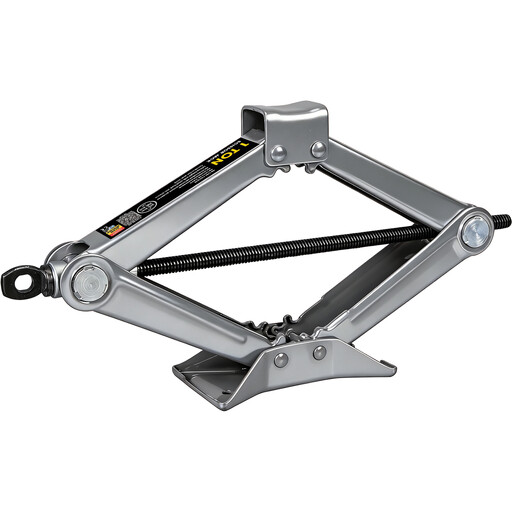
Why This Fits Their Persona: For the driver who wants a reliable tool for roadside emergencies, this scissor jack is ideal. It's designed for easy storage in a boot's spare tyre compartment, ensuring it's always there when needed without taking up valuable space.
Its foldable, compact design directly counters the pitfall of buying a bulky jack that is impractical for emergency use and storage in a standard car.
Ultra-low 88mm profile fits under most vehicles, including those with low clearance. The effort-saving handle makes operation straightforward.
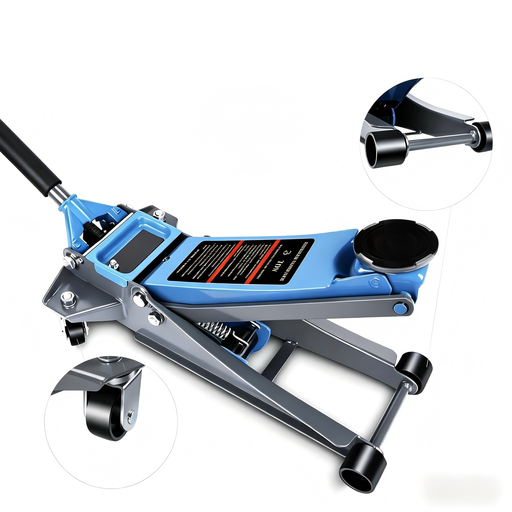
Why This Fits Their Persona: This is a versatile workhorse for the home garage. It's suitable for a wide range of tasks, from changing tyres on a family saloon to performing brake maintenance on an SUV, thanks to its broad lifting range and solid capacity.
Its extremely wide lifting range (73mm-500mm) avoids the "wrong profile" pitfall, making it a single solution for both low and high-clearance vehicles.
The dual piston pump lifts the vehicle to the desired height quickly, saving time and effort. The heavy-duty steel construction ensures durability for frequent use.
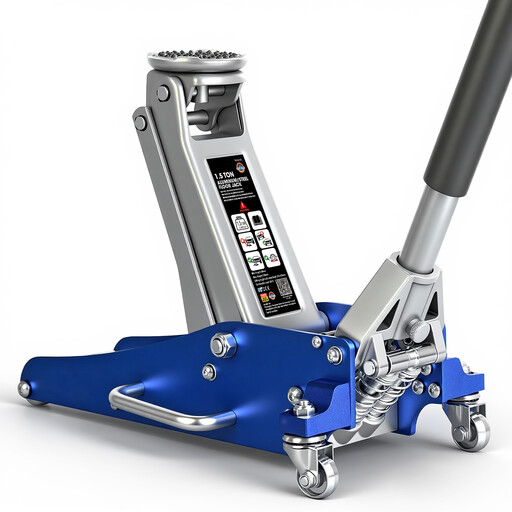
Why This Fits Their Persona: Portability and low clearance are paramount. This lightweight aluminium jack is easy to transport to a track day and its low profile is designed specifically for performance cars, preventing damage to bodywork.
Its 90mm low-profile design and lightweight aluminium construction (approx. 14.3kg) directly solve the problem of standard jacks being too high and too heavy for sports car owners.
The combination of an aluminium alloy body for portability and a dual-pump quick lift system makes it highly efficient for quick wheel changes in the paddock or at home.
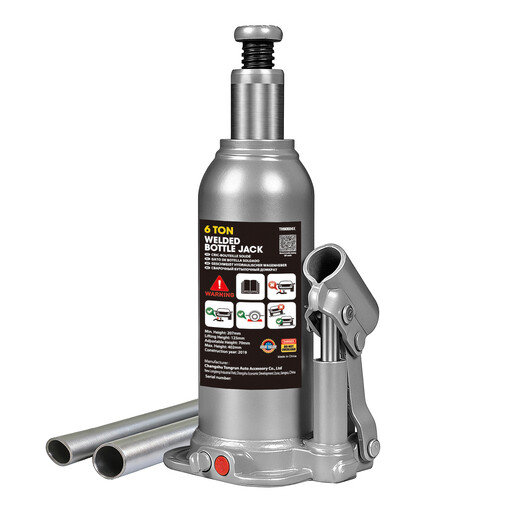
Why This Fits Their Persona: Owners of heavier vehicles like pickup trucks, large SUVs and light commercial vans need serious lifting power. This bottle jack provides a high 6-ton capacity and the lift height required for high-clearance vehicles.
Its 6-ton capacity and forged steel base directly address the critical safety pitfall of using an under-rated jack for a heavy vehicle.
The compact vertical design delivers significant power without the large footprint of a trolley jack. The adjustable screw top allows for fine-tuning the height before lifting.
We have compiled a complete, real-time list of products that fully satisfy these strict selection criteria and UK safety regulations.
1. How do I choose the right weight capacity for a car jack? Check your vehicle's Gross Vehicle Weight (GVW) in the owner's manual. A safe guideline is to select a jack with a rated capacity of at least 75% of your vehicle's total weight. It is always better to have a higher capacity than you need.
2. What is the main difference between a trolley jack and a bottle jack? A trolley jack is horizontal and on wheels, offering excellent stability and ease of positioning under a vehicle, making it a garage favourite. A bottle jack is vertical and more compact, offering greater lifting power for its size and a higher lift, which is ideal for vehicles with high ground clearance like trucks and commercial vans.
3. Are aluminium jacks as strong as steel ones? For the same price and size, a steel jack will generally have a higher load capacity and be more resistant to damage in a workshop environment. An aluminium jack's primary advantage is its significantly lower weight, making it much more portable for mobile use or for taking to track days. Both are safe when used within their specified load limits.