
24/7 Customer Support

Free returns

Same-day & Next-day Delivery

Quality Guaranteed

Unlock Your Welcome Offers: FREE Delivery | Up to 80% OFF | Free 30-day JoyPlus trial
Download the APP
For serious runners in the UK, selecting the right pair of marathon racing shoes is a critical decision. With countless brands promising faster times and revolutionary technology, it's easy to get lost in the marketing clutter. The wrong choice can not only hinder your performance on race day but also lead to discomfort or even injury during your crucial final weeks of training. As the Joybuy Product Recommendation Officer, my role is to help you navigate the market by highlighting the key factors that truly matter, so you can invest in footwear that genuinely supports your goal of a new marathon PB.
Before you commit to a purchase, be aware of these common pitfalls that many runners encounter:
To make an informed choice, focus on the technical specifications that directly impact performance and running economy. Here are the non-negotiable factors to analyse.
The single most important component for speed is the midsole foam. Traditional EVA foams are being replaced by advanced compounds engineered for high energy return. Look for shoes with PEBA-based foams, such as Li-Ning's SUPER BOOM midsole technology. These materials are designed to compress and then rebound with exceptional force, returning a high percentage of the energy you put into each stride. This is the key to high energy return running shoes; they don't just cushion your landing, they actively propel you forward, helping to improve your running economy and delay fatigue.
The carbon plate running shoes that have become standard for running shoes for road racing work in tandem with the foam. The plate's function is to stabilise the foam and create a rigid lever for a more efficient toe-off. However, its shape and stiffness are crucial. An aggressive, spoon-shaped plate provides maximum propulsion but may require a faster pace and specific foot strike to activate effectively. Other models feature plates with more flexibility, offering a propulsive benefit to a wider range of runners without feeling overly harsh. Consider your own pace and mechanics when evaluating the plate design.
For a marathon, every gram counts. A lightweight upper, often made from advanced woven materials like BOOM FIBER, provides a secure lockdown without adding unnecessary weight. It should be highly breathable to manage heat and moisture over several hours of running, preventing blisters and discomfort. The ideal shoe strikes a balance: it must be light enough to feel fast but structured enough to support your foot securely from the first kilometre to the last.
Instead of a single "best" shoe, the right choice depends on your specific running profile and goals. Here are our recommendations matched to different types of marathon runners.
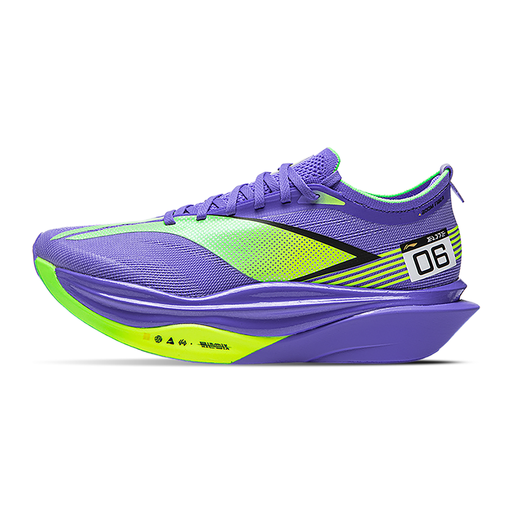
Why This Fits Their Persona: For the runner who is data-driven and chasing a specific time goal, the Li-Ning Fei Dian 6 Elite is engineered with elite-level performance in mind. Every component is tuned for maximum efficiency over the full marathon distance.
It avoids the "soft but slow" trap with its SUPER BOOM CAPSULE midsole, which focuses on propulsion. The GCU outsole is specifically designed for high-performance grip on wet surfaces, countering the durability pitfall.
The combination of a full-length T1000 carbon fibre plate and a high-rebound foam delivers a powerful, propulsive ride. The breathable LI-NING BOOM FIBER upper ensures a secure, race-ready fit.
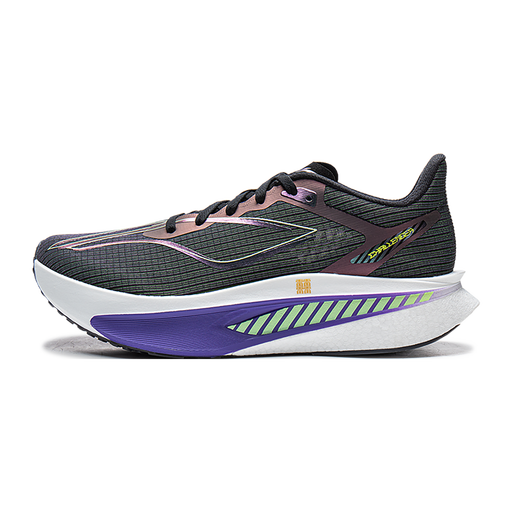
Why This Fits Their Persona: This runner needs a reliable shoe for both fast training sessions and race day. The Challenger offers a balanced performance profile that is more accessible than a top-tier elite model, making it a durable and versatile option.
It sidesteps the "overly aggressive plate" trap by offering a more accommodating ride, suitable for a wider range of paces. The GCR rubber outsole provides dependable grip, ensuring it's a practical choice for real-world UK road conditions.
This shoe provides an excellent entry point into performance running technology. Its lightweight construction and responsive SUPER BOOM midsole make it suitable for everything from tempo runs to the marathon itself.
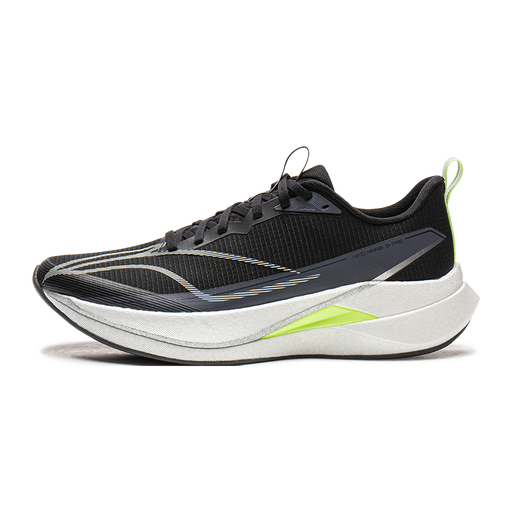
Why This Fits Their Persona: Ideal for the runner who logs high mileage and values stability alongside speed. This shoe is a workhorse for daily training that is more than capable of performing on race day, offering great value and durability.
It directly addresses the instability that can come with high-stack shoes by incorporating a widened platform and a midfoot TPU plate. The dual-layer BOOM midsole provides genuine energy return, not just soft foam.
Its standout feature is the enhanced stability, which helps reduce fatigue and potential injury risk over long distances. The durable GCR outsole is built for high mileage, making it a cost-effective choice for a training-to-race shoe.
While the right shoes are crucial for your performance, training for a marathon often involves early morning or late evening runs. Ensuring your visibility on the road is just as important for your safety and peace of mind.
We have compiled a complete, real-time list of products that fully satisfy these strict selection criteria and UK safety regulations.
1. How many miles can I expect from a pair of carbon plate marathon racing shoes? Due to their focus on lightweight performance, marathon racing shoes typically have a shorter lifespan than daily trainers. You can generally expect between 200 to 300 miles of optimal performance before the midsole foam begins to lose its responsive properties. Many runners reserve them for key workouts and races to prolong their life.
2. Can I use marathon racing shoes for all my training runs? It is generally not recommended. These shoes are specifically tuned for speed and efficiency on race day. Using them for all your runs will wear them out quickly and may not provide the support needed for slower, recovery-paced miles. It's more effective to use a dedicated daily trainer for the bulk of your mileage.
3. Do I need to be an elite runner to benefit from carbon plate running shoes? Not at all. While elite athletes may see the most significant time improvements, many amateur runners find that the enhanced running economy from these shoes helps them maintain their goal pace for longer. The reduction in muscular fatigue can be a significant advantage in the final 10km of a marathon, helping you achieve that personal best. The key is to select a model that complements your individual running style and pace.