
24/7 全天候客户支持

免费退货

当日/次日达

品质保障

开启新人专享福利: 全场免邮 | 低至 2 折 | 免费试用 30 天 JoyPlus 会员
下载 Joybuy
As a Joybuy Product Recommendation Officer, my role is to help you navigate the crowded market and find products that genuinely solve a problem. When it comes to the persistent UK issue of damp, condensation and musty odours, a moisture absorber can be a simple, effective solution. However, not all are created equal.
Many find themselves frustrated with products that underperform, leak or become surprisingly costly over time. Before you buy, let’s look at the common pitfalls that can lead to wasted money and continued damp problems.
To ensure you choose an effective and safe non-electric dehumidifier, focus on these core features.
Moisture absorbers use hygroscopic crystals, typically calcium chloride, to draw moisture from the air. These come in two main forms:
Always check the manufacturer's recommended coverage area, usually stated in square metres (m?) or cubic metres (m?). A typical refill lasts between 1 to 3 months, but this is heavily influenced by the humidity and temperature of the room. A good condensation collector for a steamy bathroom will work harder and need refilling sooner than one in a dry spare room.
Look for a unit with a wide, stable base to prevent it from being easily tipped over. The most reliable designs feature a two-part system: an upper chamber to hold the tab or crystals and a separate lower reservoir to securely collect the liquid. This separation is key to preventing spills and making disposal of the collected water safe and simple. This is especially important for a caravan moisture absorber, where movement is expected.
Instead of a one-size-fits-all approach, we've matched a few reliable options to specific user needs.
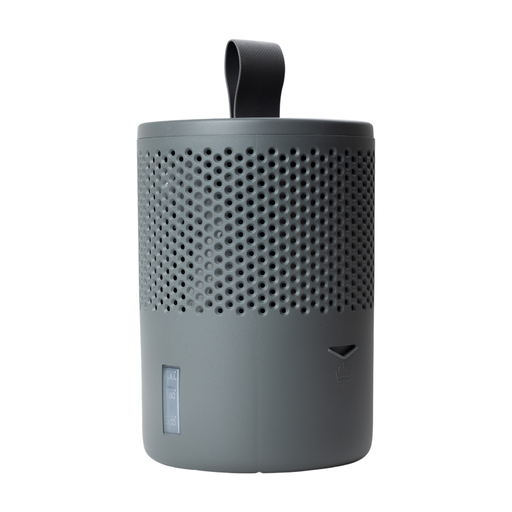
Why This Fits Their Persona: This is a workhorse for medium to large rooms (up to 50m?). Its large capacity and refillable design make it a cost-effective choice for managing persistent damp in utility rooms, kitchens or living areas without needing constant attention.
It is fully refillable, avoiding the high long-term cost of disposable units. The large capacity is correctly matched for bigger spaces, ensuring it works effectively.
Features a stable, dual-chamber design to securely contain collected liquid. The clear base allows you to easily monitor the water level.
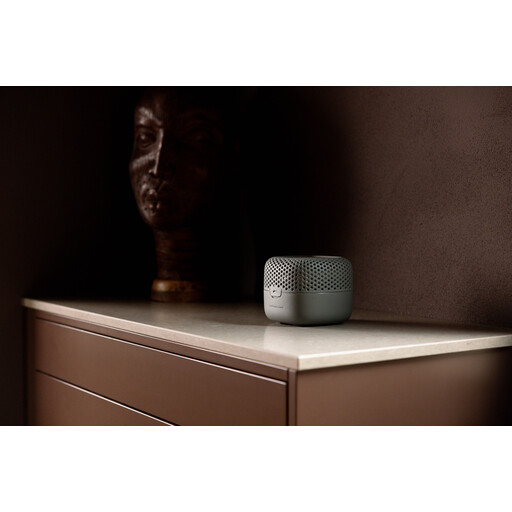
Why This Fits Their Persona: Perfect for those needing a compact solution for wardrobes, cupboards, small bathrooms or caravans. Its modern Scandinavian design is discreet, and its coverage (up to 30m?) is ideal for targeted moisture control in confined areas.
This model avoids the "mismatched capacity" pitfall by being specifically designed for smaller spaces. Its stable, refillable design also prevents leaks and long-term waste.
Silent, non-electric operation and a compact footprint. The stylish design means it doesn't have to be hidden away.
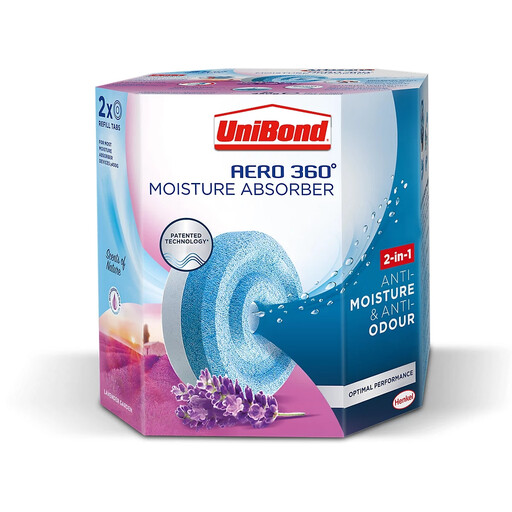
Why This Fits Their Persona: For those who want to tackle damp while also freshening the air. These refills combine moisture absorption with odour neutralisation and a pleasant lavender scent, ideal for bedrooms and living spaces. Note: These are refills for the AERO 360 device.
As part of a refillable system, it's an economical choice. The tab format is clean and easy to handle, avoiding the mess of loose crystals.
2-in-1 technology absorbs moisture and neutralises odours. The wave-shaped tab is designed for efficient air contact.
We have compiled a complete, real-time list of products that fully satisfy these strict selection criteria and UK safety regulations.
The lifespan of a refill, whether a tab or loose crystals, is typically between one and three months. However, this can vary significantly based on the level of humidity, room temperature and ventilation. In a very damp, cold and poorly ventilated room, you may need to replace it more frequently.
Yes, for localised issues, a non-electric dehumidifier is an excellent tool. They are particularly effective at managing condensation on windows, in small bathrooms or inside wardrobes. By passively drawing moisture from the surrounding air, they act as a targeted condensation collector, preventing water from settling on cold surfaces. For a severe, whole-house damp problem, a powered electric dehumidifier may be more suitable.
The liquid collected in the base of the unit is a brine (saltwater) solution. It should be handled with care and disposed of by pouring it down a toilet or drain. Avoid spilling it on plants, fabrics, leather or metal surfaces, as it can be corrosive. Always follow the specific disposal instructions provided by the manufacturer.