
24/7 Customer Support

Free returns

Same-day & Next-day Delivery

Quality Guaranteed

Unlock Your Welcome Offers: FREE Delivery | Up to 80% OFF | Free 30-day JoyPlus trial
Download the APP
Condensation on windows, musty wardrobes and damp-smelling cupboards are familiar problems in many UK homes, particularly during colder weather. A moisture absorber can offer a quiet, low-maintenance way to collect excess water vapour without adding another electrical appliance to your home.
However, not every product suits every space. Before buying, check the coverage, refill system, placement and safety instructions rather than relying on broad claims such as “long-lasting” or “powerful humidity control”.
A moisture absorber designed for a wardrobe or cupboard may not be suitable for a whole bedroom. Coverage is often stated in cubic metres (m³) or square metres, and these measurements are not interchangeable without considering ceiling height.
For example, a product suitable for approximately 20m² may be intended for a specific room layout and humidity level. Enclosed spaces such as caravans, boats and storage cupboards can behave differently from open-plan rooms. Use the stated coverage as a guide, and consider using more than one unit where rooms are large, poorly ventilated or particularly damp.
Refill tabs and bags are not automatically universal. Some systems use loose crystals or refill bags, while others require a shaped tablet and a particular container size. Check the manufacturer’s compatibility information before ordering dehumidifier refill tabs.
A low-priced refill pack is not good value if it cannot be used with the absorber already in your home. Refillable containers can reduce repeat purchases, but only when suitable replacement packs remain readily available.
Many calcium chloride moisture absorbers draw water from the air and collect it in a lower chamber or bag. This liquid should not come into contact with clothing, leather, polished surfaces, electronics or other moisture-sensitive items.
Hanging dehumidifier bags need enough clearance below them for liquid collection. Place tabletop units on a stable, level and water-resistant surface, and follow the disposal instructions when the crystals dissolve or the collection chamber is full.
Start with the space you want to manage:
The product specifications should clearly state the approximate coverage. For example, some ABSODRY Series 3 models are listed for spaces up to approximately 30m³, while ABSODRY 220-ADB models are listed for up to 50m³.
Most passive products in this category use calcium chloride crystals, which attract moisture and turn it into liquid. This process is silent and does not require electricity, making it suitable for bedrooms, cupboards and holiday homes.
Refill duration depends on room temperature, ventilation and humidity. A stated period of one to three months is an estimate rather than a guarantee. Check the unit regularly, particularly in bathrooms, kitchens and rooms where clothes are dried.
A refillable moisture absorber normally costs more initially but may be more convenient over time. Look for a dual-chamber design that keeps crystals separate from collected liquid, a visible water level and replacement refills that are easy to source.
Hanging bags are compact and useful where floor or shelf space is limited. They are generally single-use, so compare the pack size and replacement frequency before judging overall value. Fragranced versions may help with odour reduction, but neutral options are preferable if you want to avoid adding scent to a small room.
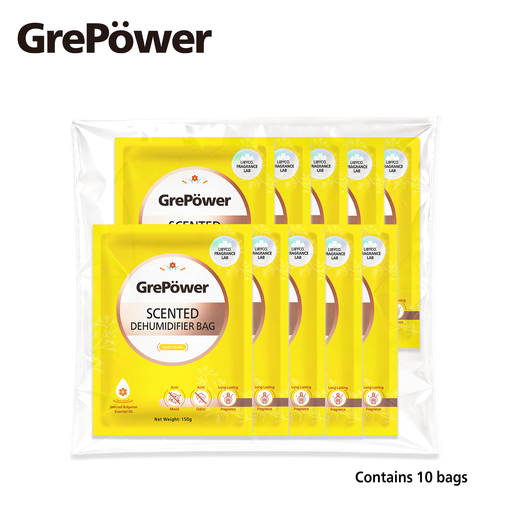
Why This Fits Their Persona: A 10-pack gives renters and first-time buyers a simple way to try moisture control in wardrobes, cupboards, bedrooms, garages or motorhomes without buying a reusable container.
The hanging format makes the placement and single-use nature clear. Replace each bag when its collection area is nearly full or the granules have dissolved.
Calcium chloride filling; 10 bags per pack; suitable for hanging in enclosed or semi-enclosed spaces.
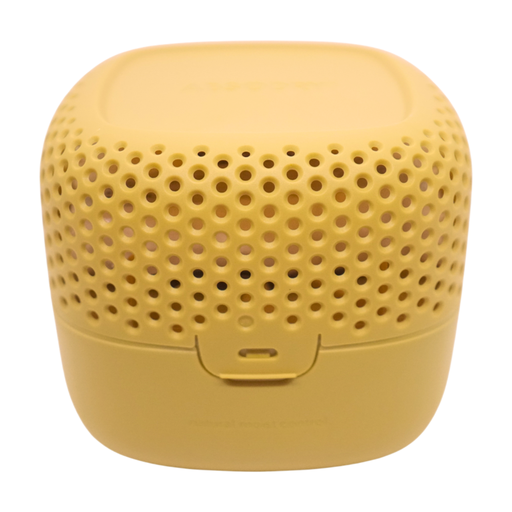
Why This Fits Their Persona: This reusable option suits households wanting a discreet, silent unit for a bedroom, bathroom, kitchen, cupboard or caravan.
Its stated capacity and refill format make it easier to compare ongoing use than a product described only as “long-lasting”.
Approximate coverage up to 30m³; reusable dual-chamber container; refill duration listed as approximately one to three months.
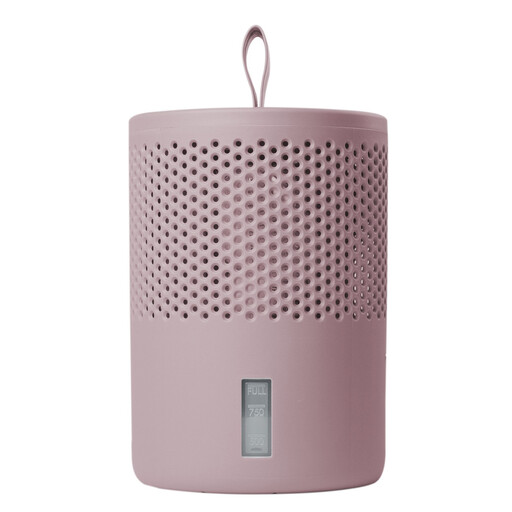
Why This Fits Their Persona: The listed 50m³ coverage makes this a practical format for larger enclosed areas, utility rooms, storage spaces, caravans and boats.
The stated capacity helps prevent choosing a small wardrobe unit for a much larger space. It also has a clear lower tank for checking collected liquid.
Up to 50m³ stated coverage; calcium chloride absorption; reusable container with a dual-chamber design.
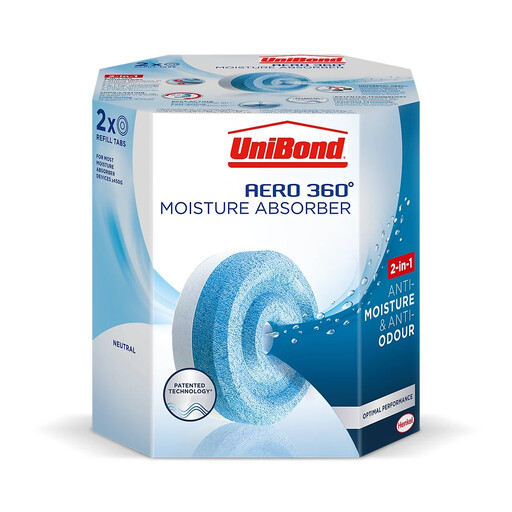
Why This Fits Their Persona: Designed for households that already own a compatible absorber and want replacement tabs for bedrooms, bathrooms, wardrobes, caravans or boats.
Compatibility is specified for the AERO 360 system and other absorbers with a capacity of 450g or more. Check your unit before purchasing.
Two 450g tabs; stated coverage up to 20m² per tab; up to three months per tab depending on conditions.
We have compiled a complete, real-time list of products that fully satisfy these strict selection criteria and UK safety regulations.
Place the absorber where air can circulate, but keep it away from radiators, direct water spray and areas where it could be knocked over. Do not position a hanging bag directly above clothing, electrical equipment or valuable items.
Calcium chloride products can irritate skin and eyes, and the collected liquid must not be consumed. Keep units, crystals and used refills away from children and pets. Always read the product label, avoid opening sealed refill casings and dispose of used contents according to the instructions.
A moisture absorber can support humidity control, odour reduction and everyday damp and mould prevention, but it does not replace ventilation, heating, leak repairs or professional treatment of established mould. Persistent damp, peeling surfaces or structural water ingress should be investigated separately.
Many refill tabs and crystal bags last up to three months under normal conditions, while some refillable systems list approximately one to three months. Actual lifespan varies with humidity, temperature, room size and ventilation. Replace the product when the crystals have dissolved, the indicator changes or the collection chamber is full.
Place it on a stable shelf or the wardrobe floor with space around it for air movement. A hanging bag should hang freely and have clear space underneath for liquid collection. Keep either format away from garments and avoid placing it directly over shoes, leather or electrical items.
A non-electric dehumidifier uses no mains electricity, batteries or power cable, so its direct operating cost is limited to replacement refills or bags. Compare the initial container price, refill weight, stated coverage and replacement interval to assess value for your particular room.