Start with a 27-inch QHD monitor if you want room to view hospital layouts and management menus, and prioritise screen positioning over a headline refresh rate for long sessions. If you also play faster games, compare refresh-rate and adaptive-sync options; decide whether your headphones will connect to your device or need a monitor output, then check that your hardware supports the display mode you intend to use.
Who is this setup for?
Long-session hospital managers
If you spend extended sessions reading menus and arranging rooms, screen position and reflections deserve attention alongside resolution. The Health and Safety Executive advises placing the top of a screen at eye level and the display about an arm's length away.
Players with mixed game libraries
If hospital management is only part of what you play, a QHD screen with a higher refresh rate and compatible adaptive sync may also suit faster games. Check the display connection and graphics hardware needed for the modes you want.
Headphone-first desk gamers
Decide whether your headphones will connect directly to your PC or console, or to an analogue output on the monitor. That choice determines which audio connections you need to confirm before buying.
What matters when choosing?
Choose the workspace and desk fit you need for management play, then assess faster-game features and the connection your headphones will use.
| Concern |
What to check |
Who this matters to |
| Readable workspace |
Compare a 27-inch QHD screen at 2560 × 1440 with your current display, and check that your computer supports the chosen resolution. |
If I regularly switch between hospital layouts and management information, I want enough screen space to read them comfortably. Around 33% of consumers put workspace clarity first. |
| Mixed-game smoothness |
Check the refresh rate available through your intended port and whether your graphics hardware supports the monitor's adaptive-sync option. |
When I also play faster games, I care about the display modes those games can use. Around 25% of consumers make mixed-game smoothness their primary concern. |
| Long-session desk fit |
Check stand adjustment and desk depth; position the screen and lighting to limit reflections. |
During lengthy management sessions, I need the screen at a workable height without distracting glare. Roughly 25% of consumers prioritise desk fit and positioning. |
| Headphone routing |
Decide whether headphones connect to the PC or console, or require an output on the exact monitor variant. |
If my headphones must plug into the monitor, I need that audio path to work with my chosen connection. Around 17% of consumers put headphone routing first. |
Buying pitfalls
-
Assuming every gaming monitor has a headphone output
HDMI and DisplayPort inputs do not, by themselves, establish that wired headphones can connect to the monitor.
Choose your audio route before buying. If headphones must plug into the display, confirm an output on the exact model and variant.
-
Treating the advertised refresh rate as automatic
LG states that the 27GS75QN-B's 200Hz overclocked mode needs compatible graphics hardware and a DisplayPort 1.4 cable. Dell lists different DisplayPort and HDMI refresh limits for the G2724D.
Check the monitor's port-specific modes against your graphics output and cable.
-
Letting curvature or response-time claims decide desk fit
A curved screen or a response-time figure does not replace suitable height, distance and lighting for a long management session. The Health and Safety Executive advises arranging screens and lighting to avoid reflections and glare.
Measure your desk space and check stand adjustment or mounting compatibility before choosing a shape or gaming mode.
-
Comparing MPRT and GtG as the same measurement
Samsung describes its G55C's 1ms MPRT figure under its own test conditions; AOC lists 0.5ms MPRT and 1ms GtG separately for the Q27G4XF. The figures use different measurement methods.
Check the method and applicable mode before using response time to compare monitors.
Relevant monitor brands
LG UltraGear
The 27GS75QN-B illustrates a 27-inch QHD IPS option for buyers considering monitor-based headphone audio.
- LG lists a 180Hz standard refresh rate, adaptive-sync compatibility and a 3-pole headphone output for this model.
- Its 200Hz overclocked mode has a stated compatible graphics-card and DisplayPort 1.4 cable requirement.
Samsung Odyssey
The 27-inch G55C illustrates the curved QHD route for someone who prefers that screen shape.
- Samsung lists a 1000R curve, 165Hz refresh rate and AMD FreeSync for the G55C.
- Curvature is a viewing preference, not a demonstrated advantage for hospital-management play; Samsung's quoted 1ms MPRT uses its stated internal test conditions.
ASUS TUF Gaming
The VG27AQL3A illustrates a QHD Fast IPS option for a library that includes faster games.
- ASUS lists 2560 × 1440 resolution, 180Hz refresh, FreeSync Premium and G-SYNC compatibility for this model.
- Motion-blur features are less central to choosing a screen for management play than workspace, placement and connection fit.
AOC AGON
The Q27G4XF illustrates a 27-inch QHD IPS option with a height-adjustable base.
- AOC lists a 180Hz refresh rate, Adaptive Sync and height adjustment for the Q27G4XF.
- Its listed 0.5ms MPRT and 1ms GtG figures should not be treated as interchangeable measurements.
Joybuy monitor choices
These choices include 27-inch QHD and 4K screens and a 34-inch ultrawide. Compare their workspace, desk fit and connection options against the way you play and use headphones.
 No image available
LG UltraGear G8 27G850A 27-inch 4K Nano IPS
Consider this 27-inch 4K option if you want to assess a higher-resolution screen for hospital layouts alongside other games.
The title lists dual 240Hz and 480Hz modes, DisplayPort 2.1 and HDMI 2.1. Check which resolution each mode supports, whether your PC and cable can use it, and whether the exact variant has the headphone connection you need.
Joybuy
 No image available
Samsung Odyssey G6 S27DG612 27-inch QHD OLED 240Hz
This 27-inch QHD model is worth comparing if your game library extends beyond hospital management to faster titles.
It is identified as a 240Hz OLED monitor. Check the connection needed for your intended refresh rate and confirm the headphone route if you want audio to leave through the monitor.
Joybuy
 No image available
Philips Evnia 6000 34M2C6500 34-inch WQHD
Consider this 34-inch ultrawide if you want to assess a wider screen for management layouts and have room for it on your desk.
The title specifies 3440 × 1440 resolution, up to 175Hz through DisplayPort and 100Hz through HDMI. Check viewing distance and confirm that its audio output suits your headphones before relying on monitor-based sound.
Joybuy
 No image available
HKC G27H2DPro 27-inch QHD Fast IPS 220Hz
This 27-inch QHD option may interest you if hospital management shares your playtime with faster games.
The title lists a Fast IPS panel and 220Hz refresh rate. Consider reflections from its listed glossy finish, and confirm height adjustment, headphone output and the connection required for your intended display mode.
Joybuy
 No image available
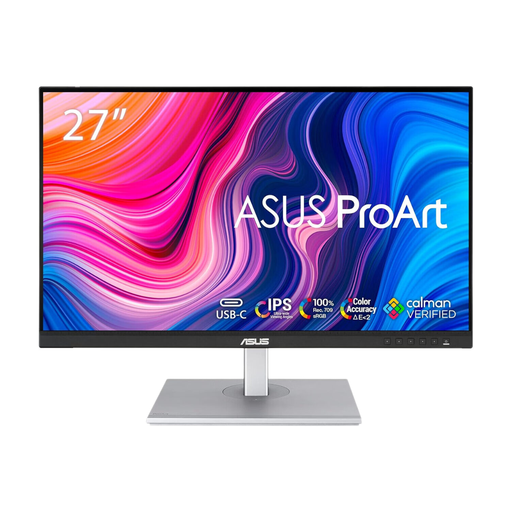
ASUS ProArt PA278CFRV QHD IPS 100Hz
Consider this QHD IPS display if your priority is a desk screen for management play rather than the higher refresh rates of gaming-focused options.
The title specifies 100Hz. Check its adjustment range for your desk and confirm what the audio jack does on the exact variant if you plan to connect headphones to the monitor.
Joybuy
Questions about the setup
Do I need a 240Hz monitor to manage a virtual hospital?
No: 240Hz is not a requirement of hospital-management play. Start with the workspace, positioning and connections you need; a higher refresh rate becomes more relevant if you also play faster games and your PC can drive the chosen mode.
Do headphones have to plug into the monitor?
No. You can connect them to your PC, console or another compatible audio device instead. A monitor output matters if you want the monitor to pass received audio to wired headphones; LG lists a 3-pole headphone output for the 27GS75QN-B, but you should check the exact model you intend to buy.
How should I position the screen for long sessions?
Place it where you can view it without awkward posture or distracting reflections. The Health and Safety Executive advises keeping the top of the screen at eye level, the display about an arm's length away and the screen and lighting arranged to avoid glare.


