
24/7 Customer Support

Free returns

Same-day & Next-day Delivery

Quality Guaranteed

Unlock Your Welcome Offers: FREE Delivery | Up to 80% OFF | Free 30-day JoyPlus trial
Download the APP
Paint markers are useful for everything from workshop identification and warehouse labelling to craft projects, classroom displays and DIY decoration. However, the word “paint” does not automatically mean that a marker will adhere to every material or remain visible outdoors.
The right choice depends on the ink formula, tip size, surface and expected durability. This guide explains the main buying traps and compares suitable options for UK users.
Some products are designed to leave durable marks, while others are intentionally removable. Permanent paint markers and permanent markers are suitable for labelling items that should remain identified. Wet-erase chalk markers, by contrast, are made for temporary displays on suitable non-porous surfaces.
A marker described as waterproof may still perform differently on untreated wood, dusty concrete or textured plastic. Always check the manufacturer’s stated surface compatibility and test a small hidden area first.
A fine tip is useful for serial numbers, small labels and detailed craft work, but it may cover large areas slowly. A medium or broad tip creates more visible warehouse and construction markings, although it can be less suitable for precise writing.
Tip measurements can also vary between brands. Look for the actual measurement where provided, such as a 2.9mm fine bullet tip or 4.5mm medium bullet tip, rather than relying only on terms such as “precision” or “bold”.
Paint markers commonly require shaking and priming before first use. Failing to mix the pigment can cause uneven colour or inconsistent flow. Leaving caps loose, storing markers in unsuitable temperatures or ignoring the recommended horizontal storage position can shorten usable life.
For industrial paint markers, the surface also matters. Oil, dust, rust and moisture may reduce adhesion, even when the marker is designed for metal or plastic.
For outdoor work, construction and maintenance, look for ink described as permanent, waterproof, weather-resistant or UV-resistant, but treat these descriptions as product features rather than guarantees for every environment. Sunlight, abrasion, solvents and repeated handling can affect the mark.
For shop boards, windows and menu displays, choose wet-erase chalk markers or liquid chalk markers specifically intended for non-porous surfaces. These are generally removed with a damp cloth when used correctly. Do not use them on porous materials if easy removal is important.
Check whether the marker is intended for:
A multi-surface marker is convenient, but the finish may vary between materials. Smooth glass can produce a different result from rough concrete. For safety-critical labels or asset identification, test adhesion and visibility before applying marks to the full batch.
Fine tip paint markers support controlled writing and detailed lines. Medium tips offer a compromise between coverage and control, while solid paint sticks provide a broader, no-drip marking format.
For occasional home use, a small pack may reduce waste. Schools, offices, warehouses and businesses may find bulk marker packs more practical. Compare the number of usable colours and the intended task rather than choosing solely by pack size. A 48-pack or 72-pack can be economical for regular use, but only if the tip and ink type suit the work.
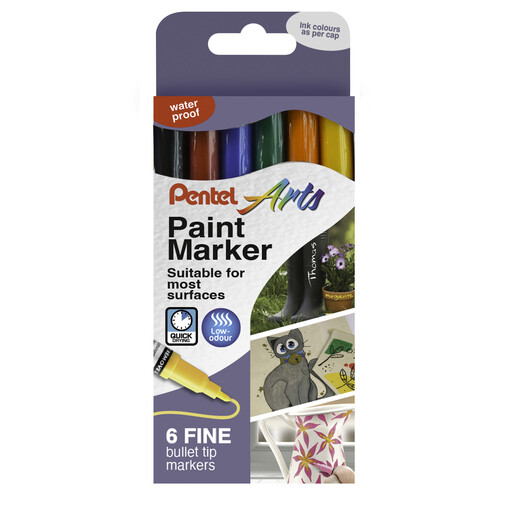
Why This Fits Their Persona: A six-colour set gives students, DIY users and new crafters a practical starting selection without committing to a large bulk pack.
The fine 2.9mm bullet tip is specified clearly, helping buyers match the marker to detailed writing rather than relying on vague tip descriptions.
Low-odour pigment-based ink; suitable for thick card, metal, glass, plastic and rubber.
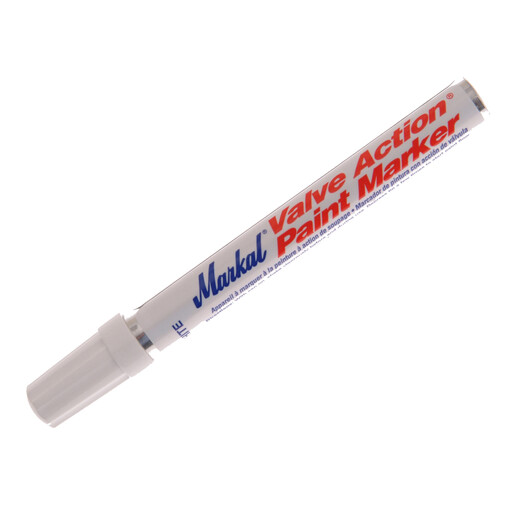
Why This Fits Their Persona: Its metal barrel and controlled valve-action mechanism suit tradespeople, maintenance teams and workshop users who value controlled application.
The valve-action design helps regulate paint release, while the product information identifies the ink type and suitable surfaces.
Fast-drying, opaque white paint; suitable for steel, iron, plastic, glass, rubber and textiles.
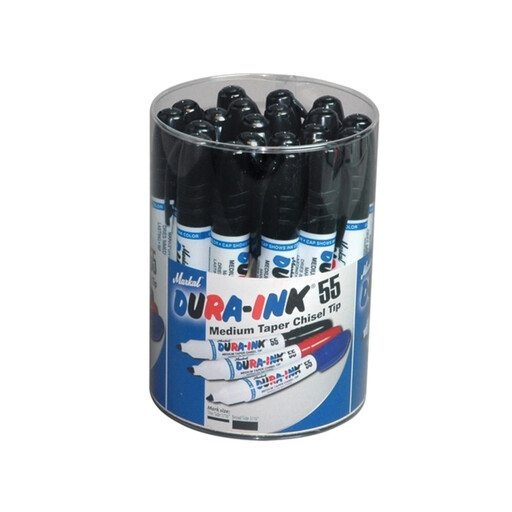
Why This Fits Their Persona: A 20-pack is suitable for warehouses, construction teams, dispatch areas and businesses that use markers continuously.
The product specifies a medium taper tip, permanent ink and a quick-drying format, making the intended use clearer than generic marker labelling.
Medium taper supports varied line widths; black ink is described as waterproof and fade-resistant.
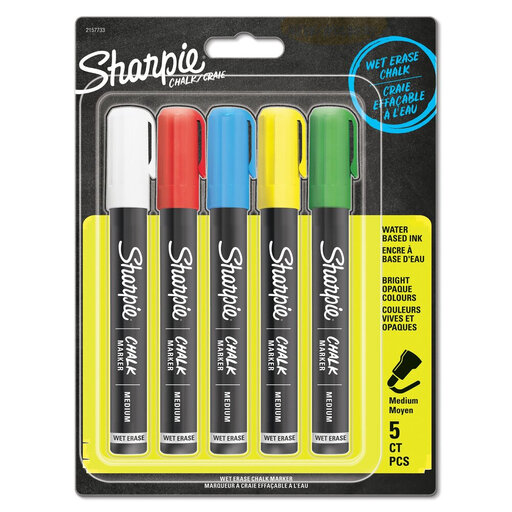
Why This Fits Their Persona: Teachers, cafés, small businesses and households can refresh temporary messages on boards, windows and other suitable non-porous surfaces.
It is specifically presented as wet-erase, so users are less likely to mistake a removable display marker for a permanent paint pen.
Five assorted colours; wipes away with a damp cloth when used on suitable non-porous surfaces.
We have compiled a complete, real-time list of products that fully satisfy these strict selection criteria and UK safety regulations.
Many paint markers are designed for metal, including steel and iron, but results depend on surface preparation and the specific ink formula. Clean away oil, moisture and loose rust first, then test the marker in an unobtrusive area. Industrial paint markers with opaque pigment or solid paint formats may be suitable where visibility is more important than fine detail.
The usable life of a marker depends on cap security, storage, frequency of use and ink type. A marker that is recapped promptly and stored as directed is less likely to dry out prematurely. The mark itself may last longer or shorter depending on sunlight, abrasion, water and the surface. Waterproof or permanent wording should not be treated as a guarantee against every condition.
No. Wet-erase chalk markers are intended to be removed from suitable non-porous surfaces with a damp cloth. They are useful for temporary signs, shop windows, blackboards and classroom displays, but should not be used on porous materials when clean removal is required.