
24/7 Customer Support

Free returns

Same-day & Next-day Delivery

Quality Guaranteed

Unlock Your Welcome Offers: FREE Delivery | Up to 80% OFF | Free 30-day JoyPlus trial
Download the APP
Paint markers can label steel, brighten signs, identify timber, decorate glass or add colour to a craft project. However, choosing the wrong format can lead to faded writing, unwanted permanent marks or an ink flow that stops halfway through the job. The right choice depends on the surface, permanence required and working conditions—not simply the colour shown on the packaging.
Standard art markers and permanent marker pens may work on paper, but their ink can appear faint on dark metal, plastic or concrete. For high-contrast work, look for opaque paint, a suitable nib and a colour that stands out against the surface.
Permanent paint markers and oil-based paint pens generally provide durable writing, but performance still depends on surface preparation, abrasion and exposure to rain or sunlight. A mark designed for indoor labelling may not remain clear on an outdoor building site. Check whether the product description specifically mentions weather resistance, UV resistance or outdoor use.
Chalk markers and wet-erase markers are useful for glass, mirrors, non-porous boards and temporary displays. They are not automatically suitable for unfinished wood, concrete or porous walls. Ink can soak in and become difficult to remove. Always check the recommended surfaces before writing a menu, sign or classroom display.
Start by identifying the material. For markers for metal and wood, steel, iron, plastic, glass, rubber, textiles and concrete may each require a different formulation. Industrial marking pens and construction markers should offer a clearly stated surface range rather than relying on vague “multi-purpose” wording.
Decide whether the mark should remain, be wiped away or be removed with a specific cleaner. Permanent paint markers are appropriate for stock identification, workshop labelling and many DIY jobs. Weather-resistant markers are more suitable for outdoor work, but no marker should be assumed to withstand prolonged exposure unless the listing states this.
For changing notices, menus and shop windows, semi-permanent liquid chalk or wet-erase ink may be more practical. For a whiteboard, use dry-wipe ink and recap each pen promptly to reduce drying.
Nib design affects both precision and coverage. A fine or bullet tip is useful for component numbers and small labels. A chisel tip can create broad lines for signs. Valve action paint markers use a press-and-release mechanism to control paint flow, which can help reduce flooding when the nib is primed correctly.
A solid paint stick does not require pumping or shaking to release liquid ink and is less prone to dripping. It can be useful on rough or cold surfaces, although the mark may be broader and less detailed. For oil-based markers, follow the stated ventilation and storage guidance, particularly when using them indoors.
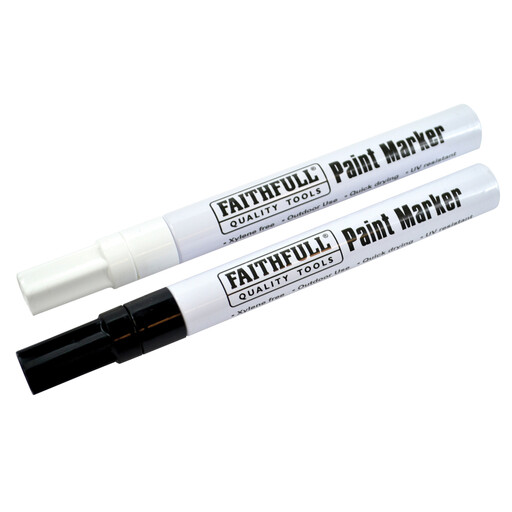
Why This Fits Their Persona: A practical two-colour option for DIY users, household repairs and occasional workshop labelling across metal, wood, plastic and glass.
The oil-based, quick-drying ink is specified for multiple materials, helping avoid the weak coverage associated with ordinary felt-tip pens.
Black and white provide contrast; the robust tip supports consistent lines and the ergonomic barrel offers a secure grip.
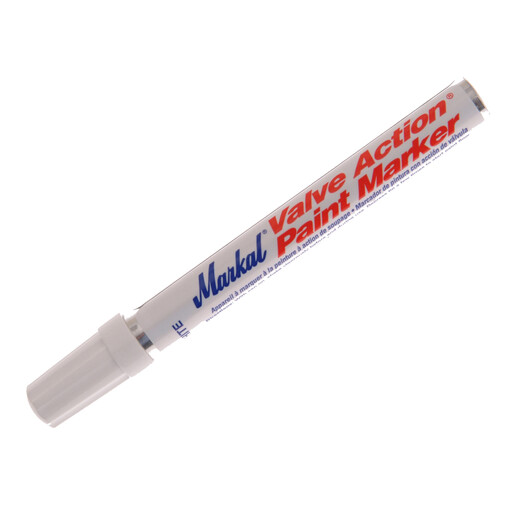
Why This Fits Their Persona: Suits tradespeople, maintenance teams and workshops needing controlled white marks on dark components and varied materials.
The valve-action tip allows paint release to be controlled, rather than relying on continuous pressure that can cause flooding.
Metal barrel, spirit-based xylene-free white paint and stated UV- and fade-resistant properties.
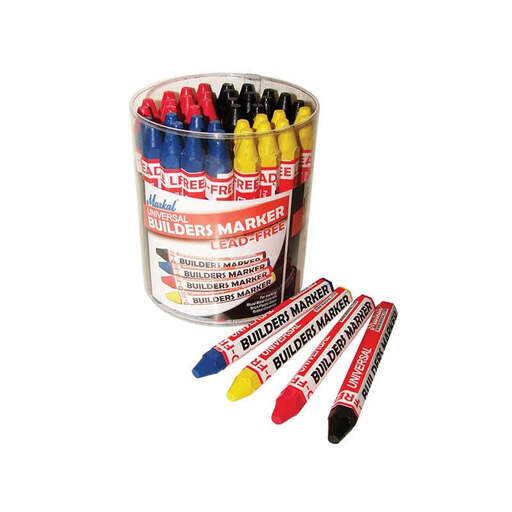
Why This Fits Their Persona: Designed for construction teams, stockrooms and large DIY projects where several colours and frequent marking are required.
The 48-pack reduces the risk of running out during a project, while the listed weather-resistant ink addresses outdoor-use concerns.
Four colours support visual identification; the markers are specified for wood, metal, plastic and concrete.
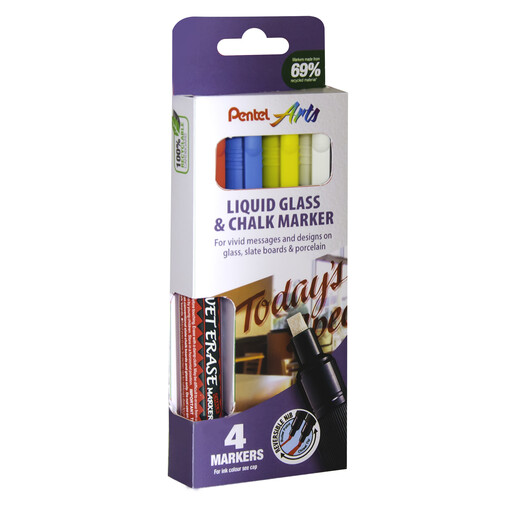
Why This Fits Their Persona: Suitable for shop signage, classroom displays, menus and home decoration on compatible non-porous surfaces.
The wet-erase formula is intended to wipe away with a damp cloth, avoiding the permanence trap when displays need regular updates.
Four colours and reversible bullet/chisel nibs support both detail work and broader lettering.
We have compiled a complete, real-time list of products that fully satisfy these strict selection criteria and UK safety regulations.
Read the product label before use and follow the manufacturer’s instructions. Oil-based and spirit-based formulas may require good ventilation. Keep markers away from heat, secure caps after use and store them as directed. Do not use a wet-erase or chalk marker on an unapproved porous surface. Products containing small parts should be kept away from young children, and ink should not be treated as suitable for skin contact.
Lifespan depends on ink type, frequency of use, nib pressure and storage. Recapping immediately after use is one of the simplest ways to reduce drying. Store solid paint sticks in a cool, dry place and keep liquid markers horizontally where the product instructions recommend it.
They can be suitable for some outdoor applications, but check the listing for weather-resistant, UV-resistant or fade-resistant properties. Surface preparation also matters: remove loose dirt, grease and moisture before marking, and allow the ink to dry fully.
Some paint markers are permanent and may require a suitable cleaner. For planned temporary writing, choose wet-erase markers or chalk markers specified for glass and other non-porous surfaces. For whiteboards, use dedicated dry-wipe markers such as the BIC Ecolutions Velleda range, rather than assuming every removable-looking ink is board-safe.