
24/7 Customer Support

Free returns

Same-day & Next-day Delivery

Quality Guaranteed

Unlock Your Welcome Offers: FREE Delivery | Up to 80% OFF | Free 30-day JoyPlus trial
Download the APP
From labelling moving boxes to creating vibrant window displays, the humble marker pen is a staple in UK homes, offices and workshops. Yet, choosing the right one can be surprisingly complex. A marker that promises permanence might fade in a week, while another might smudge instantly on a glossy surface. As your Joybuy Product Recommendation Officer, my role is to help you navigate the options and find the right tool for the job, without the marketing fluff.
Before you add another set of pens to your basket, let's look at the common pitfalls that lead to wasted money and frustration:
To avoid these issues, focus on two core parameters: ink type and tip style. Getting these right is the key to a successful purchase.
The ink determines what surfaces your marker will work on and how long the mark will last.
The tip dictates the kind of line you can create.
Instead of a one-size-fits-all approach, we've matched some reliable options to specific user needs.
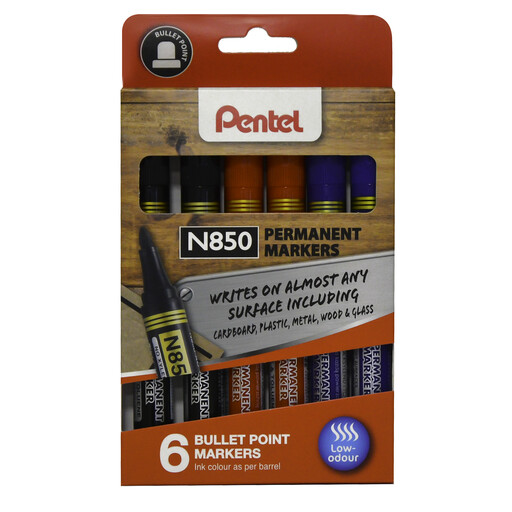
Why This Fits Their Persona: This value pack is ideal for home and office use. The bullet tip is a reliable workhorse for labelling files, storage boxes and general writing tasks. The low-odour ink is a significant benefit for use in enclosed spaces.
The versatile bullet tip provides a consistent line, avoiding the "wrong tip for the job" problem in most everyday scenarios. Its permanent ink is formulated for general use on paper and cardboard, delivering on its promise.
Excellent value pack of 6 markers. The specially moulded anti-roll cap is a practical feature that prevents pens from disappearing off your desk.
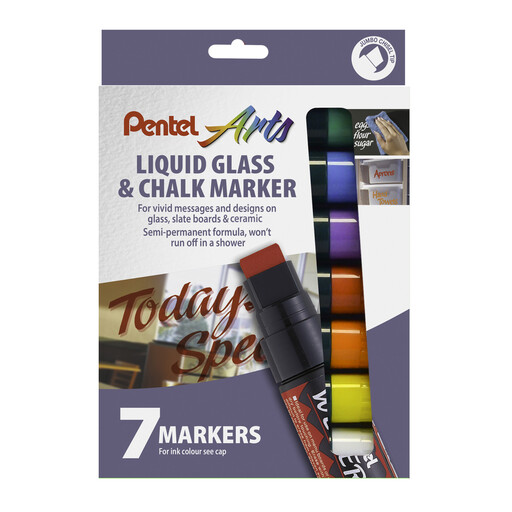
Why This Fits Their Persona: Perfect for creating bold, eye-catching menus, event signs and window displays in a cafe, pub or shop. The semi-permanent ink is a key feature, as it won't run in a light shower but can be removed intentionally.
This is a specialist pen for writing on glass and chalkboards. It solves the "permanent ink myth" by providing a formula designed specifically for non-porous surfaces, ensuring visibility and appropriate removability.
The jumbo 10-15mm chisel tip provides excellent coverage for large lettering. Its semi-permanent formula is suitable for both indoor and outdoor displays.
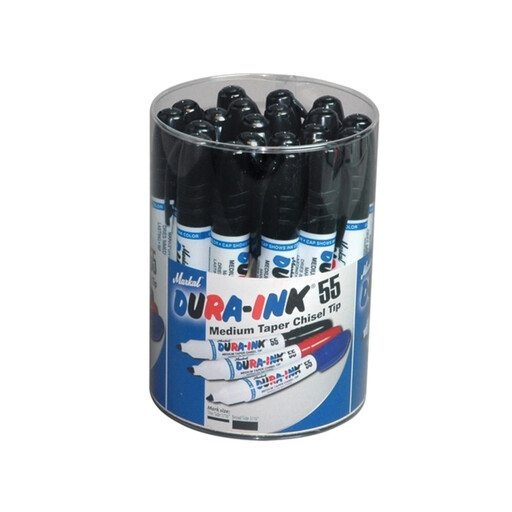
Why This Fits Their Persona: This is a heavy-duty tool for demanding environments. The bulk 20-pack is cost-effective for warehouses, construction sites and logistics operations where markers are essential daily equipment.
This is a true industrial marker. Its fade-resistant and waterproof permanent ink is designed for longevity on tough surfaces like metal and plastic, avoiding the pitfall of using a standard office marker in an industrial setting.
The quick-drying, smudge-proof ink is highly practical in a fast-paced work environment. The bulk pack offers excellent value for high-volume users.
We have compiled a complete, real-time list of products that fully satisfy these strict selection criteria and UK safety regulations.
1. How can I stop my marker pens from drying out? The most effective way to prolong the life of your marker pens is to always replace the cap tightly immediately after use. For most markers, especially those with felt tips, storing them horizontally helps ensure the ink remains evenly distributed and doesn't pool at one end. Finally, keep them away from direct sunlight and heat sources like radiators.
2. What is the difference between a wet erase and a dry erase marker? While both are used on non-porous surfaces like whiteboards, their removal method differs. A dry erase marker's ink includes a silicone polymer that prevents it from bonding to the surface, allowing it to be wiped away easily with a dry cloth or eraser. A wet erase marker uses a water-based paste that is more resistant to smudging once dry. It requires a damp cloth for removal, making it a better choice for signs or lists that you don't want to be erased accidentally.
3. Can I use permanent markers on glass? You can, and the mark will be quite durable. However, "permanent" doesn't mean impossible to remove. On a non-porous surface like glass, you can usually remove permanent ink with a solvent like isopropyl alcohol and some effort. If you intend to write on glass and remove it easily later, a dedicated wet erase chalk marker is the correct and much more convenient tool for the job.