
24/7 Customer Support

Free returns

Same-day & Next-day Delivery

Quality Guaranteed

Unlock Your Welcome Offers: FREE Delivery | Up to 80% OFF | Free 30-day JoyPlus trial
Download the APP
A rebounder trampoline can make indoor cardio more convenient without taking up the space required by a full-size fitness machine. It may suit adults who want short home workouts, balance practice, gentle bouncing or a compact addition to a home gym. However, product pages can make similar models appear interchangeable when important differences are hidden in the frame, suspension system and weight limit.
Before choosing a mini fitness trampoline, watch for these common buying pitfalls.
A stated size such as 40, 42 or 48 inches usually refers to the overall frame diameter, not necessarily the jumping surface. The frame, springs and protective edging reduce the available standing area. Measure the room around the product as well as the trampoline itself, leaving clear space from walls, furniture and overhead fittings.
A spring rebounder trampoline can provide a responsive bounce, but exposed or poorly covered springs may create more noise and require regular inspection. A bungee cord rebounder generally uses elastic cords rather than metal springs, which may offer a quieter feel. Noise also depends on flooring, user weight and bounce intensity, so “silent” should not be treated as a guarantee in every home.
A trampoline with handle can improve confidence for beginners or users who want balance support, but the handle must be securely fitted and adjusted to a suitable height. Similarly, the maximum load is not a suggestion. Choose a model whose stated capacity is comfortably above the user’s weight, and check whether the advertised limit applies to a particular size option.
For flats, spare bedrooms and rooms with limited floor space, a folding rebounder trampoline can be easier to store than a fixed model. The SPORTSOUL 40-inch folding models measure approximately 101.6 cm across, while the 48-inch version measures around 121.9 cm. Folded or stored dimensions still matter: measure the cupboard, under-bed area or wall space where you intend to keep it.
A compact frame does not remove the need for safe clearance. Use the trampoline on a flat, stable surface, away from obstacles, and ensure there is sufficient overhead room.
Steel springs are used in several of the SPORTSOUL models listed here. The 40-inch folding model has 36 steel springs, while the 48-inch folding version has 40 steel springs. Their jumping mats are made from polypropylene, and the spring areas have integrated foam padding.
The BCAN adult rebounder uses a steel frame with bungee cord suspension. This may appeal to households prioritising a quieter indoor exercise trampoline, although cords still need regular checks for fraying or damage. Do not assume one suspension system is automatically suitable for every user; the bounce feel, maintenance routine and desired workout style all matter.
Compare the published maximum user weight with your requirements before considering price or appearance. The listed products range from 70 kg to 120 kg, with the BCAN options offering stated capacities of 204 kg or 250 kg, depending on size.
An adjustable handlebar can provide balance support, but it does not eliminate fall risk. Use one person at a time, avoid somersaults or high-risk movements, and inspect the mat, frame, springs, cords and padding before each session. Models described as suitable for low-impact cardio equipment or rehabilitation should not be treated as medical products. If you have an injury, health condition or concerns about starting exercise, seek appropriate medical advice first.
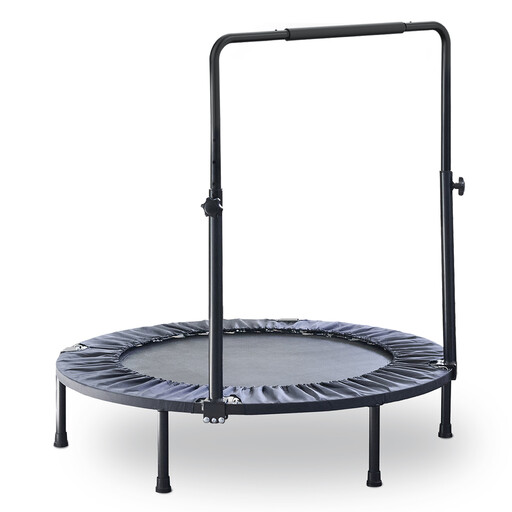
Why This Fits Their Persona: A compact starting point for adults building a simple home gym trampoline routine in a UK room with limited space.
The folding frame supports easier storage, while the adjustable handle and integrated foam spring pad address stability and exposed-spring concerns.
40-inch footprint, 36 steel springs, pre-assembled jumping system and 70 kg maximum user weight.
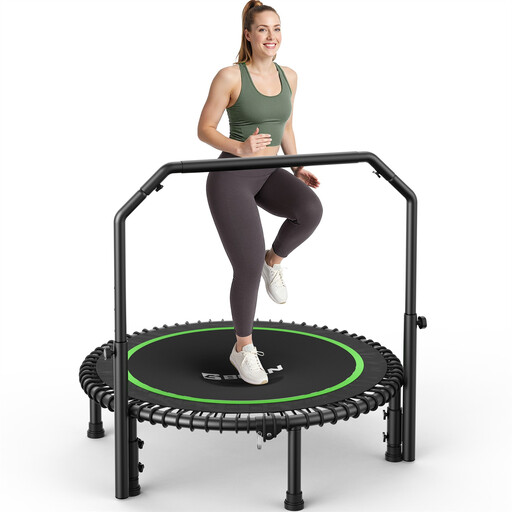
Why This Fits Their Persona: A practical choice for shoppers who prioritise a quieter bounce, adjustable support and a higher stated load capacity.
Its bungee cord suspension avoids relying on exposed metal springs, while the two size options make it easier to match the available floor area.
Adjustable handlebar, steel frame, bungee cords and stated 204 kg or 250 kg capacity depending on size.
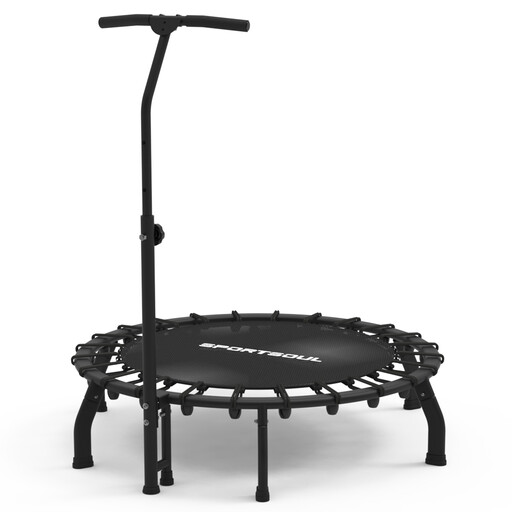
Why This Fits Their Persona: Suitable for users seeking a broader-capacity full-body workout trampoline with resistance bands for varied movement patterns.
The stated 120 kg limit is clearly specified, and the pre-assembled elastic ropes reduce the setup uncertainty found with loose components.
42-inch frame, elastic resistance bands, pre-assembled mat and maximum user weight of 120 kg.
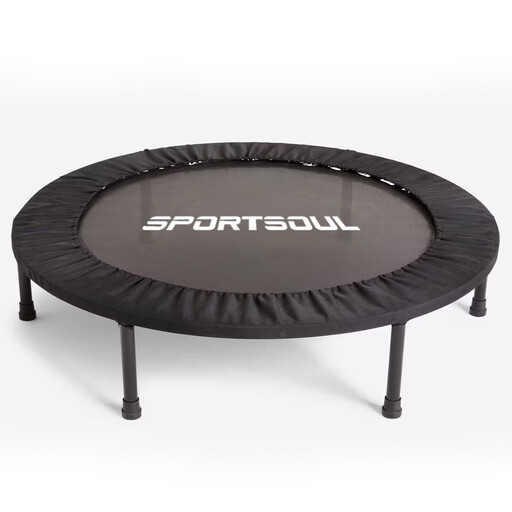
Why This Fits Their Persona: A lightweight option for adults who need a straightforward indoor exercise trampoline that can be moved and stored regularly.
The compact 40-inch frame is paired with silent, non-slip foot covers, helping address floor protection and noise concerns in shared homes.
No assembly is required, net weight is 6.6 kg, and the stated maximum user weight is 100 kg.
We have compiled a complete, real-time list of products that fully satisfy these strict selection criteria and UK safety regulations.
Many models are compact enough for a flat, but bouncing can still transmit sound through floors. Use a stable, level surface and consider a suitable protective exercise mat beneath the feet if compatible with the manufacturer’s instructions. Select a bungee cord model if quieter operation is a priority, and keep the workout intensity controlled.
Inspect the frame, feet, mat, springs or bungee cords before each use. Look for loose joints, stretched cords, damaged padding, fraying or unusual movement. Wipe the frame and mat with a soft, damp cloth and mild soap, then dry thoroughly. Store the equipment indoors when possible, particularly after outdoor use.
A rebounder trampoline does not require mains electricity, so its direct running cost is limited. The main ongoing considerations are storage, floor protection and replacement components if the suspension system or mat eventually shows wear. Following the stated capacity and maintenance guidance can help preserve the equipment, but no trampoline should be used once safety-critical parts are damaged.